This guide covers 13 examples of circular economies grouped by how they work rather than by sector. Four are UK rules or planning policy. The other nine are business models, material innovations and shared infrastructure with published figures.
For each, we set out the mechanism, the numbers the organisation or regulator has published, and the reporting point a sustainability lead should notice.
What Makes Something a Circular Economy Example?
The Greater London Authority's working definition is as usable as any. It describes a circular economy as one where materials are retained in use at their highest value for as long as possible, then reused or recycled, with minimal residual waste (GLA Circular Economy Statement guidance).
The alternative is the linear take-make-dispose model, where products are made, used once and thrown away.
"Highest value" is the phrase doing the work. Shredding a working office chair into plastic pellets counts as recycling, but it discards most of the energy and labour that went into the chair.
That gives a rough hierarchy of loops, tightest first:
- Maintain and repair, so the product stays with its current user.
- Reuse or redistribute, so it passes to someone else largely as it is.
- Refurbish or remanufacture, so components return to as-new specification.
- Recycle, so the material re-enters production.
Energy recovery and landfill sit outside the loop. A strong example operates as high on that list as the product allows, which mirrors the waste hierarchy that underpins UK waste law.
The 13 Examples at a Glance
| # | Example | Circular model | Where | Status |
|---|---|---|---|---|
| 1 | Deposit return schemes | Collection for recycling | UK | Due to start 1 October 2027 |
| 2 | Packaging EPR | Producer pays for end of life | UK | Fees and recycling obligations from 2025 |
| 3 | Appliance spare parts rules | Repair | Great Britain | In force since 1 July 2021 |
| 4 | Circular Economy Statements | Circular construction | Greater London | London Plan policy since 2021 |
| 5 | Signify lighting at Schiphol | Product-as-a-service | Netherlands | Agreement announced 2015 |
| 6 | Cat Reman | Remanufacturing | Global | Running since 1973 |
| 7 | IKEA Buy Back | Buy-back and resale | UK and Ireland | UK launch 2021 |
| 8 | Library of Things | Sharing and rental | England | Operating |
| 9 | Napapijri single-polymer jacket | Mono-material design | Italy | Ellen MacArthur Foundation case study |
| 10 | Econyl | Regenerated material | Italy, sold globally | Launched 2011 |
| 11 | Toast Brewing | Surplus food as feedstock | UK | Brewing with surplus bread since 2015 |
| 12 | Kalundborg Symbiosis | Industrial symbiosis | Denmark | Exchanges since the 1970s |
| 13 | Pooled reusable pallets | Reusable transit packaging | UK and global | Named activity under pEPR |
Four Examples Set by UK Rules
1. Deposit Return Schemes for Drinks Containers
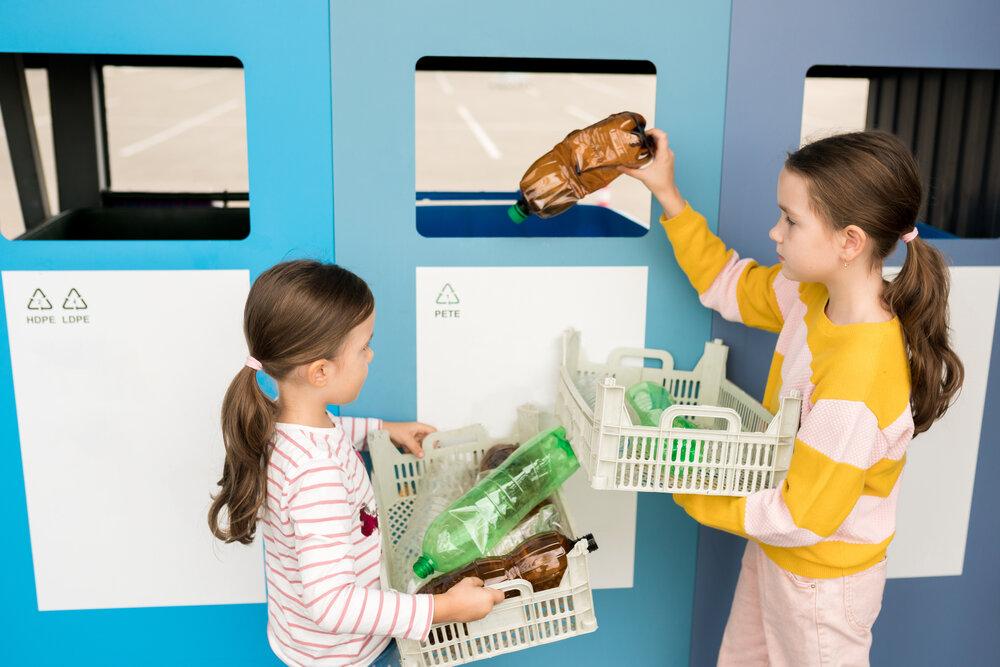
Every part of the UK is expected to run a deposit return scheme (DRS) from 1 October 2027. You pay a refundable deposit when you buy a drink in a single-use container and get it back when you return the empty to a shop or a reverse vending machine. Exchange for Change, the trading name of the UK Deposit Management Organisation, has set a flat 20p deposit (House of Commons Library, July 2026).
Scope differs by nation. England, Northern Ireland and Scotland will cover PET plastic, steel and aluminium containers from 150ml to 3 litres, but not glass. Wales will include glass bottles, initially without a deposit. In England and Northern Ireland the legal basis is the Deposit Scheme for Drinks Containers (England and Northern Ireland) Regulations 2025, and the Environment Agency enforces the scheme in England.
The Commons Library summary of the government's impact assessment for England and Northern Ireland gives set-up costs of £632 million, annual running costs of £1.065 billion and annual benefits of £1.612 billion.
Here's the detail drinks producers tend to miss.
DRS containers are excluded from packaging EPR charges, but glass drinks bottles are not. A brand selling the same product in cans and glass will run two compliance regimes side by side.
2. Extended Producer Responsibility for Packaging
Packaging extended producer responsibility (pEPR) shifts the cost of managing household packaging waste from councils to the businesses that put packaging on the market. According to Defra's guidance, last updated 11 June 2026, you need to collect and report packaging data if your business, subsidiary or group has annual turnover of £1 million or more and supplied or imported more than 25 tonnes of packaging in the previous calendar year.
Large organisations are those with turnover of £2 million or more and over 50 tonnes of packaging. They report every six months and may have to pay a waste disposal fee, scheme administrator costs and a regulator registration charge. They also need packaging waste recycling notes (PRNs) or export notes (PERNs), which are evidence that packaging waste has been recycled. Small organisations collect and report data but carry lighter obligations.
The circular lever is fee modulation. Defra says your fee will be lower if your packaging is easier to recycle, measured under a recyclability assessment methodology.
So packaging design now shows up as a cost line.
Group structures catch people out. Turnover and tonnage are added up across every group member that handles packaging, and if the totals cross the thresholds, each of those members must comply even if it falls below them on its own.
3. Spare Parts Rules for Household Appliances
Great Britain's so-called right to repair rules sit in the Ecodesign for Energy-Related Products and Energy Information Regulations 2021. For household washing machines and washer-dryers, manufacturers, importers or authorised representatives must make parts including motors, pumps, drums and printed circuit boards available to professional repairers for at least 10 years after the last unit of a model goes on sale. Door hinges, seals and detergent dispensers must be available to end users as well, for the same period.
Dishwashers follow a similar pattern with a seven-year minimum for parts such as pumps, motors and heating elements. Manufacturers must also deliver dishwasher spares within 15 working days of an order during that period.
The rules came into force on 1 July 2021. They cover a short list of products, and most parts go only to professional repairers. Which? welcomed the change at the time but argued the rules should extend to more appliances and to a product's full working life (Big Issue, 2021).
4. Circular Economy Statements for Major London Developments
London Plan Policy SI 7 requires planning applications referable to the Mayor to include a Circular Economy Statement, and says those schemes should aim to be net zero-waste (GLA monitoring report, June 2024). Referable schemes include residential developments of 150 homes or more.
The GLA's guidance, published in March 2022, asks for two things: a written report and a template spreadsheet. The template has five reporting tables covering targets, design approaches, design principles, recycling and waste reporting, and a bill of materials. Applicants also supply a pre-redevelopment audit, a pre-demolition audit and an operational waste management plan.
Of those, the pre-redevelopment audit carries the most weight. The guidance ranks retaining existing structures above demolition where that is the more sustainable option, so this audit is where a developer shows it has genuinely tested retrofit before proposing a new build. Boroughs are encouraged to apply the same approach to smaller schemes.
Business Models That Keep Products in Use
5. Product-as-a-Service: Lighting at Schiphol Airport
In 2015, Philips (whose lighting business now trades as Signify), Schiphol Group and contractor Cofely agreed that the airport would pay for the light it uses while Philips kept ownership of the fixtures and installations. Philips and Cofely took joint responsibility for performance, durability and eventual reuse and recycling (Signify press release, April 2015).
Because the supplier owns the asset, it has a direct commercial reason to make fixtures last. Philips said the fittings were designed to last 75% longer than conventional ones, with parts that can be replaced individually, and that LEDs would cut electricity use by 50% against conventional lighting. Those were launch projections from the supplier, not audited results.
For the customer, a service contract moves emissions around the inventory. Bought outright, light fittings would normally fall in Scope 3 Category 2 (capital goods) in the year of purchase. Under a pay-per-use contract, the electricity still sits in Scope 2 and the service fee in Category 1, while the manufacturing footprint stays with the supplier. Some contracts may instead fall under Category 8 (upstream leased assets). Agree the treatment with your assurance provider before the first reporting year, not after.
6. Remanufacturing: Caterpillar's Core Return System
Caterpillar has run a full remanufacturing programme since 1973 (Cat blog). It runs on a deposit. The customer buys a remanufactured part and pays a core deposit on top, which is refunded when the used component, known as the core, comes back to a dealer (Caterpillar).
Returned cores are stripped to individual parts, cleaned and salvaged using processes such as laser cladding and machining. Then they're rebuilt to original specification, with current engineering updates, and sold with the same 12-month parts warranty as new parts. Caterpillar prices them at 45% to 85% of new (Cat Financial, April 2025).
Eligibility rules handle quality control. A core earns full or partial credit only if it's complete, assembled, and not visibly cracked, broken or welded.
It's the same logic as a drinks deposit, applied to engine blocks.
7. Buy-Back and Resale: IKEA
IKEA launched its Buy Back scheme across UK stores in 2021 after pandemic delays. Customers fill in an online form, receive a preliminary offer, and bring the assembled item to the returns desk in exchange for a voucher with no expiry date. At launch, IKEA paid 50% of the original price for items in as-new condition, 40% for minor scratches and 30% for well-used pieces, up to £250 per item (Retail Gazette, May 2021). Returned pieces are resold in the store's Circular Hub.
Paying in vouchers keeps the value inside the business, and grading by visible condition gives staff a consistent intake standard without specialist inspection.
The main friction flagged at launch was that items must arrive fully assembled, which is awkward for large furniture.
8. Sharing and Rental: Library of Things
Library of Things rents out items people need only occasionally, such as drills, carpet cleaners and sewing machines, from kiosks in libraries and community spaces. Its published figures to June 2025 claim more than 68,000 rentals, 440 tonnes of waste prevented and 1,375 tonnes of CO2e saved (Library of Things).
What makes it a useful example is that it publishes its method (impact methodology). The direct waste figure for 2022 to 2023 works like this:
- Rentals that users said replaced a purchase: 2,516
- Average weight of the top 10 most rented products, used as a proxy: 7kg
- Direct waste prevented: 2,516 × 7kg = 17,612kg
It then adds an indirect estimate, based on survey data showing 60% of users say they're more likely to reuse, repair or recycle after borrowing.
Every input is either self-reported or a proxy, and the organisation says openly that the calculator has limits. But anyone can rebuild the arithmetic, which is the standard to hold your own claims to.
Designing Waste Out of Materials
9. Single-Polymer Clothing: Napapijri
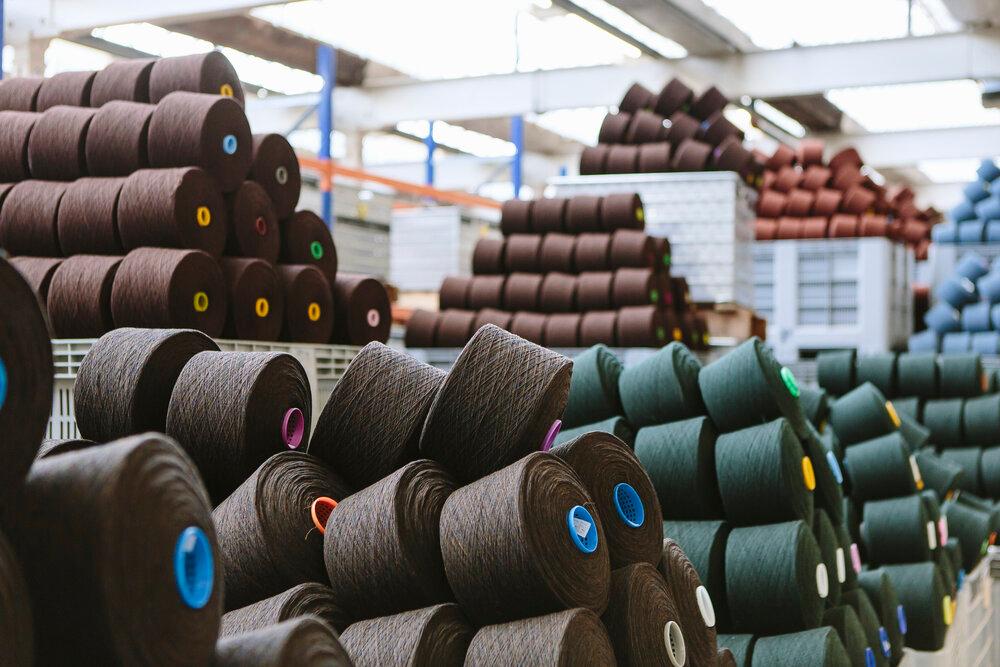
Performance jackets are hard to recycle because the shell, insulation and trims are usually different materials that can't be separated easily. Napapijri's answer, documented by the Ellen MacArthur Foundation, was to make the whole jacket, including fabric, filling and trims, from one polymer. Customers who return an old jacket get 20% off a future purchase.
Mono-material design is the upstream fix for most recycling problems. It's the same principle that lowers pEPR fees on packaging. Fewer material types in one item means less sorting and cleaner feedstock at the reprocessor.
10. Regenerated Nylon: Econyl
Aquafil launched Econyl in 2011 after five years of development. It's nylon made from waste such as old carpets, fabric scraps and discarded fishing nets, recovered through chemical and mechanical processes and turned back into yarn (Interiors and Sources, 2019).
Aquafil's headline environmental figure has shifted over time. A 2019 company release quoted up to an 80% reduction in global warming impact against nylon from oil, with 57,100 tonnes of CO2e avoided per 10,000 tonnes of raw material (Econyl, June 2019). More recent partner material cites up to 90% and 65,100 tonnes (Material Bank).
Revisions like that are normal as life cycle assessments are updated. For a buyer, the practical step is to cite the specific environmental product declaration and its date in your own reporting, never a marketing percentage.
11. Surplus Bread as Brewing Feedstock: Toast Brewing
Toast Brewing, a London-based B Corp certified since March 2018 (B Lab directory), has brewed with surplus bread since 2015. It takes end-of-day loaves from large bakeries and heel ends that sandwich makers don't use, and the bread replaces part of the malted barley in the brew. The company reported upcycling more than 3.3 million slices by the end of 2023 (Global Good Awards).
This is cascading use. Food that can't be sold as intended goes to the next highest-value use before anaerobic digestion or composting.
Shared Infrastructure Between Businesses
12. Industrial Symbiosis at Kalundborg
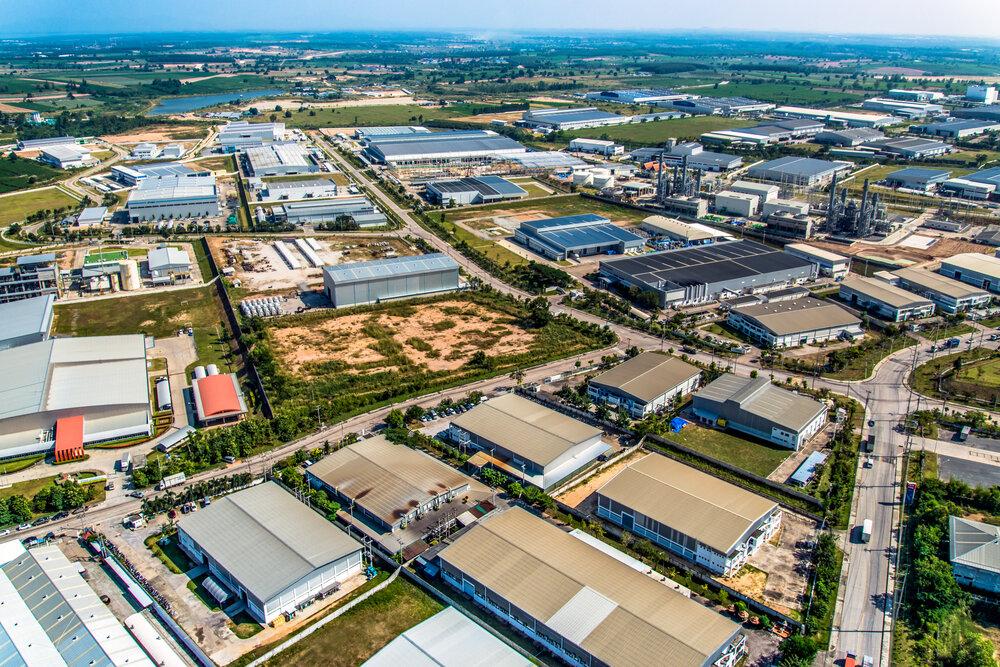
Kalundborg in Denmark is the standard case study for industrial symbiosis, where one company's by-product becomes another's raw material. It started in the 1970s with one shared resource, wastewater (Win Win Award). Public and private companies there are now physically connected, often by pipeline, so surplus energy, water and materials can pass between them.
In a 2022 article for the International Water Association, Kalundborg Symbiosis said the network saves 4 million m³ of groundwater a year by switching to surface water, saves 586,000 tonnes of CO2 and recycles 62,000 tonnes of residual materials (IWA, 2022). Other published sources put the annual CO2 saving above 635,000 tonnes (Sweco).
The gap between those two figures is normal for avoided-emissions claims. Each depends on the baseline chosen and the year measured, and neither is directly comparable with a company's own GHG inventory.
13. Pooled Reusable Pallets
Wooden pallets that are hired out, returned and loaned again are among the least glamorous circular systems. They're also among the longest established. Defra's pEPR guidance treats hiring or loaning out reusable packaging as a packaging activity in its own right and uses pallets as its example. Organisations doing it may also need to report nation data showing where in the UK that packaging is supplied and discarded.
That's why pallet pooling belongs on this list. A reuse model doesn't sit outside the compliance system just because nothing is thrown away on each trip.
How Circular Activity Shows Up in Carbon and ESG Reporting
Waste and Material Factors in Scope 3
DESNZ publishes the UK government conversion factors for company reporting every year, and they are the standard reference for SECR and for GHG Protocol reporting on UK activity. The 2026 set came out in June 2026. Its material use and waste disposal tables separate treatment routes such as landfill, combustion, composting, open-loop recycling and closed-loop recycling, so the route you record changes the emissions result for the same tonnage.
Where the data usually breaks is the waste contractor's monthly return. A line that says "mixed recyclables" with no treatment route can't be matched to a specific factor, and an auditor will ask how you chose one. Ask contractors for tonnage by material and by route before the reporting year starts.
Avoided Emissions Sit Outside the Inventory
The Kalundborg, Econyl and Library of Things figures above are all avoided-emissions estimates. They compare what happened with a counterfactual where the circular option didn't exist.
Under the GHG Protocol Corporate Standard, your inventory counts the emissions your organisation and its value chain actually cause across Scopes 1, 2 and 3. Avoided emissions can be disclosed, but separately, and they aren't subtracted from the total. If a Scope 3 figure drops sharply in the year a circular programme launches, expect your assurance provider to ask whether a counterfactual has leaked into the inventory.
ESRS E5 Under CSRD
For companies in scope of the Corporate Sustainability Reporting Directive, ESRS E5 (Resource Use and Circular Economy) covers resource inflows, resource outflows and waste, where the double materiality assessment finds the topic material. On 3 July 2026 the European Commission adopted a delegated act containing simplified ESRS, which apply to financial years beginning on or after 1 January 2027 (PwC Viewpoint, July 2026). Published analysis of the revised E5 says it removes the standalone disclosure on anticipated financial effects.
At the time of writing, the delegated act was going through the scrutiny period in the European Parliament and Council. Check the final text on EUR-Lex before restructuring your E5 disclosures around it.
Where Circular Claims Go Wrong
Recyclable, recycled-content and take-back claims all count as environmental claims under consumer law. Since 6 April 2025, the Competition and Markets Authority (CMA) has been able to enforce consumer protection law directly under the Digital Markets, Competition and Consumers Act 2024, with fines of up to 10% of global turnover, and misleading environmental claims fall within that (Fieldfisher). The CMA's Green Claims Code sets out the standard claims are expected to meet.
Recurring problems with circular claims include:
- A "recyclable" label on packaging that most local collection systems don't accept.
- A percentage reduction quoted with no baseline, life cycle assessment or date.
- Avoided emissions presented as if they cut the company's own footprint.
- A take-back scheme promoted before anyone has measured how many items come back, or what happens to them.
None of this is legal advice. If you're preparing public circular claims, have them checked against the CMA's guidance by a qualified adviser.
Where UK Circular Economy Policy Stands in September 2026
| Measure | Position | Source and date |
|---|---|---|
| Packaging EPR | Fees and recycling obligations apply from 2025, based on 2024 data | Defra guidance, updated 11 June 2026 |
| Deposit return schemes | Due to start across the UK on 1 October 2027 | House of Commons Library, 22 July 2026 |
| Circular Economy Growth Plan (England) | Not yet published; Defra said in June 2026 it would follow shortly, with no date | letsrecycle.com, 17 June 2026 |
| Simplified ESRS (EU) | Delegated act adopted 3 July 2026; applies to financial years from 1 January 2027 | PwC Viewpoint, 6 July 2026 |
The Growth Plan is the gap. It draws on the Circular Economy Taskforce set up in December 2024 and was first expected in autumn 2025 (letsrecycle.com, June 2026). Until it appears, any sector roadmaps it's expected to contain are proposals, not policy.
More Information
Extended producer responsibility for packaging: who is affected and what to do, Defra and the Environment Agency, GOV.UK.
Greenhouse gas reporting: conversion factors 2026, DESNZ, GOV.UK.
Deposit return schemes (CBP-10453), House of Commons Library.