
Carbon accounting for technology and SaaS companies
For most technology and Software-as-a-Service (SaaS) companies, the biggest emissions sit off your own balance sheet. They're in the cloud compute you rent, the laptops your team works on and the miles they travel. Gaia measures Scope 1, 2 and 3 across the business and produces audit-ready reports, without the spreadsheets or the consultants.
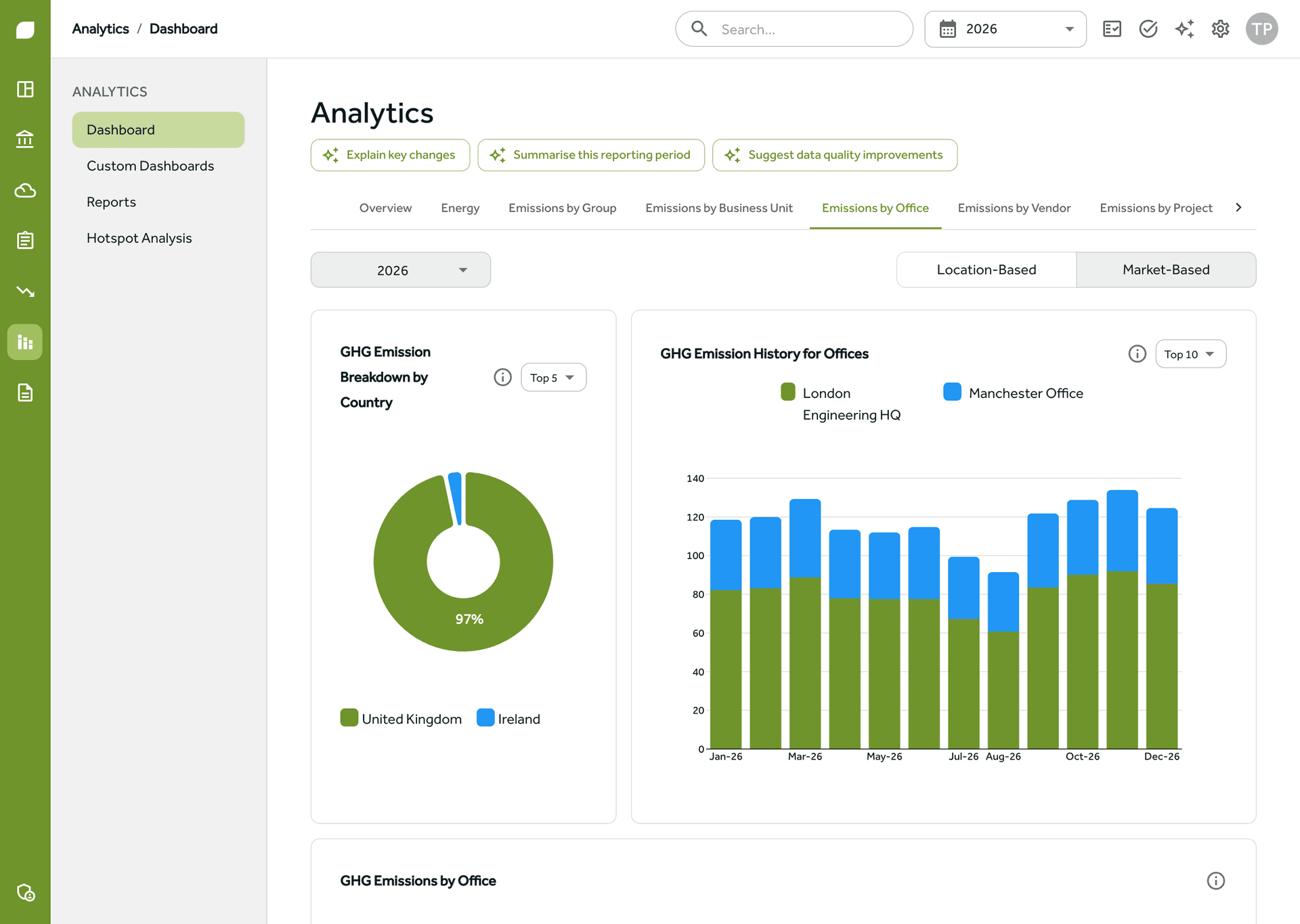
Carbon accounting built for how software companies actually operate
A typical SaaS business runs light on Scope 1 and 2. You might lease an office, and that's most of what you directly control. The emissions that matter are almost all Scope 3, spread across your cloud provider, your suppliers and a team that could be working from twenty different cities.
Gaia pulls that picture together. It uses the Greenhouse Gas Protocol (GHG Protocol) methodology and the UK conversion factors published by the Department for Environment, Food and Rural Affairs (DEFRA) and the Department for Energy Security and Net Zero (DESNZ), so the numbers hold up when a customer or investor asks how you got them.
The emissions behind the compute you buy
Most of your compute footprint lives on someone else's servers. Cloud and data-centre energy scales with usage and can climb quickly as you grow, yet it rarely shows up on a utility bill you control. Gaia captures it within your Scope 3 purchased goods and services, so the compute you pay for is counted rather than left out because it's hard to see. Import provider invoices or usage exports and Gaia calculates the emissions for you, validating every row and giving a reason for anything it rejects.
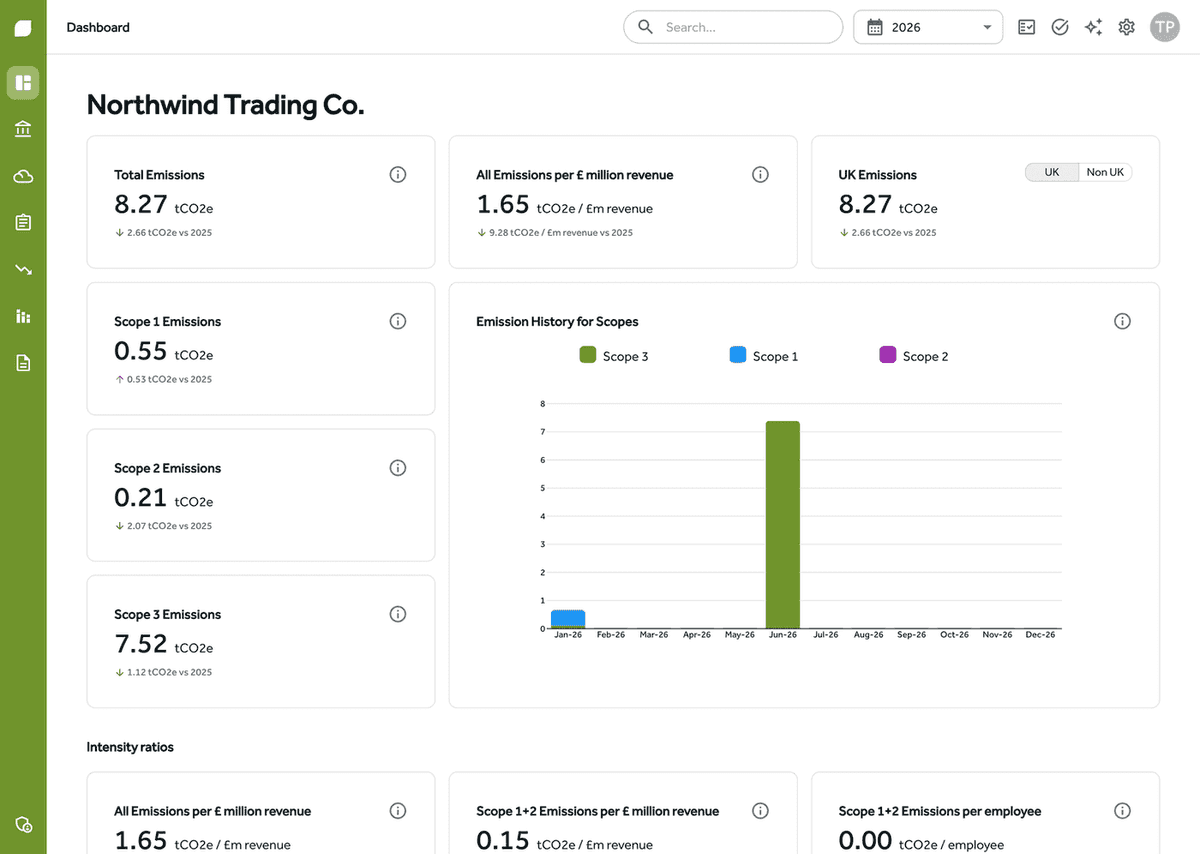
A spread-out workforce and the travel that comes with it
When your team works from home offices and cities across the country, your emissions move with them. Remote working energy, commuting on the days people come in, and the flights for sales, conferences and offsites all count towards Scope 3. Gaia tracks business travel and homeworking across every location in one view, so you can see where the footprint concentrates and act on the parts that matter, like a travel policy or how often the whole company flies to one place.
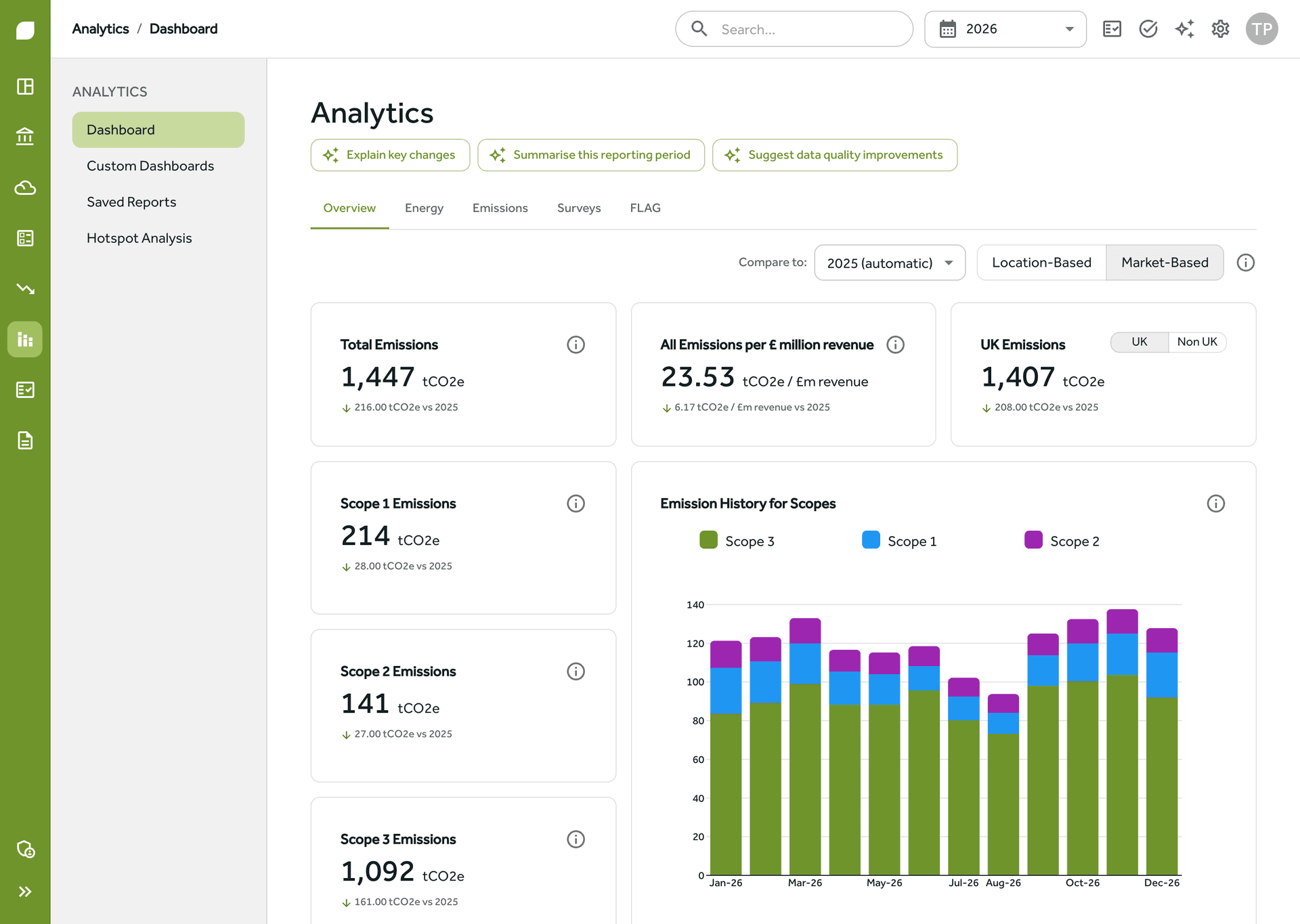
The hardware you buy, and what happens to it
Every laptop, monitor, phone and server your company buys carries embodied emissions from the way it was made, and more again once it reaches end of life. For a growing software team, refresh cycles and new hires add up over the year. Gaia counts hardware procurement in your Scope 3 figures, and when you're weighing a longer refresh cycle or a different device, you can model the difference before you commit.
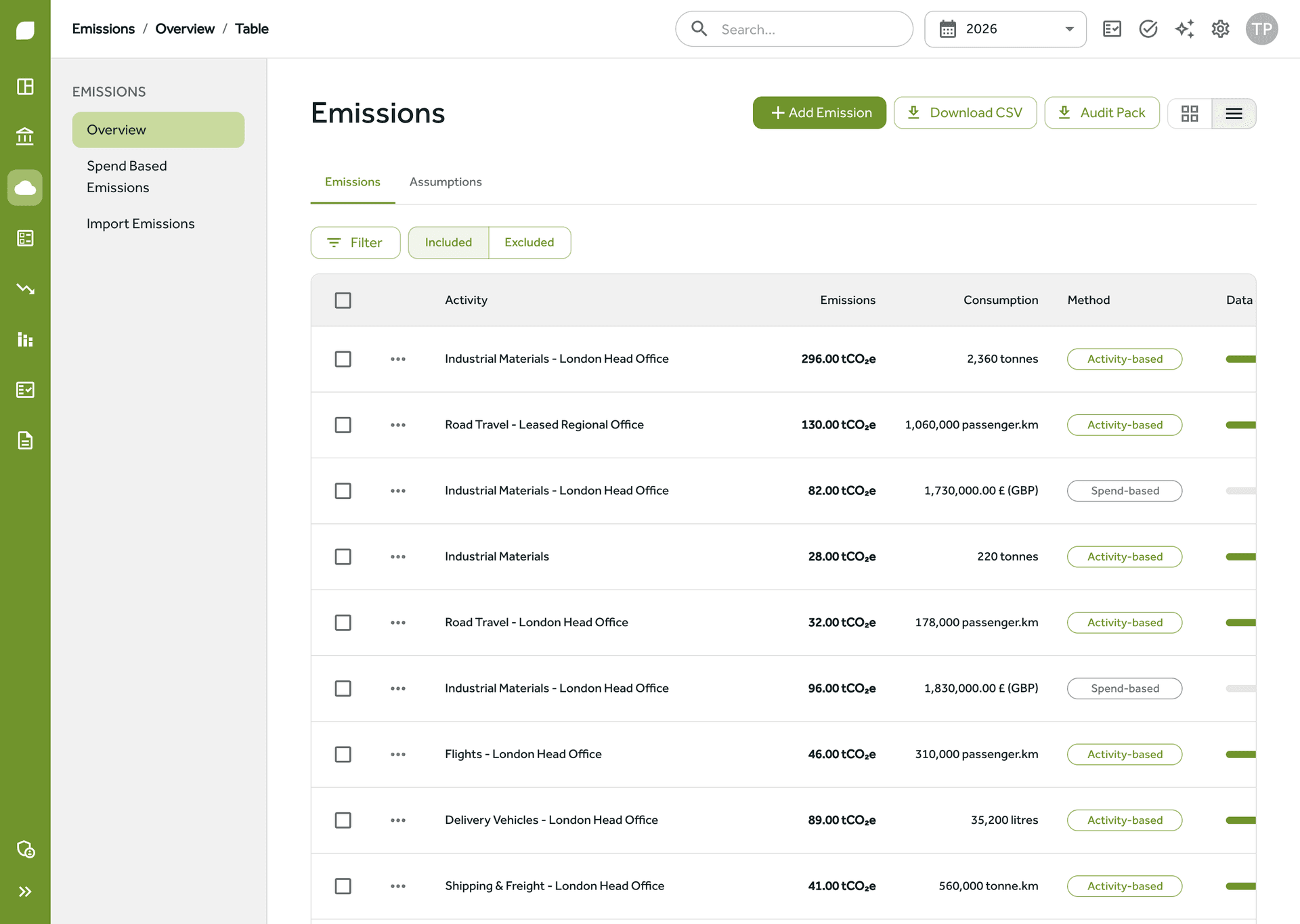
What Gaia helps technology companies measure
One system for the emissions that sit across your cloud, your suppliers and your team.
Cloud and compute
Purchased services
Business travel
Homeworking
Hardware procurement
End-of-life hardware
Offices and facilities
Supplier data
Common questions from technology and SaaS teams
We barely have any Scope 1 and 2. Is carbon accounting still worth it?
Yes, because your reporting still has to cover Scope 3, and for a software company that's where nearly all of the footprint sits. Gaia measures Scope 1, 2 and 3 together, and spend-based measurement and supplier surveys mean you're not chasing every number by hand. You get a complete figure that stands up to scrutiny, rather than the small part that happens to be easy to count.
How does Gaia handle cloud and data-centre emissions?
Gaia counts them within your Scope 3 purchased goods and services. You can import provider invoices or usage exports as spreadsheets, and Gaia calculates the emissions using the GHG Protocol methodology and DEFRA and DESNZ conversion factors. Every row is validated on import, and any row that is rejected or looks unusual states its reason, so you can check it before it reaches a report.
Can it produce reports for SECR and CSRD?
Gaia generates reports for Streamlined Energy and Carbon Reporting (SECR) and the Corporate Sustainability Reporting Directive (CSRD), along with B Corp and the GHG Protocol. Reports are audit-ready, and you can export them as a web link or a PDF, which helps when an investor or a customer's procurement team asks for the detail behind your numbers.
Our team is fully remote. How do we capture that?
Gaia tracks homeworking energy and business travel across every location, so a distributed team is counted properly rather than left as a guess. The data-quality mix then shows how much of the footprint is measured rather than spend-based, so a few unreported home offices are visible in the report instead of hiding the gap.
Can we get our suppliers' actual figures instead of estimates?
Yes. Gaia's supplier engagement feature sends surveys to your vendors and pulls their responses straight into your account, so you can replace estimates with primary data over time. It also connects to Xero, QuickBooks and Sage and offers application programming interface (API) access, so spend and supplier data can flow in without manual entry.
Trusted carbon data



Aligned with the standards your reports rely on
Gaia is aligned with the Greenhouse Gas Protocol (GHG Protocol) methodology and uses recognised industry-standard data to calculate your emissions, including the annual UK conversion factors published by the Department for Environment, Food and Rural Affairs (DEFRA) and the Department for Energy Security and Net Zero (DESNZ).
See it in sixty seconds
Nine real product screens in the order you would meet them. Press play, or step through at your own pace.
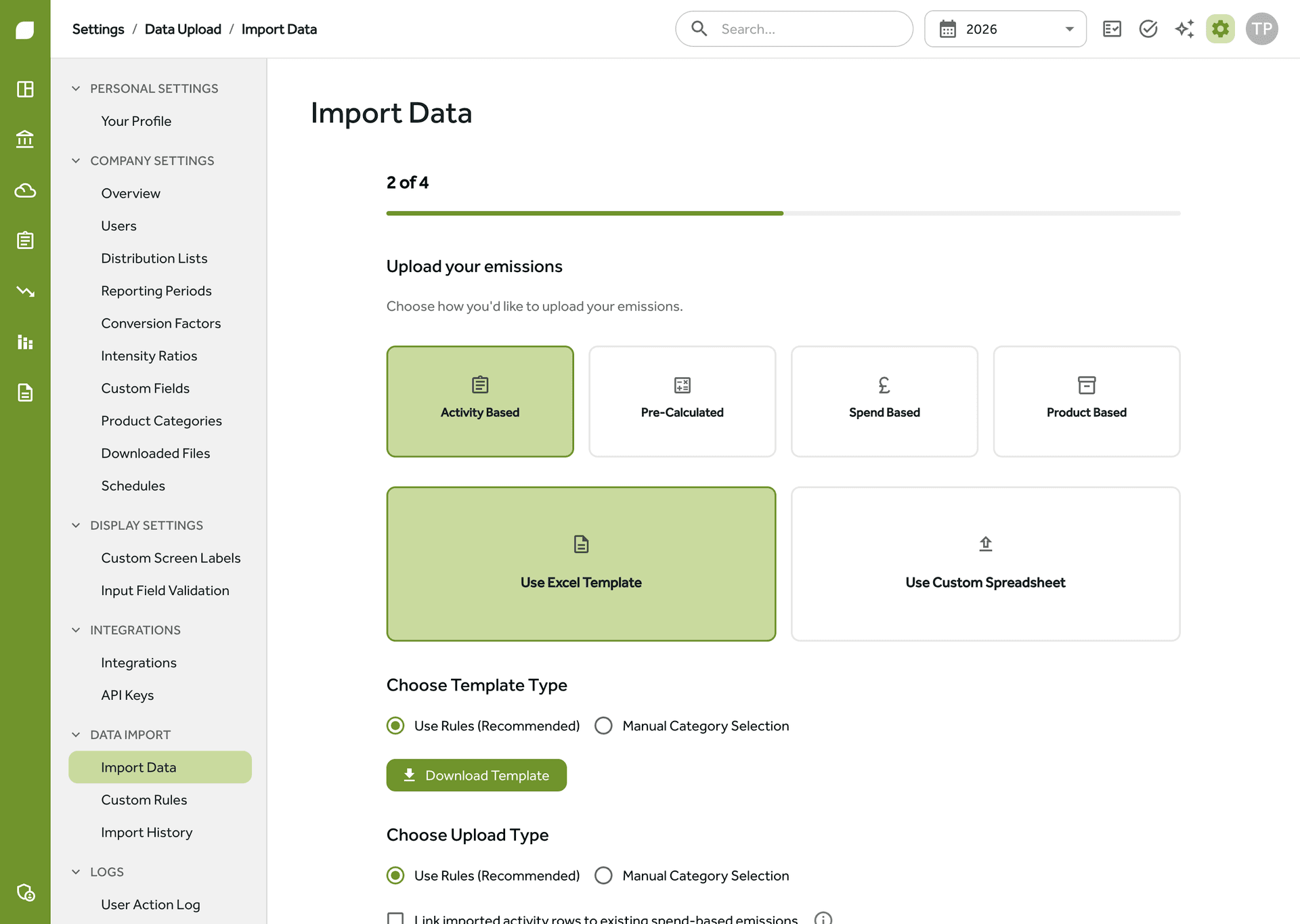
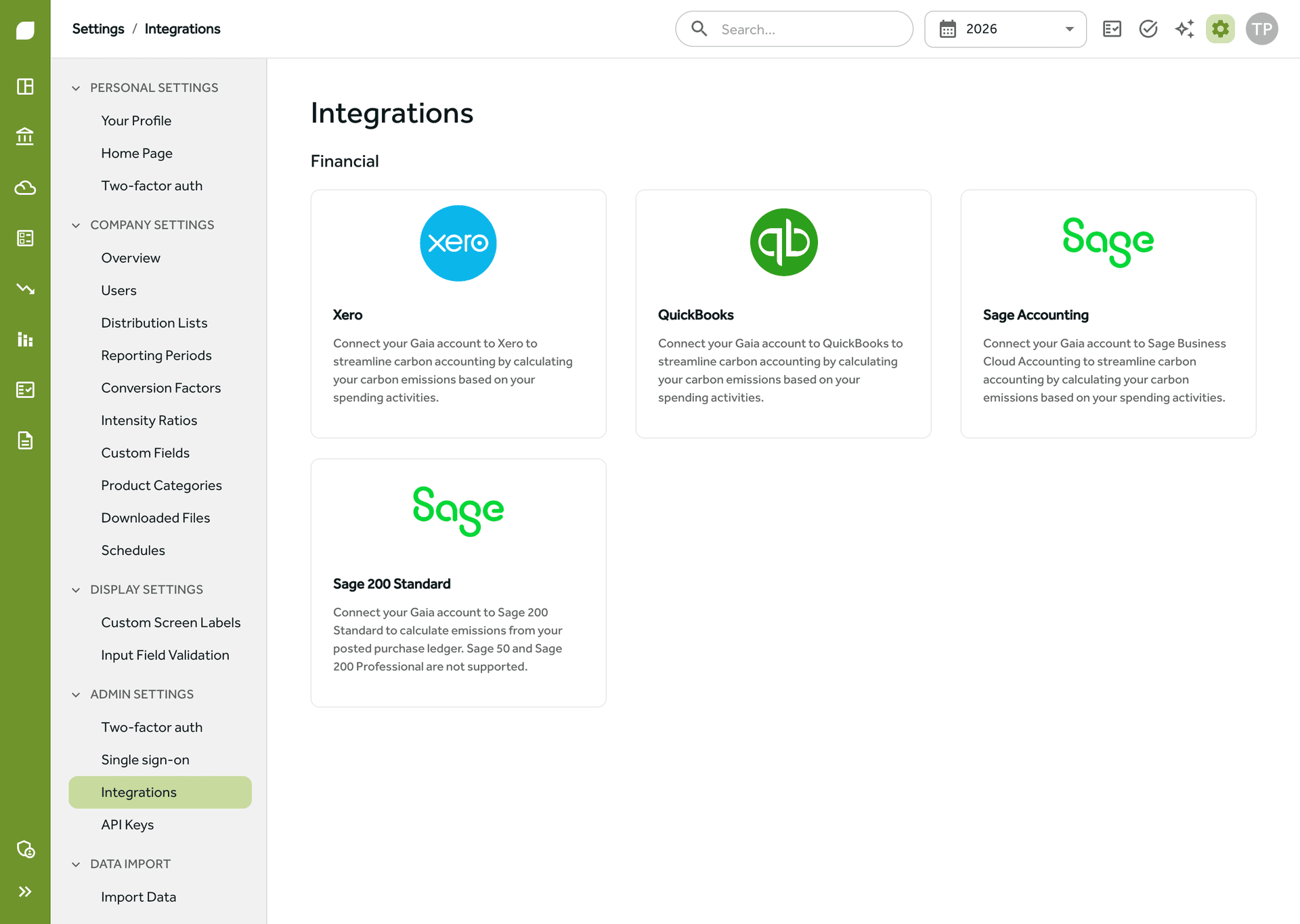
Every route in validates before anything counts
Spreadsheets, accounting integrations, bill extraction or the API: the import wizard checks every row and says exactly what failed and why, so you fix the file instead of hunting through it. See the full walkthrough