
SECR reporting software
Carbon accounting software with SECR reporting for UK businesses
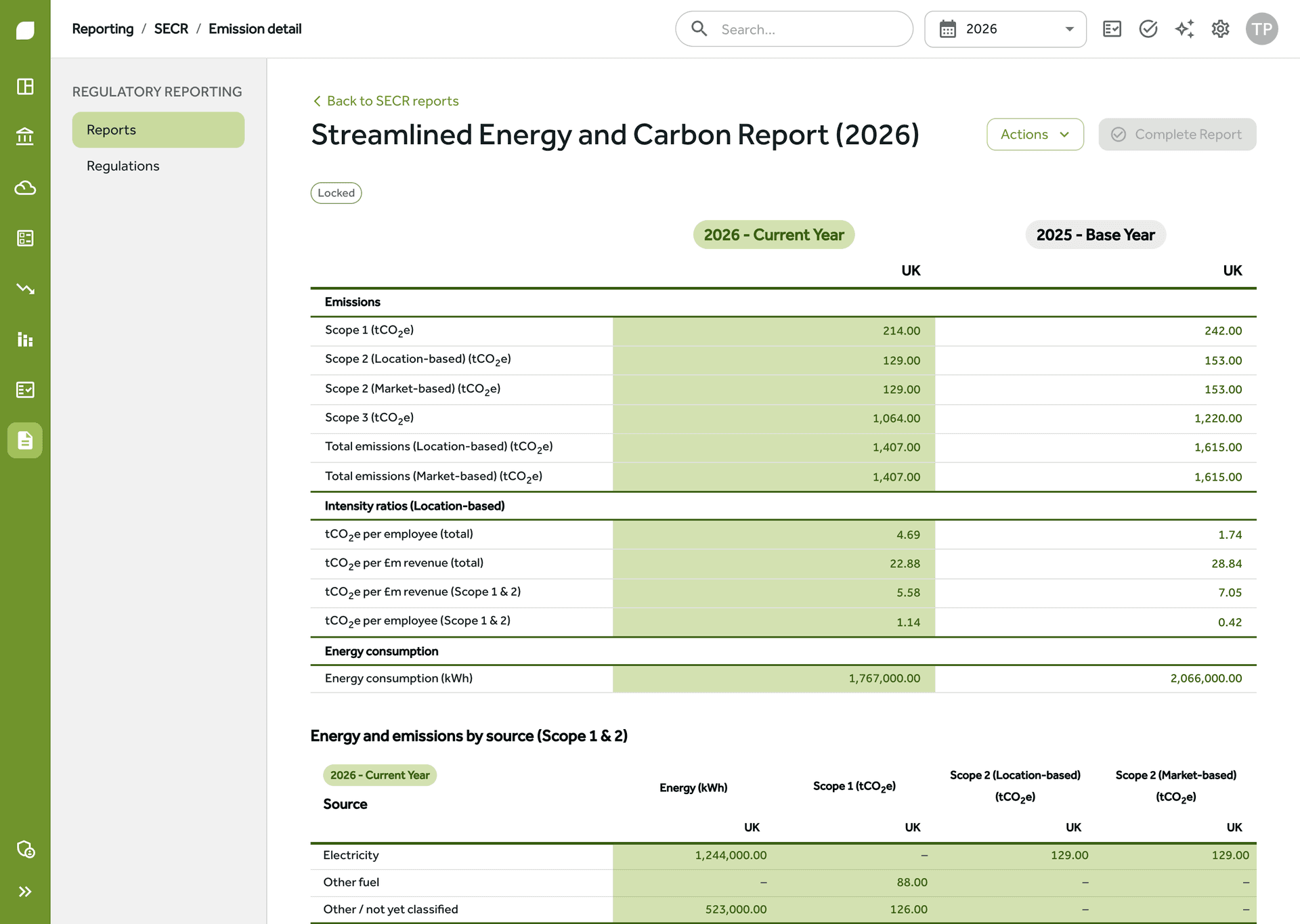
Complex reporting made simple with Gaia
Overcome the unique challenges faced by UK businesses when reporting on carbon emissions
Where SECR sits in your annual report
Streamlined Energy and Carbon Reporting (SECR) is the UK framework, introduced in 2019, that requires large UK companies to report their energy use and greenhouse gas (GHG) emissions every year. It is managed under the Companies (Directors' Report) and Limited Liability Partnerships Regulations 2018, and the name is a clue to where the disclosure lives: in the Directors' Report, inside the annual financial report.
That placement sets the clock. The report follows your financial year and is usually due 6 or 9 months after it ends, so the emissions figures need to be ready when the accounts are. It also explains why SECR tends to land on whoever owns year-end reporting, even though the underlying data comes from operations: buildings, fleets, meters and bills.
Quoted and unquoted duties are different lists
SECR sets one set of duties for quoted companies and a different one for large unquoted companies and Limited Liability Partnerships (LLPs). If you've had conflicting answers about what your firm must disclose, this split is usually why.
Quoted companies
Large unquoted companies and LLPs
Comply with the UK's Streamlined Energy and Carbon Reporting (SECR)
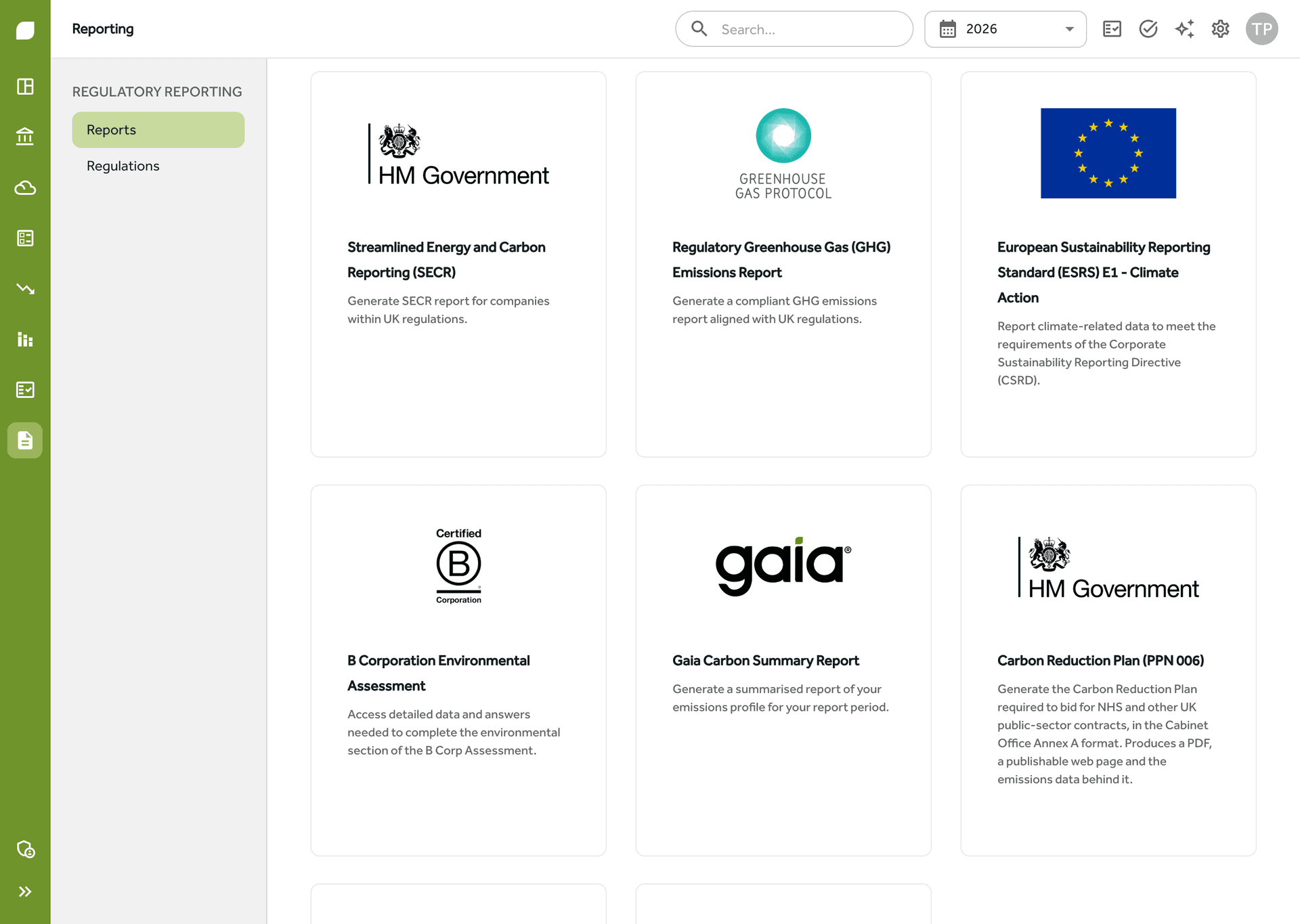
Generate compliance reports, including the Streamlined Energy and Carbon Report (SECR), at the click of a button. Gaia Carbon Accounting has out of the box best practice built-in as standard, enabling you to generate reports quickly and easily with data you can trust.
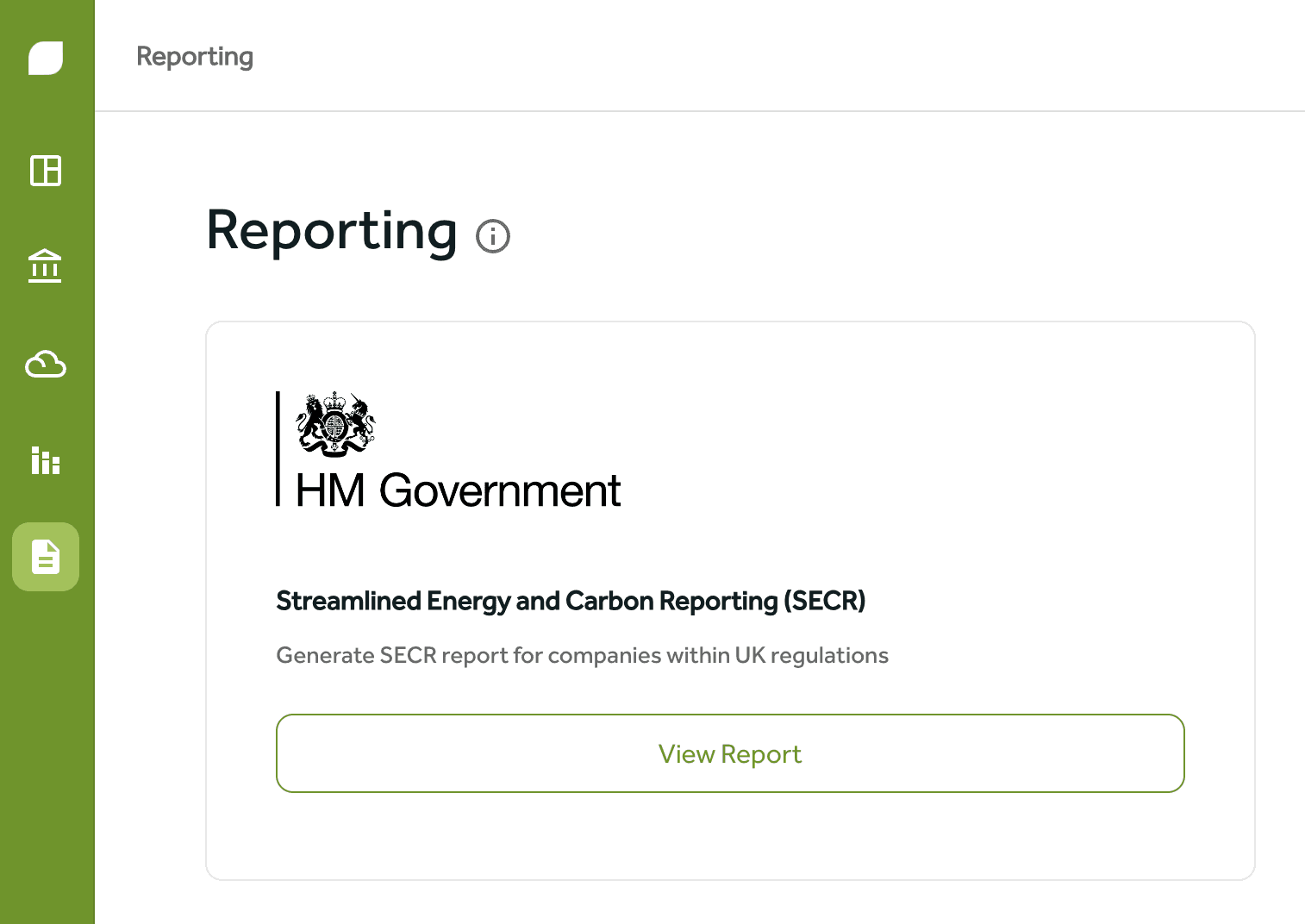
Configure the report to your chosen intensity ratios
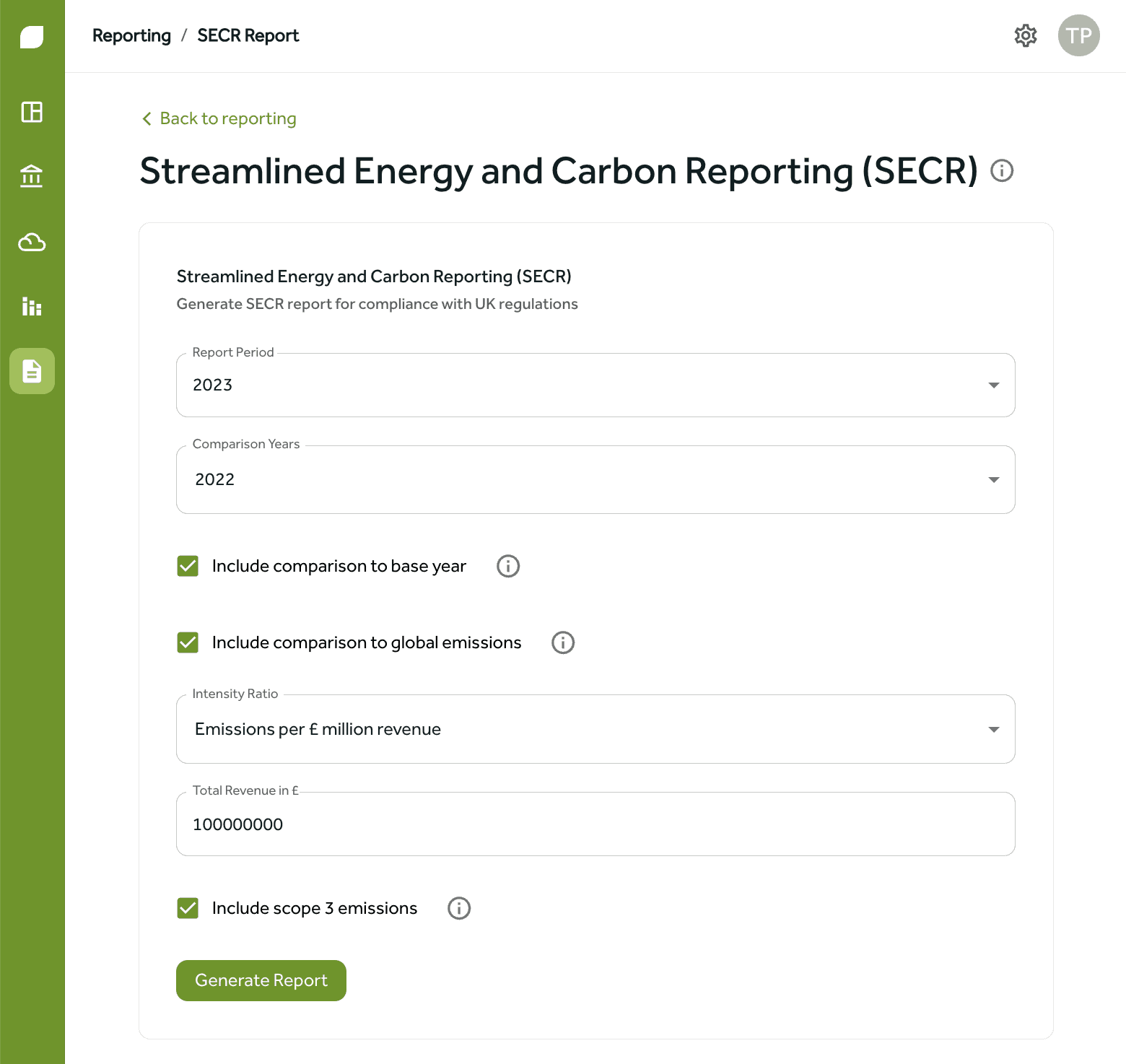
Configure your SECR report with relevant comparison years and select the intensity ratio(s) for your reporting. It is a mandatory requirement to report on at least one intensity ratio.
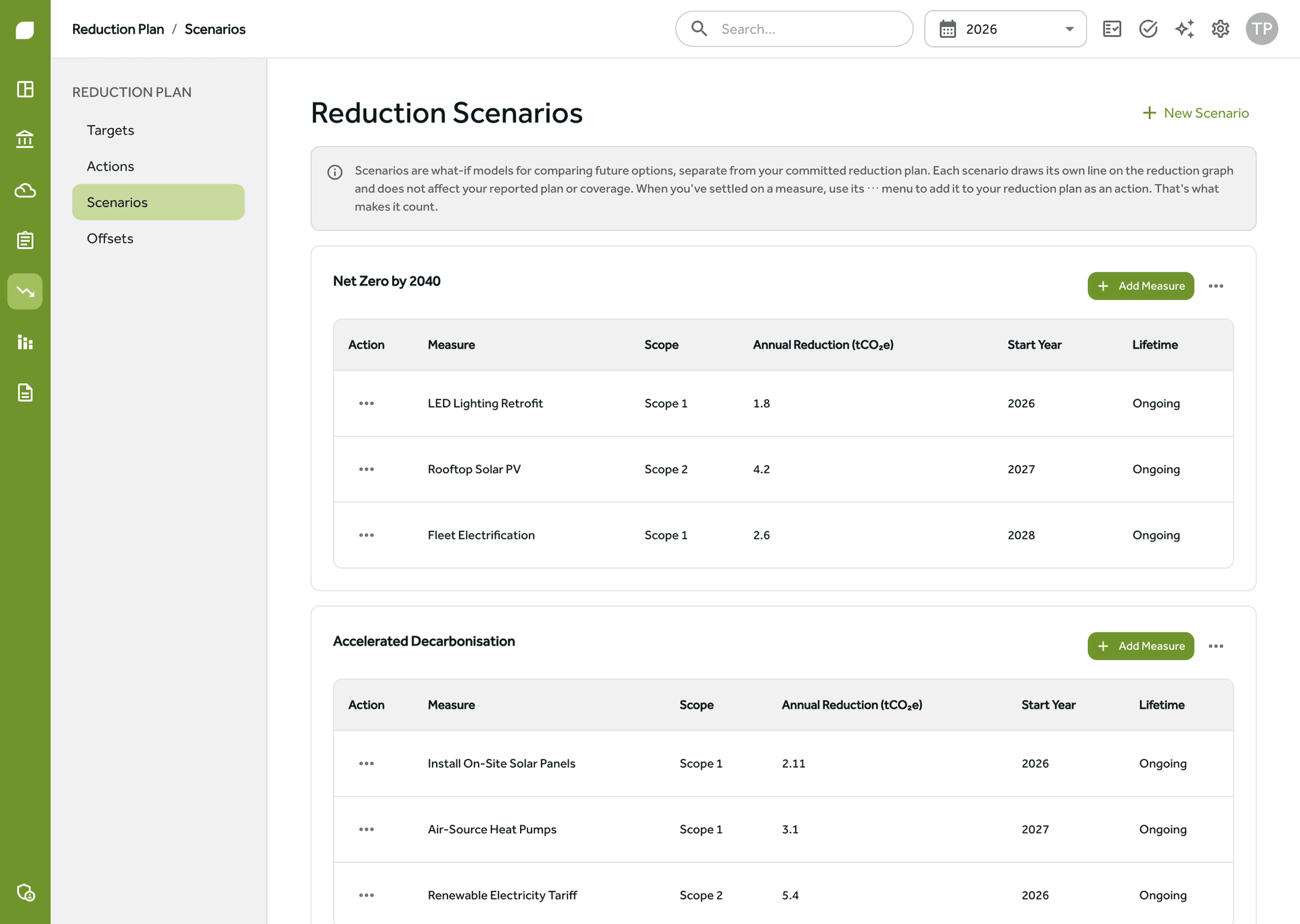
The narrative is the part a spreadsheet can't write
Whichever duty list applies to you, the report has to describe the energy efficiency action you've taken. Gaia's decarbonisation strategy builder keeps your reduction targets, the actions behind them and the scenarios you've modelled in one place. When the report asks what you did this year, the answer is already written down.
See the carbon accounting software for UK businesses in action
Trusted climate data


Climate data you can trust
The Gaia Carbon Accounting platform is aligned with the Greenhouse Gas Protocol (GHG Protocol) methodology ensuring best practice. Gaia uses the leading industry standard data to calculate your carbon emissions, including the annual UK GHG conversion factors provided by DEFRA and DESNZ.
Faster data collection with AI
Save time by leveraging Gaia Carbon Accounting's AI to remove much of the admin burden associated with collecting and reporting on carbon emissions.
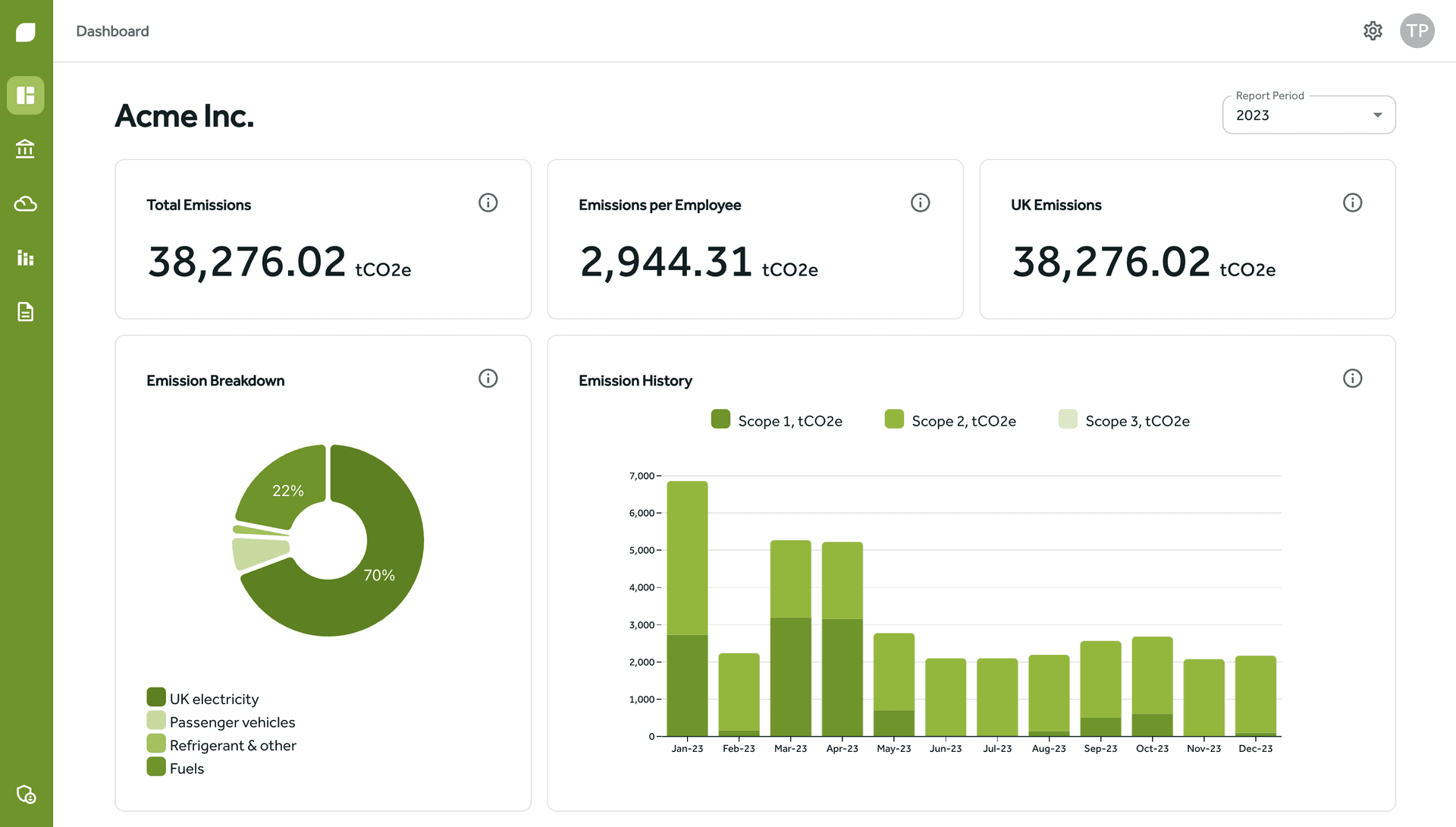
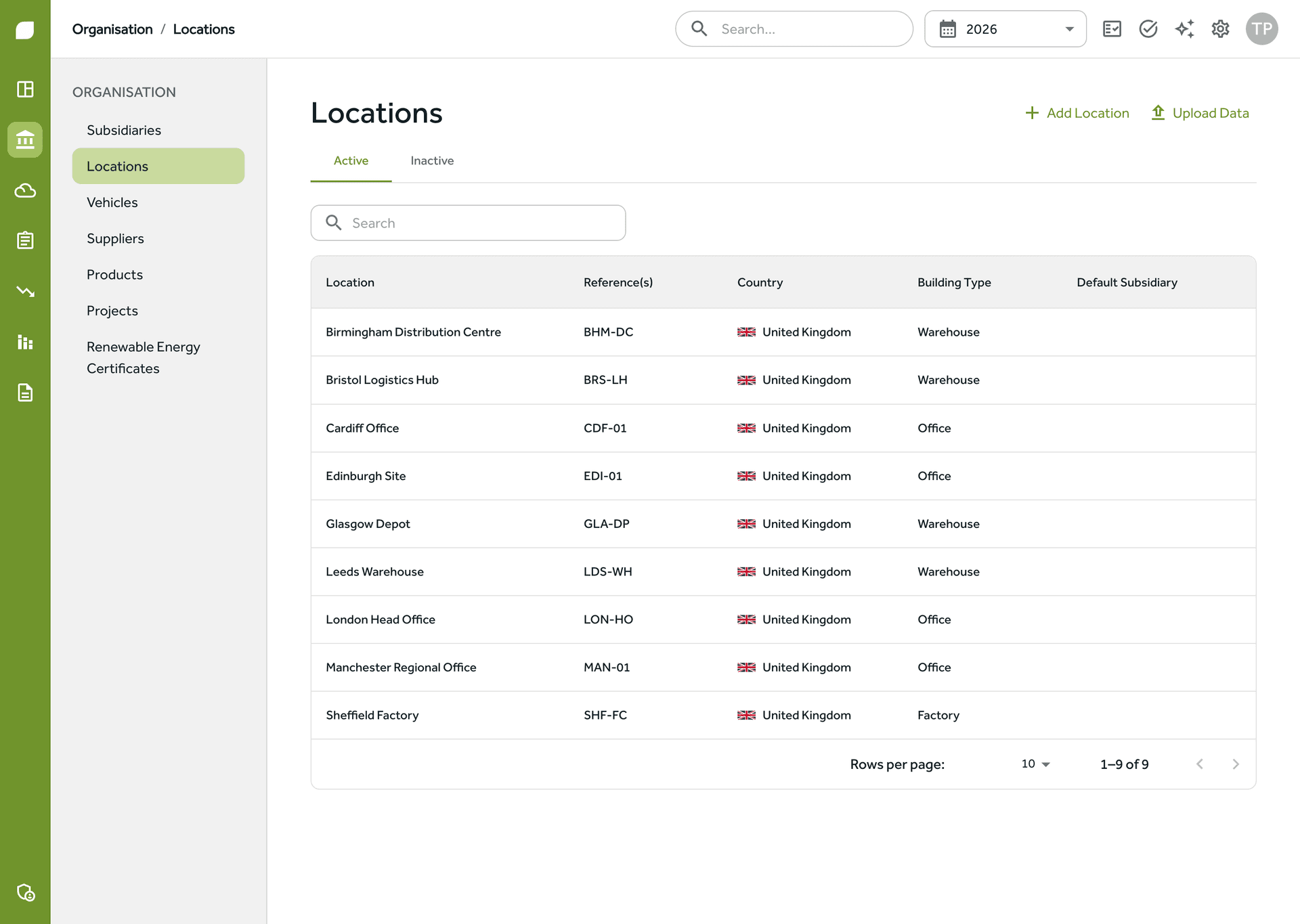
Pin down UK energy use by site and fleet
The report keeps asking where. Large unquoted companies and LLPs report emissions from UK-based energy use, and quoted companies state the proportion of theirs that relates to the UK. Gaia tracks data by location and by vehicle and lets you view emissions by activity, so you can separate a UK site's gas and electricity from the rest of the group and stand behind the split.
What the UK's new standards would mean for SECR reporting
The UK Sustainability Reporting Standards (UK SRS) could replace SECR in the future. The UK government confirmed implementation on 25 February 2026, and the standards are expected to take effect from 2027. They are single materiality, like SECR, require Scope 1 and 2, and bring in Scope 3 when relevant, with an investor focus. Gaia already produces the SECR report and the EU's Corporate Sustainability Reporting Directive (CSRD) disclosure from the same platform and the same data, alongside B Corp and GHG reports. If the framework changes, the data behind your reporting is already collected and structured. Nothing gets rebuilt. Gaia already produces a UK SRS climate disclosure in the four-pillar IFRS S2 shape; our UK SRS reporting page covers it in full.
Common questions about SECR
Does SECR apply to my company?
It applies to all UK quoted companies, whatever their size, and to large unquoted companies and LLPs, meaning those that meet two of three criteria measured across the reporting period: 250 employees, £36m in turnover, or £18m in assets. Quoted companies have one duty list, and large unquoted companies and LLPs share another.
Do we have to report Scope 3?
Not under SECR. It is designed to be low-burden, covering Scope 1 (direct) and Scope 2 (indirect) emissions, the two simplest to measure. The EU's CSRD does require Scope 3, and Gaia measures all three scopes and produces both reports from the same platform and the same data. Our guide SECR vs CSRD: What's the difference? sets the two side by side, and our CSRD reporting page covers that framework.
Is SECR data independently audited?
No. The figures are self-reported and checked within the financial audit, unlike CSRD disclosures, which need an independent auditor. They still face scrutiny, so Gaia keeps the data behind every reported figure ready for audit, with an audit pack view for the evidence behind each number.
What happens if we miss the reporting date?
You break the reporting rules. Fines are the immediate risk, and beyond them a missed disclosure weakens a company's reputation and causes problems with audits.
Where does the energy and emissions data come from?
Wherever it already lives. Gaia connects to Xero, QuickBooks and Sage, supports spreadsheet import and API access, and reads energy and fuel bills uploaded as PDFs or photos, with a person confirming every extracted figure before it counts. The integrations page has the full list.
Have SECR ready when the accounts are
See how Gaia builds the disclosure your Directors' Report needs, with pricing from £300 + VAT per month.