
Carbon accounting for retailers
For most retailers, emissions don't sit in your stores. They sit in the products you buy to sell and the suppliers who make them. Gaia measures Scope 1, 2 and 3 across your whole range and turns messy supplier data into audit-ready reports.
Carbon accounting built for retail supply chains
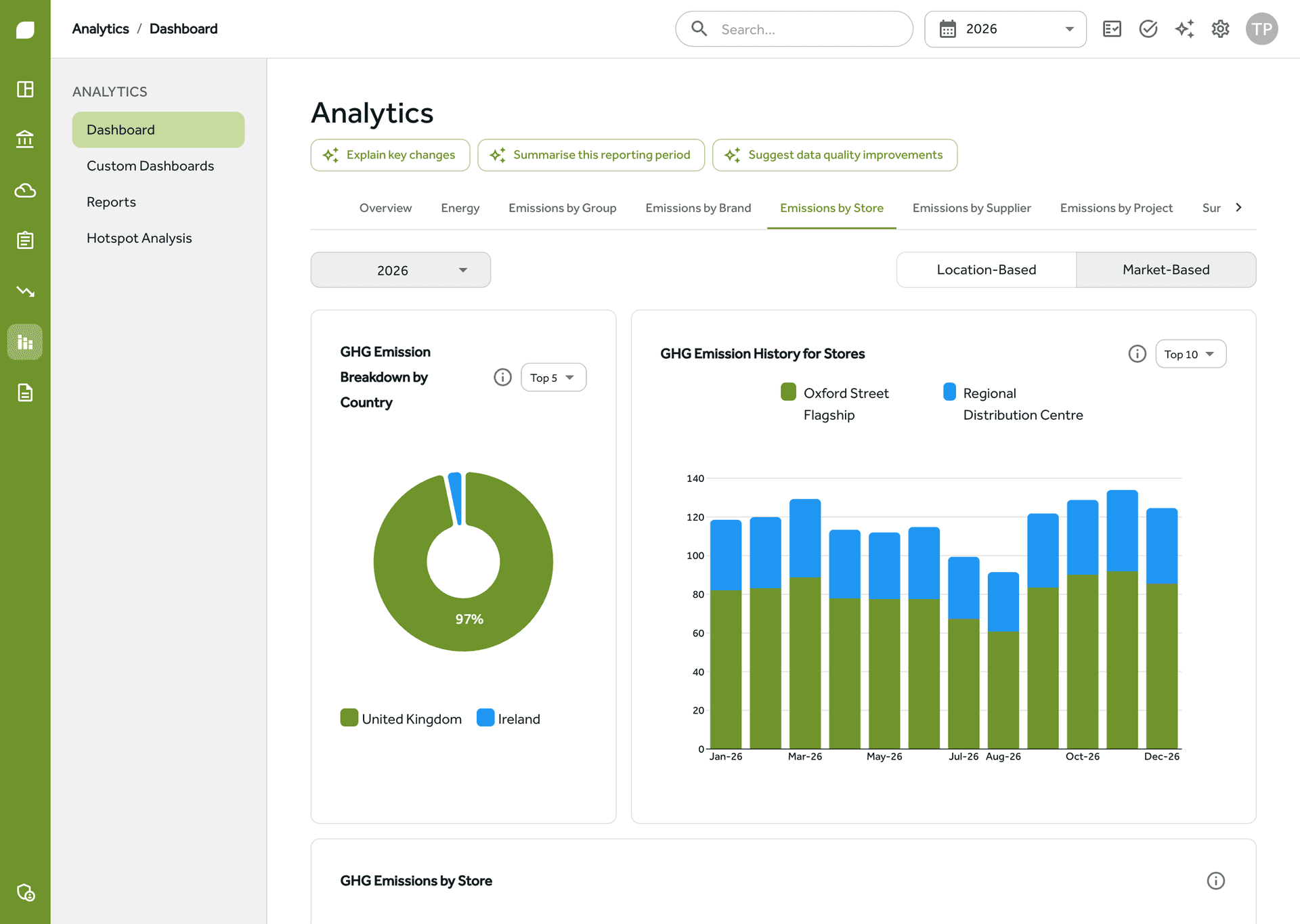
For most retailers, the large majority of emissions sit in Scope 3: the products you buy to sell, plus the suppliers and logistics behind them. Your own stores and offices are a small slice by comparison.
That makes retail carbon reporting a data problem more than anything else. Gaia collects emissions data across hundreds of suppliers and thousands of product lines, then turns it into reports for Streamlined Energy and Carbon Reporting (SECR) and the Corporate Sustainability Reporting Directive (CSRD).
CDP, the environmental disclosure platform, reports that supply chain emissions are on average 11.4 times higher than a company's own operational emissions, based on companies disclosing through its supply chain programme.
The footprint is on your shelves
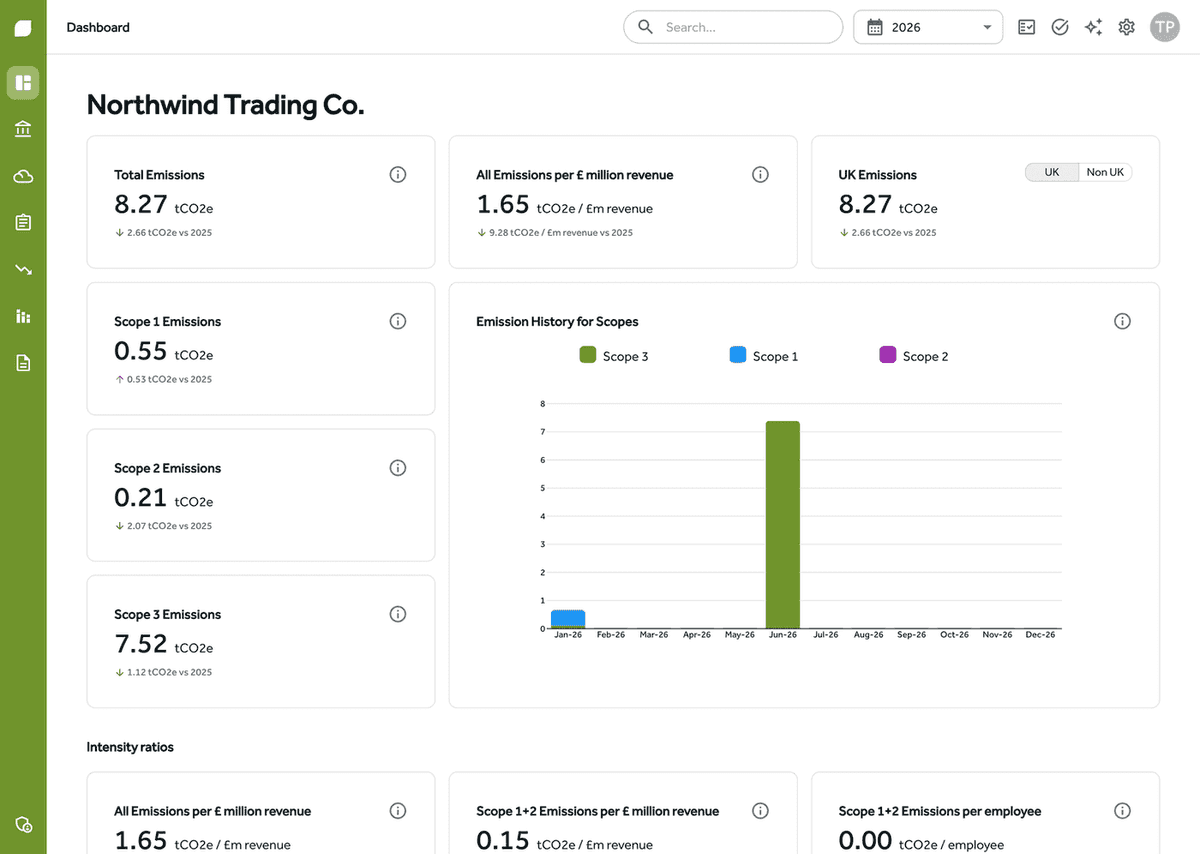
The biggest part of a retailer's footprint is usually the goods themselves, from raw materials through manufacturing to the moment they reach your stores. Gaia measures Scope 3 across your product range, so you can see which categories and suppliers carry the most emissions and where a change would actually move the number.
Hundreds of suppliers, one place to work
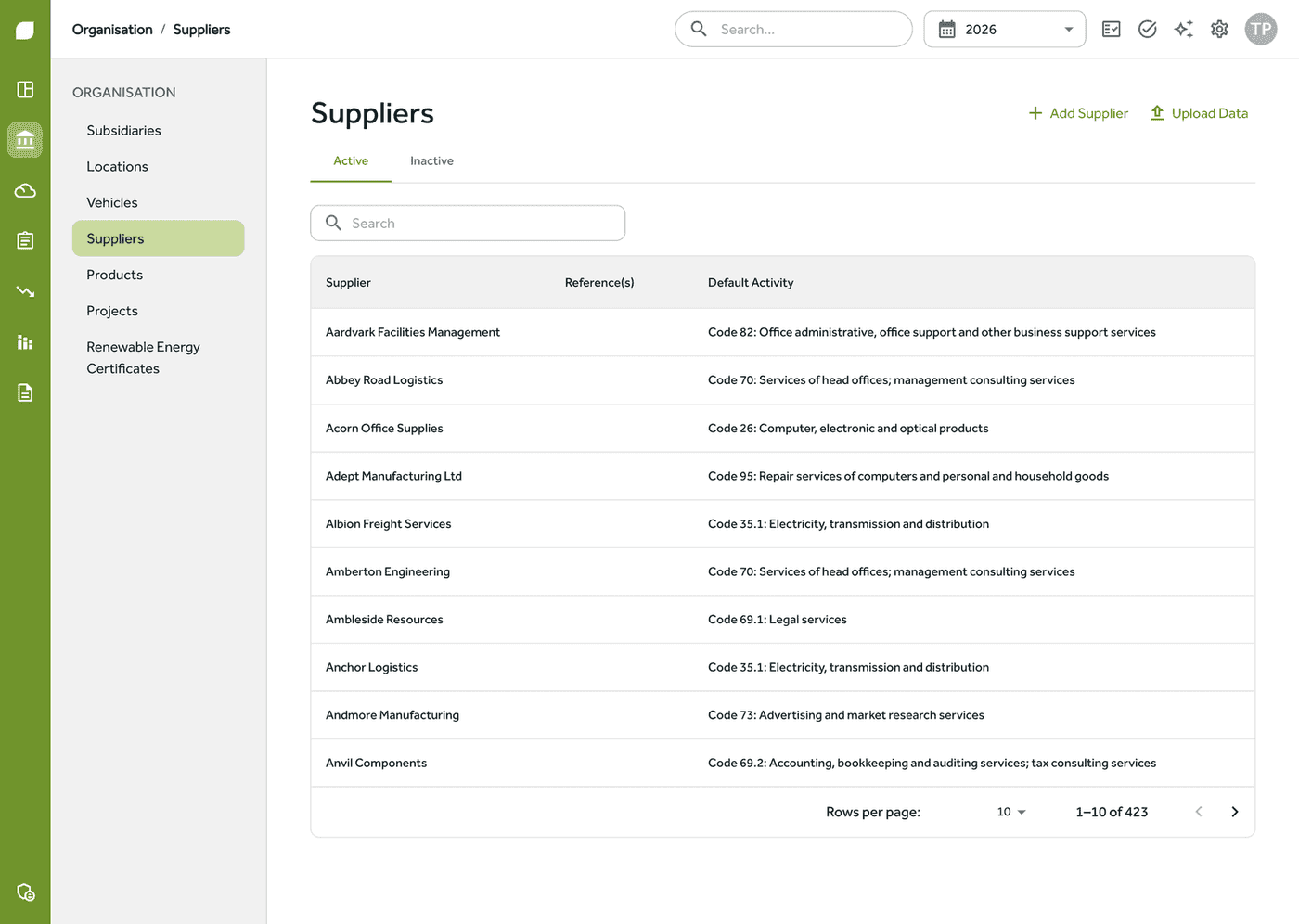
A mid-sized retailer can buy from hundreds of suppliers, each holding data in a different format. Gaia's supplier survey feature sends invitations and collects the replies in one place. Each response is attributed back to the supplier and its answers become calculated emissions against real factors, so you can see coverage across your register at a glance.
Distribution, packaging and store energy
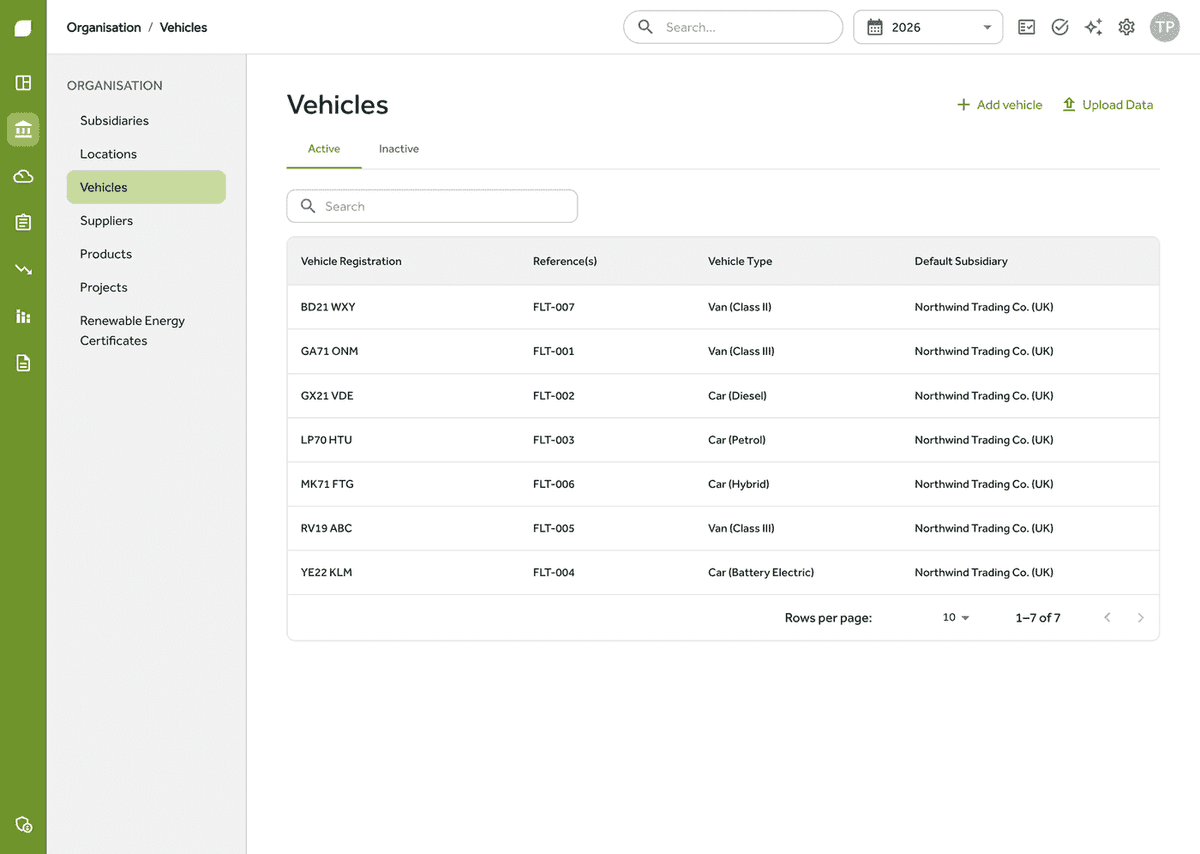
Beyond the products, emissions come from moving stock, packaging it and running your stores. Gaia tracks energy across every location in one view and takes in your logistics and distribution data. Every import is validated row by row, and a rejected row states its reason before anything ends up in a report.
What Gaia helps retailers measure
Gaia uses the Greenhouse Gas Protocol (GHG Protocol) methodology and the UK conversion factors published by the Department for Environment, Food and Rural Affairs (DEFRA) and the Department for Energy Security and Net Zero (DESNZ), so your numbers stand up to scrutiny.
Purchased goods
Store and site energy
Logistics and distribution
Packaging materials
Supplier engagement
Multi-location tracking
Retail carbon accounting, answered
Why does Scope 3 matter so much for retailers?
For most retailers the majority of the footprint sits in Scope 3, and within that, the goods you buy to sell. Gaia focuses on Scope 3 data collection, through supplier surveys and spend-based calculation, so you can measure the part of your footprint that actually drives the total, rather than just your stores and offices.
We work with hundreds of suppliers. How does Gaia handle all that data?
Gaia's supplier survey feature sends invitations and gathers the responses in one place, with each reply attributed back to the supplier and a coverage percentage across your register. Spreadsheets of spend and activity data import through a wizard that validates every row and states the reason when one is rejected, so nobody is rekeying data from hundreds of documents.
Can Gaia produce SECR and CSRD reports?
Yes. Gaia generates audit-ready reports for Streamlined Energy and Carbon Reporting (SECR) and the Corporate Sustainability Reporting Directive (CSRD), along with B Corp and GHG Protocol formats. You can export each one as a web link or a PDF.
What if a supplier can't give us emissions data?
Retail chains rarely have complete data on day one. Where a supplier can't provide figures, Gaia calculates spend-based emissions using DEFRA factors, and the data-quality mix shows how much of your footprint is measured and how much is spend-based, so you can prioritise the suppliers and categories worth chasing for primary data.
Does Gaia connect to the systems we already use?
Gaia integrates with Xero, QuickBooks and Sage, and offers application programming interface (API) access, so financial and operational data can flow in without manual exports. From there you can build a decarbonisation strategy, and if you buy offsets, Gaia records them in an offsets register (registry, vintage, serial range, retirement certificate) and reports them gross-first: offsets sit alongside your scope totals rather than reducing them, which is exactly what a client or auditor wants to see. Gaia does not sell credits.
Trusted carbon data



Aligned with the standards your reports rely on
Gaia is aligned with the Greenhouse Gas Protocol (GHG Protocol) methodology and uses recognised industry-standard data to calculate your emissions, including the annual UK conversion factors published by the Department for Environment, Food and Rural Affairs (DEFRA) and the Department for Energy Security and Net Zero (DESNZ).
See it in sixty seconds
Nine real product screens in the order you would meet them. Press play, or step through at your own pace.
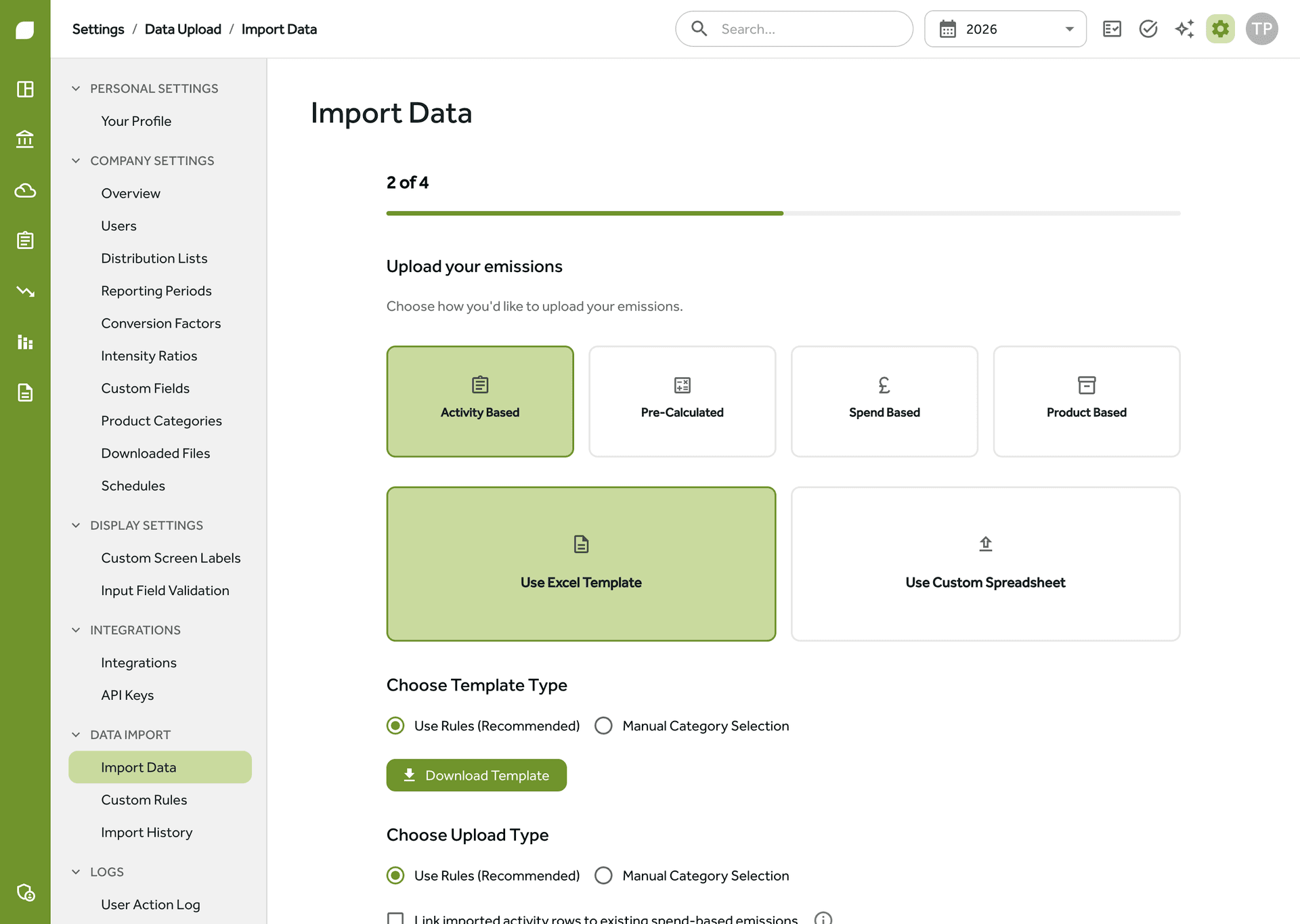
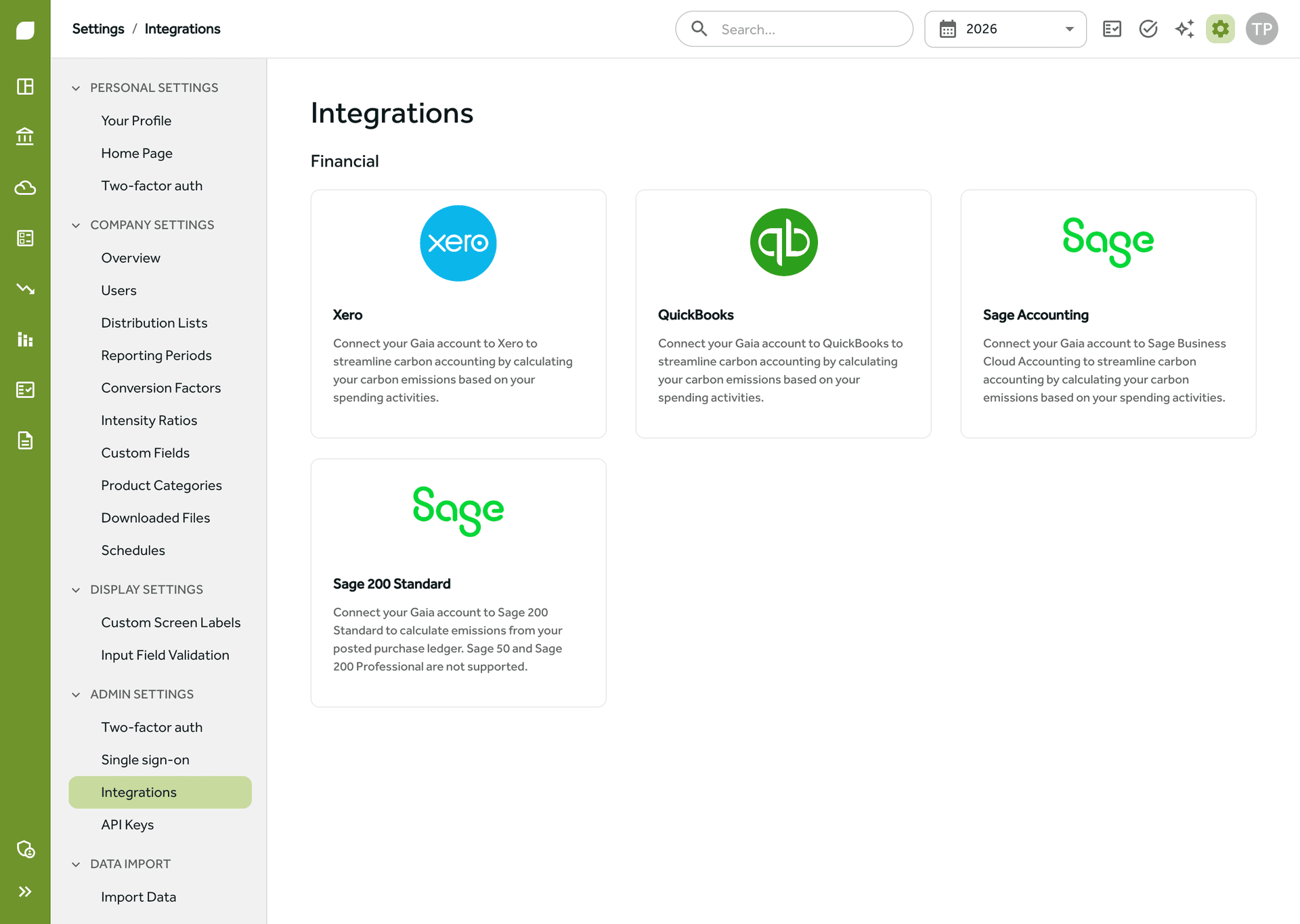
Every route in validates before anything counts
Spreadsheets, accounting integrations, bill extraction or the API: the import wizard checks every row and says exactly what failed and why, so you fix the file instead of hunting through it. See the full walkthrough