
Carbon accounting built for construction
Most carbon software misses where construction's emissions actually sit: in the materials you buy and the fuel you burn on site. Gaia measures Scope 1, 2 and 3 across every project and produces audit-ready reports, without the spreadsheets or the consultants.
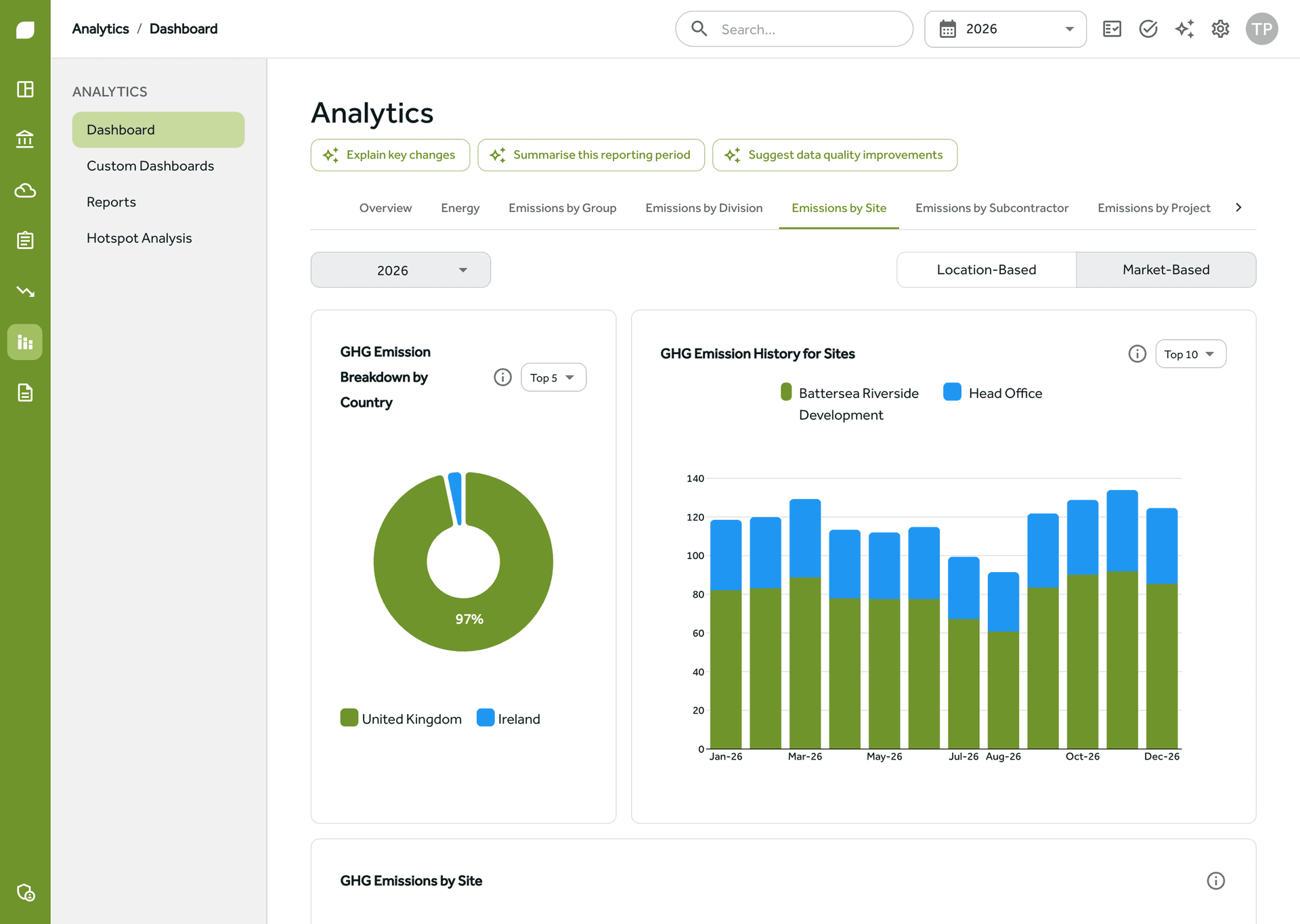
Trusted by UK contractors


Why construction carbon is different
Construction firms carry one of the most complex carbon footprints of any sector. Most of it sits in Scope 3: the emissions embodied in cement, steel and concrete before they ever reach site, plus the diesel, plant and temporary power a live project runs on. The data is scattered across suppliers, subcontractors and sites, and it changes with every job.
Gaia brings that data into one place. You can measure a project properly, meet your Streamlined Energy and Carbon Reporting (SECR) and Corporate Sustainability Reporting Directive (CSRD) obligations, and give clients a credible plan to build with less carbon.
The buildings and construction sector accounts for around 37% of global energy- and process-related carbon emissions, according to the United Nations Environment Programme. Much of that is locked into materials before a site is even handed over.
See the carbon locked into your materials
Cement, steel and concrete make up a large share of a project's footprint before a wall goes up. With Gaia you import the figures from delivery notes and invoices as spreadsheets, with every row validated, and it calculates the embodied emissions for you using recognised emission factors. Scope 3 stops being guesswork.
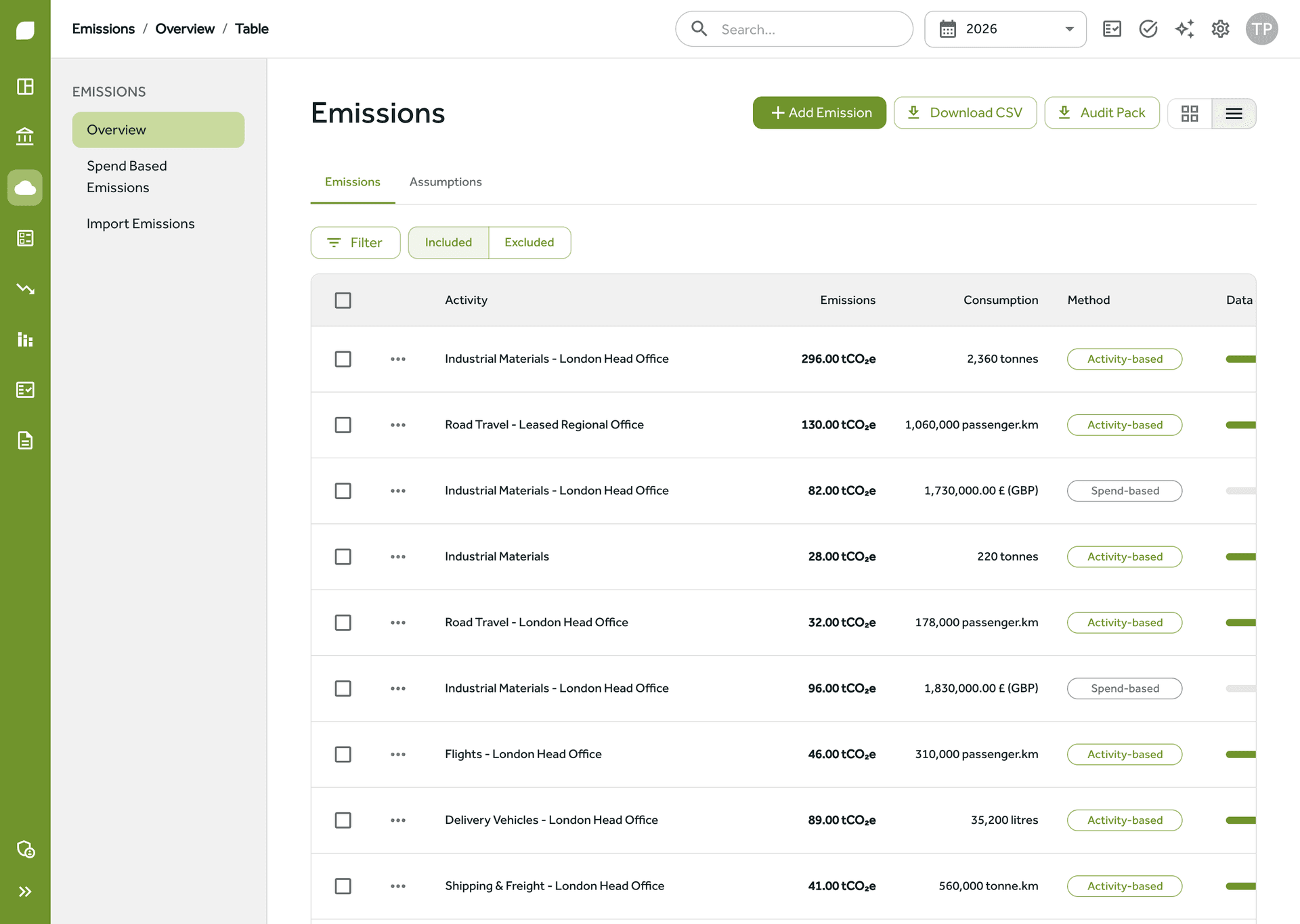
Track fuel, plant and generators across every site
Live sites run on diesel, generators and temporary power, and no two projects look the same. Gaia tracks your Scope 1 and 2 energy use across every site in one view, so you can see which projects and activities drive the most emissions and act on them first.
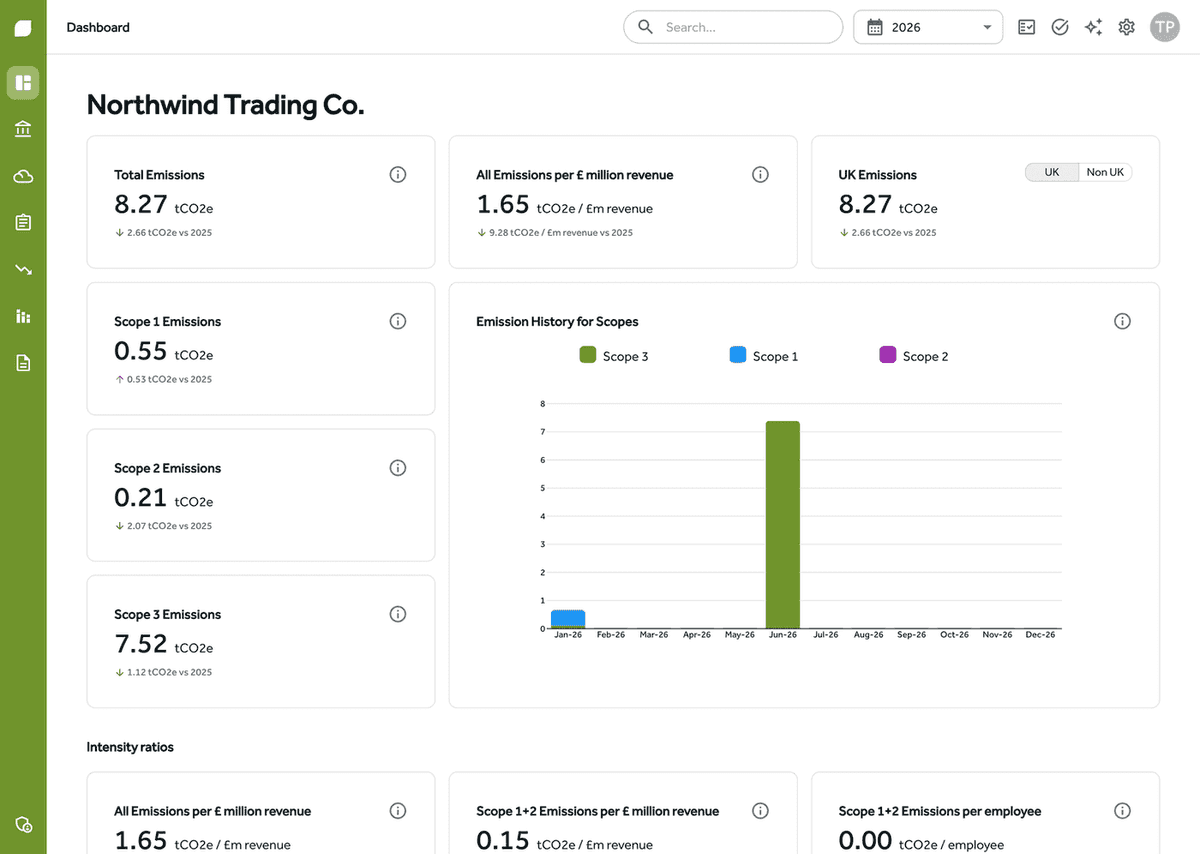
Bring subcontractor and supplier data into one place
Construction supply chains are fragmented and built around individual projects, with dozens of subcontractors on any job. Gaia's supplier engagement tools collect emissions data straight from the firms you work with. When a return is missing, spend-based factors cover the gap, and the data-quality mix shows how much of the footprint is measured rather than estimated, so your reporting isn't held up.
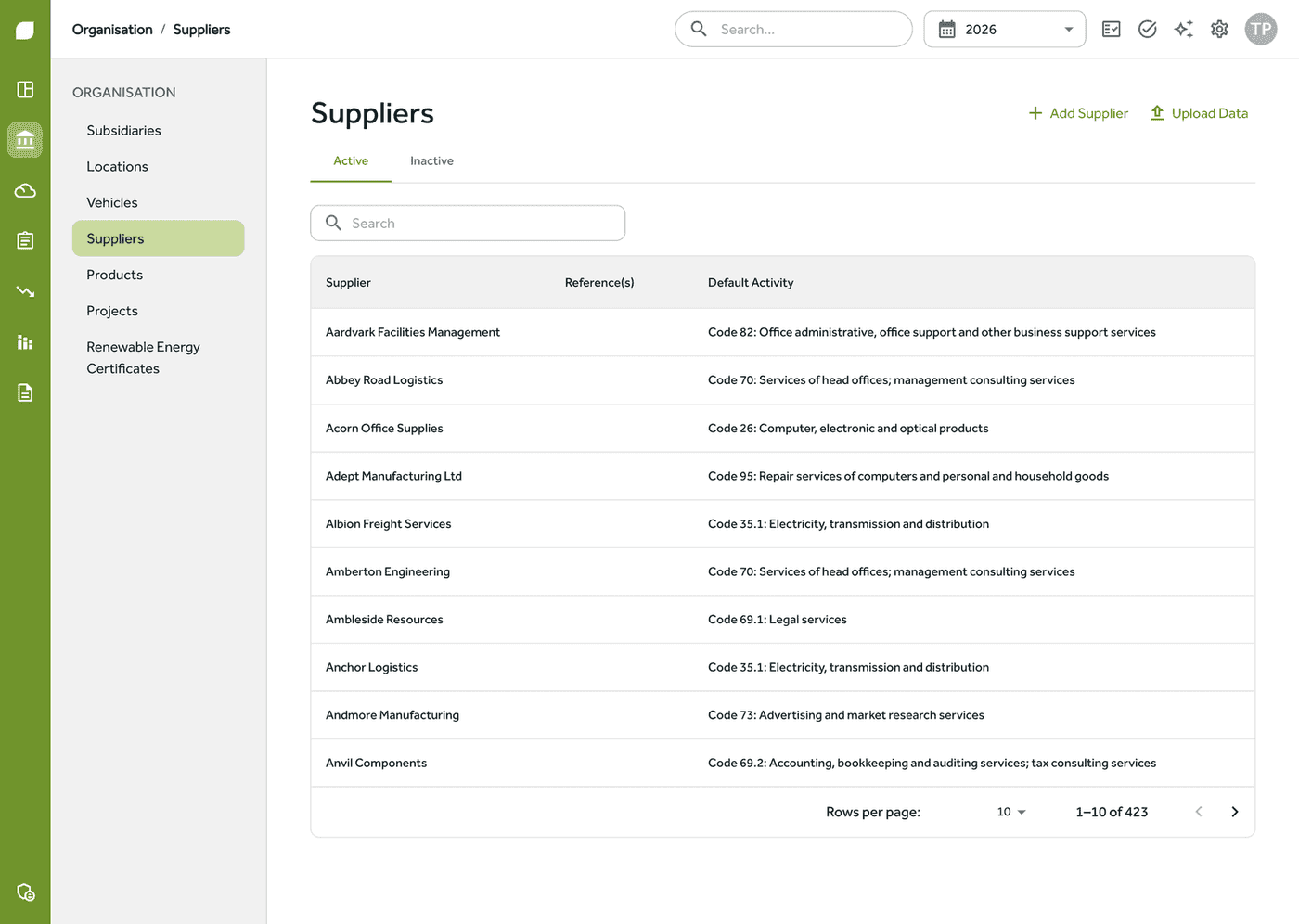
What Gaia helps construction firms measure
A full picture of a project's footprint, from the quarry to handover.
Materials & embodied carbon
Site energy, fuel & plant
Fleet, logistics & deliveries
Waste & water
Cut the admin with AI
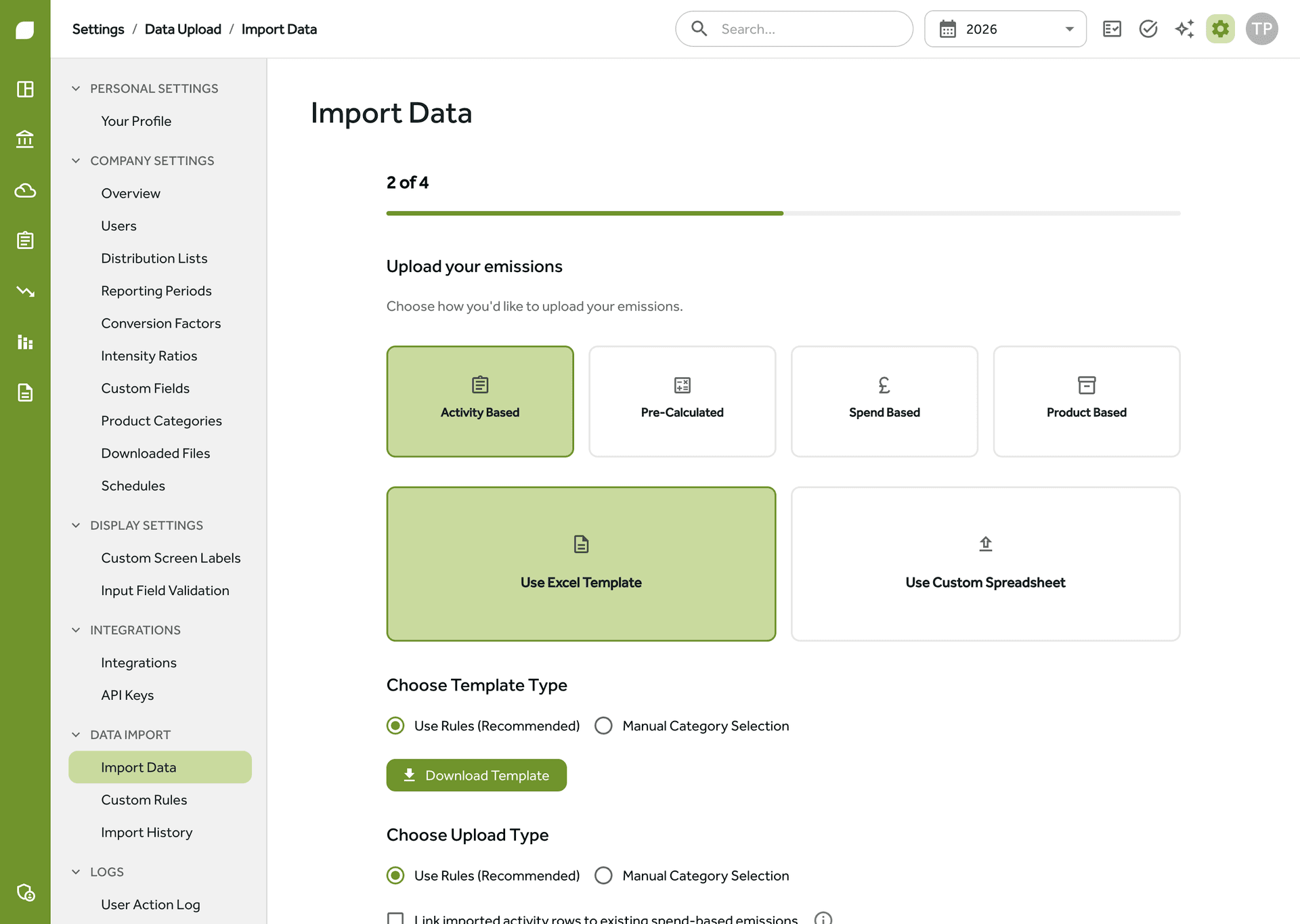
Gathering data is the hardest part of carbon accounting in construction. Upload fuel and energy bills as PDFs or photos and Gaia's document extraction reads the figures, with a person confirming them before anything counts. Spreadsheets and CSVs import through a wizard that validates every row and gives a reason for anything it rejects. That saves your team hours of manual entry.
Audit-ready reports for SECR, CSRD and beyond
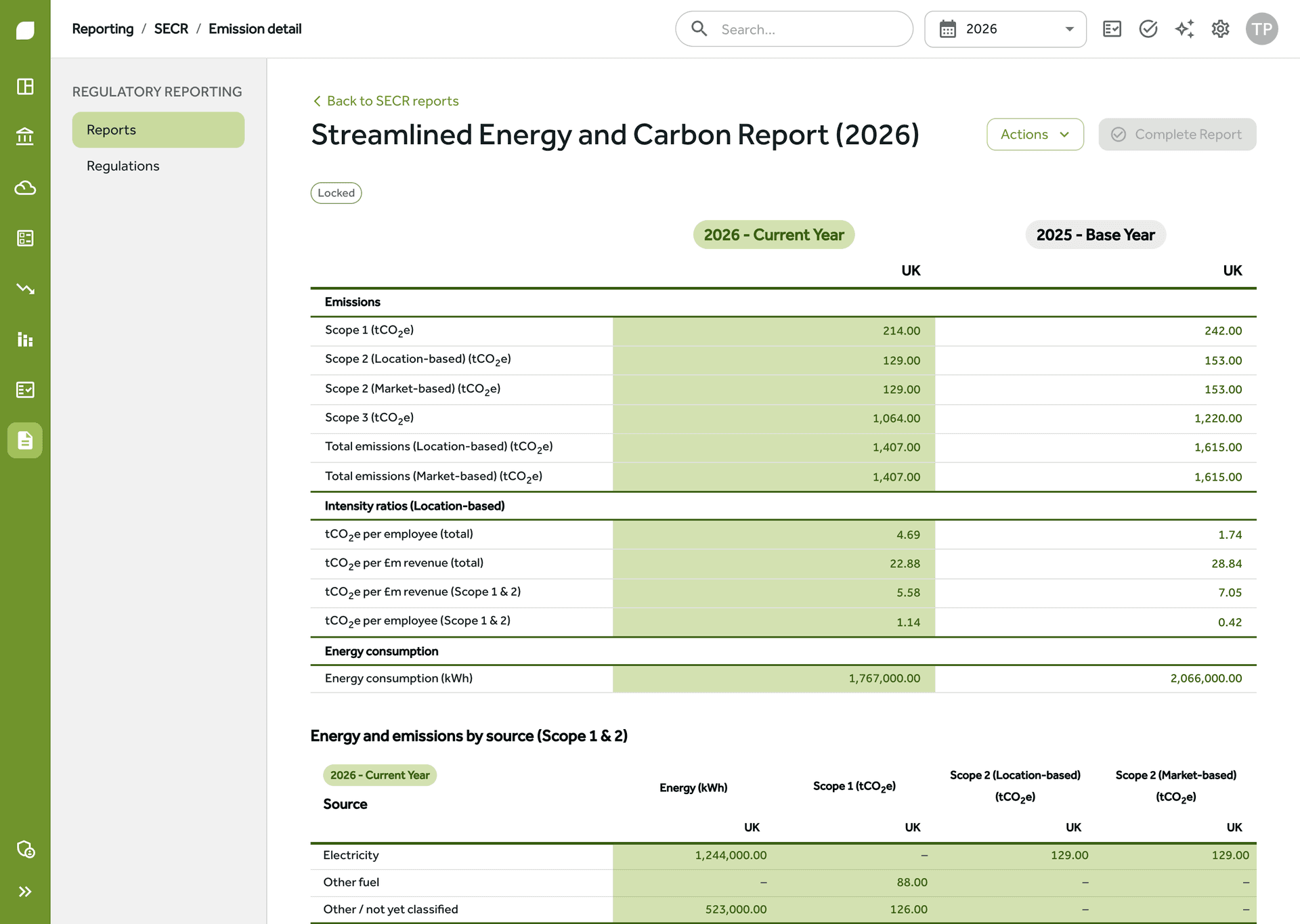
Generate a Streamlined Energy and Carbon Reporting (SECR) report at the click of a button, with the underlying data ready to support the Corporate Sustainability Reporting Directive (CSRD) and whole-life carbon frameworks used across the sector, such as PAS 2080 (Carbon Management in Buildings and Infrastructure). Bidding for public-sector frameworks? Gaia also generates the PPN 006 Carbon Reduction Plan those tenders require. Best practice is built in, so your reports hold up to scrutiny from clients and auditors.
Trusted carbon data


Aligned with the standards your reports rely on
Gaia is aligned with the Greenhouse Gas Protocol (GHG Protocol) methodology and uses recognised industry-standard data to calculate your emissions, including the annual UK conversion factors published by the Department for Environment, Food and Rural Affairs (DEFRA) and the Department for Energy Security and Net Zero (DESNZ).
Construction carbon accounting FAQs
Can Gaia measure embodied carbon in construction materials?
Yes. Gaia captures data on the materials you buy, from cement and steel to concrete, and calculates the embodied emissions as part of your Scope 3 footprint using recognised emission factors.
Does Gaia work across multiple sites and projects?
It does. You can track energy, fuel and activity data across as many sites and projects as you need, and view emissions by location or activity to see where to focus.
Can Gaia produce SECR reports for our business?
Yes. Gaia generates Streamlined Energy and Carbon Reporting (SECR) reports at the click of a button, with best practice built in and the data behind every figure ready for audit.
How does Gaia handle subcontractor and supplier data?
Gaia's supplier engagement tools request emissions data directly from your subcontractors and suppliers. A late return doesn't delay your reporting: spend-based factors cover the gap in the meantime, and the data-quality mix shows how much of the footprint is measured rather than estimated.
Which systems does Gaia integrate with?
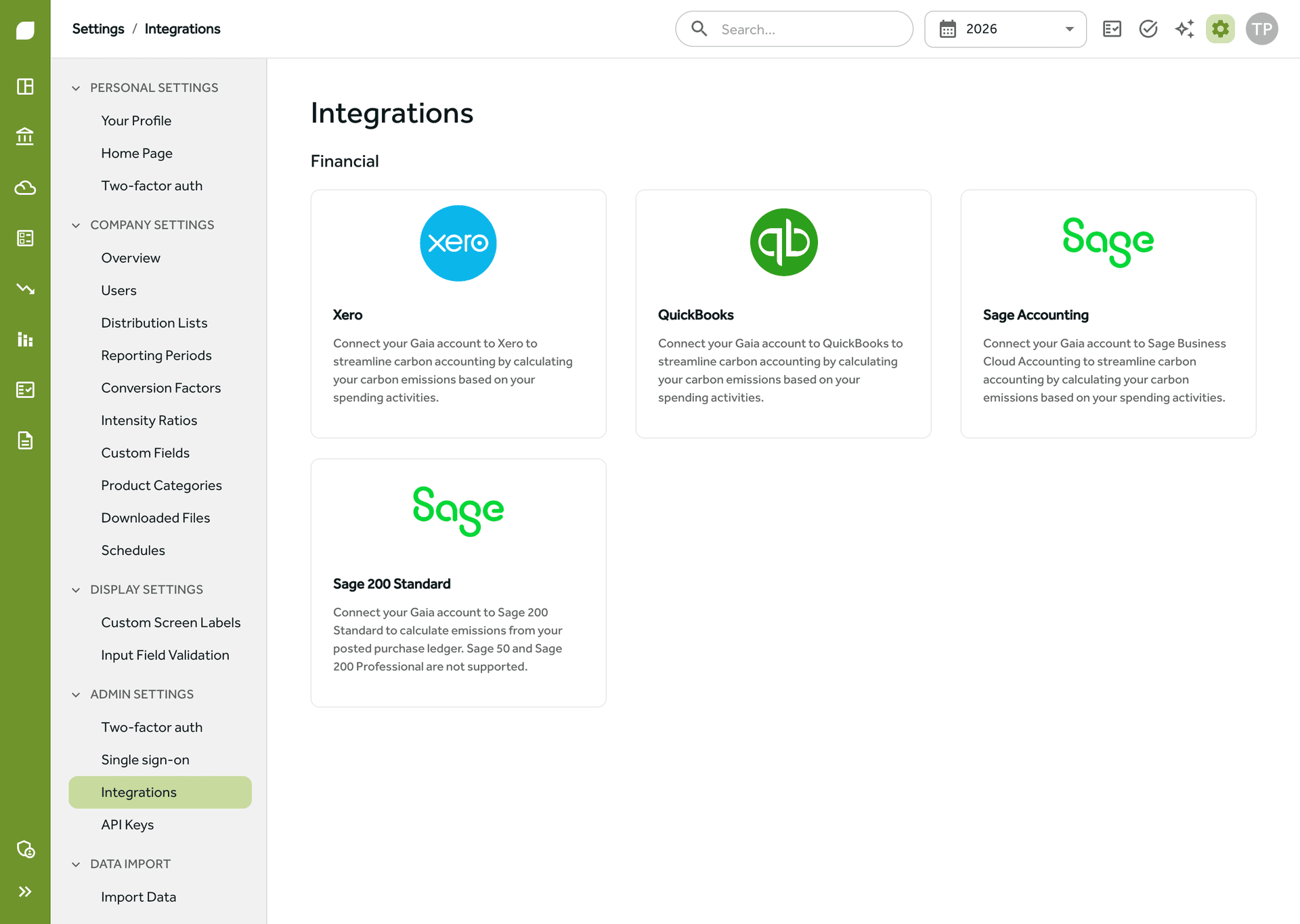
Gaia connects to accounting and finance systems including Xero, QuickBooks and Sage, and offers API access so you can bring existing data straight in.
See it in sixty seconds
Nine real product screens in the order you would meet them. Press play, or step through at your own pace.
Every route in validates before anything counts
Spreadsheets, accounting integrations, bill extraction or the API: the import wizard checks every row and says exactly what failed and why, so you fix the file instead of hunting through it. See the full walkthrough