
Carbon accounting for manufacturers
Manufacturing emissions don't sit in one place. Some of it comes straight out of your processes. A chunk comes from the energy running your lines, and more is locked into the raw materials you buy. Gaia measures Scope 1, 2 and 3 across every site and turns the numbers into audit-ready reports, so you're not stuck in spreadsheets or waiting on consultants.
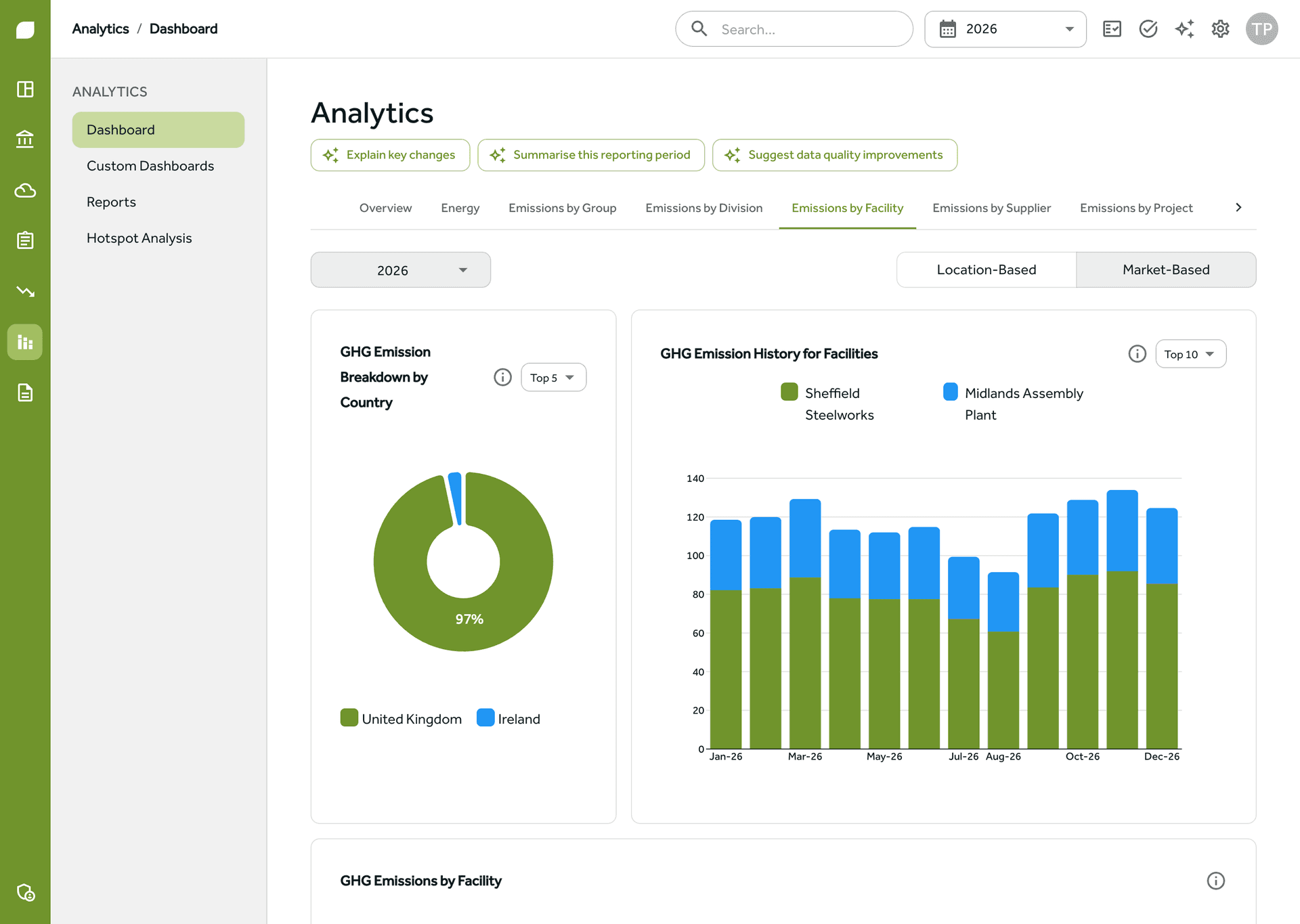
Built for how manufacturers actually emit
A factory's carbon footprint is rarely simple. Some processes release carbon dioxide directly through chemical reactions. Your furnaces and kilns burn a lot of energy, and every input you buy arrives with emissions already attached. Gaia pulls all of it into one place so you can report accurately and see where to cut first.
Your customers are asking harder questions too. More of them want carbon figures for the products they buy, which means you need supplier and materials data you can stand behind. Gaia gives you that foundation, measured with the Greenhouse Gas Protocol (GHG Protocol) methodology and UK government conversion factors.
Carbon released by the process itself
Making cement, steel, glass or chemicals can release carbon dioxide straight from the reaction itself, separate from the energy you use. These process emissions are easy to undercount if you only track fuel and electricity. Gaia captures them as part of your Scope 1 figure, so your total reflects what the plant really emits.
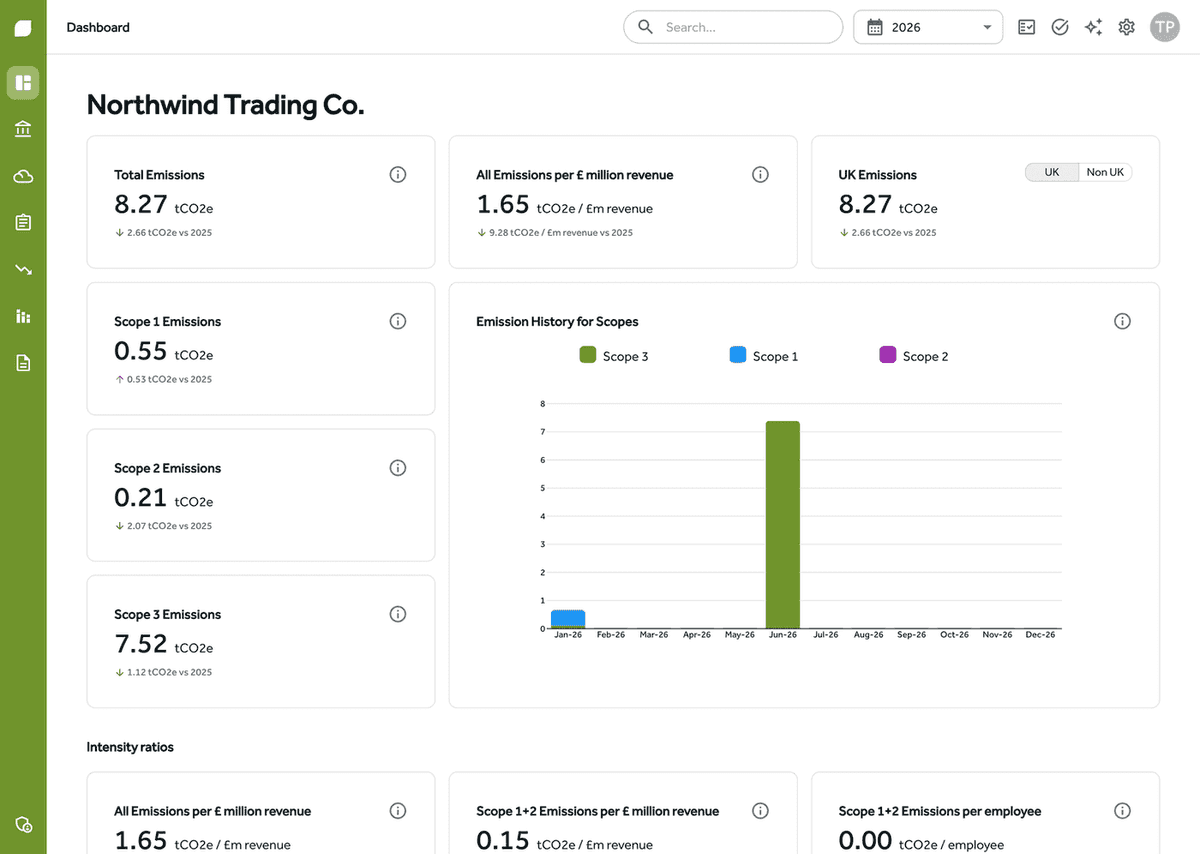
Energy-hungry sites, measured plant by plant
Furnaces, kilns, compressors and boilers make manufacturing one of the more energy-intensive things you can do. Gaia tracks your Scope 1 and 2 energy across every site in one view, so you can compare plants and see which processes are driving the load.
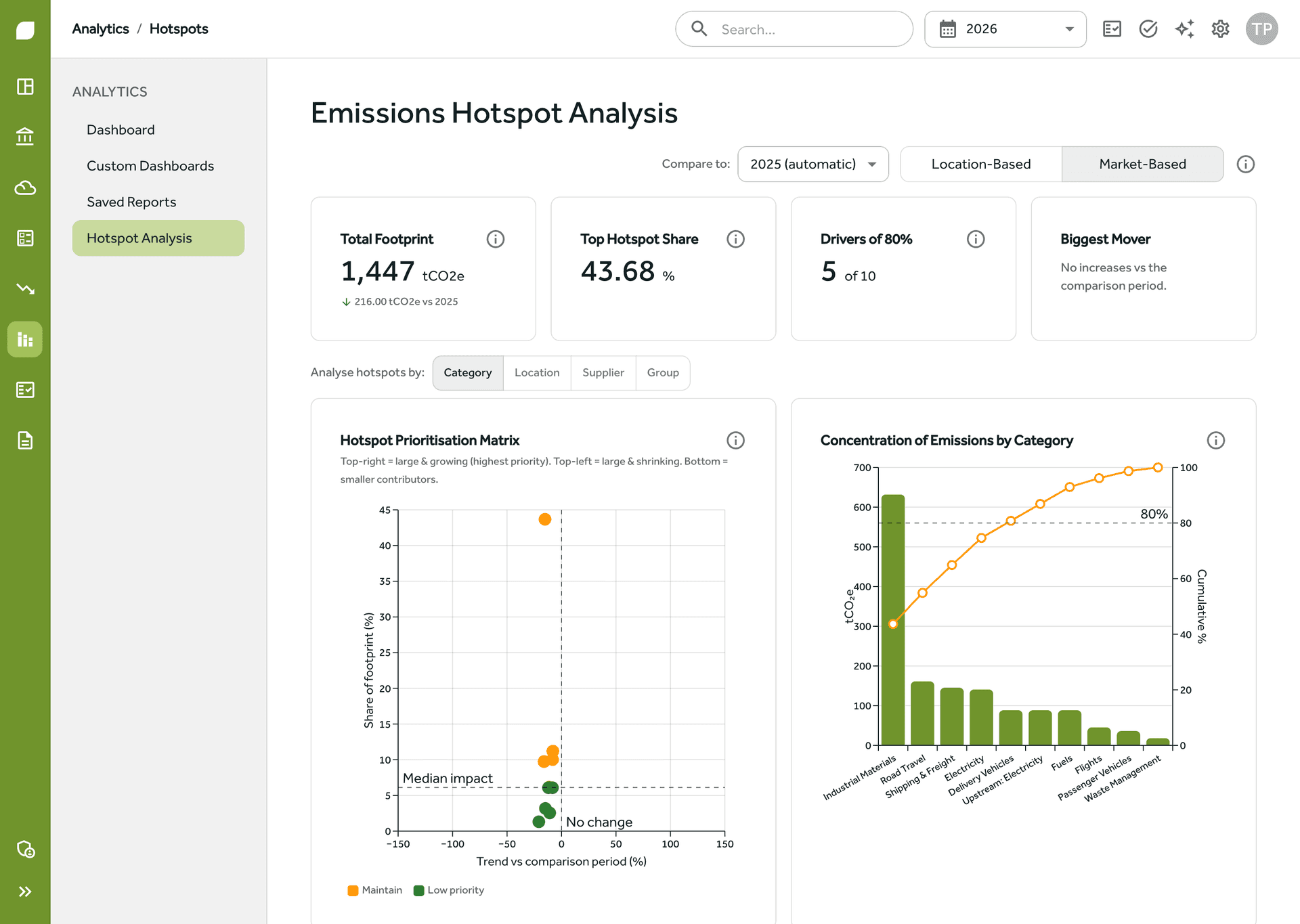
Hundreds of inputs, one Scope 3 picture
A single product line can pull in raw materials and components from dozens of suppliers, and purchased goods usually dominate a manufacturer's Scope 3. Gaia lets you send suppliers a survey to gather their figures and collects the responses in one place, so you're not chasing numbers by email.
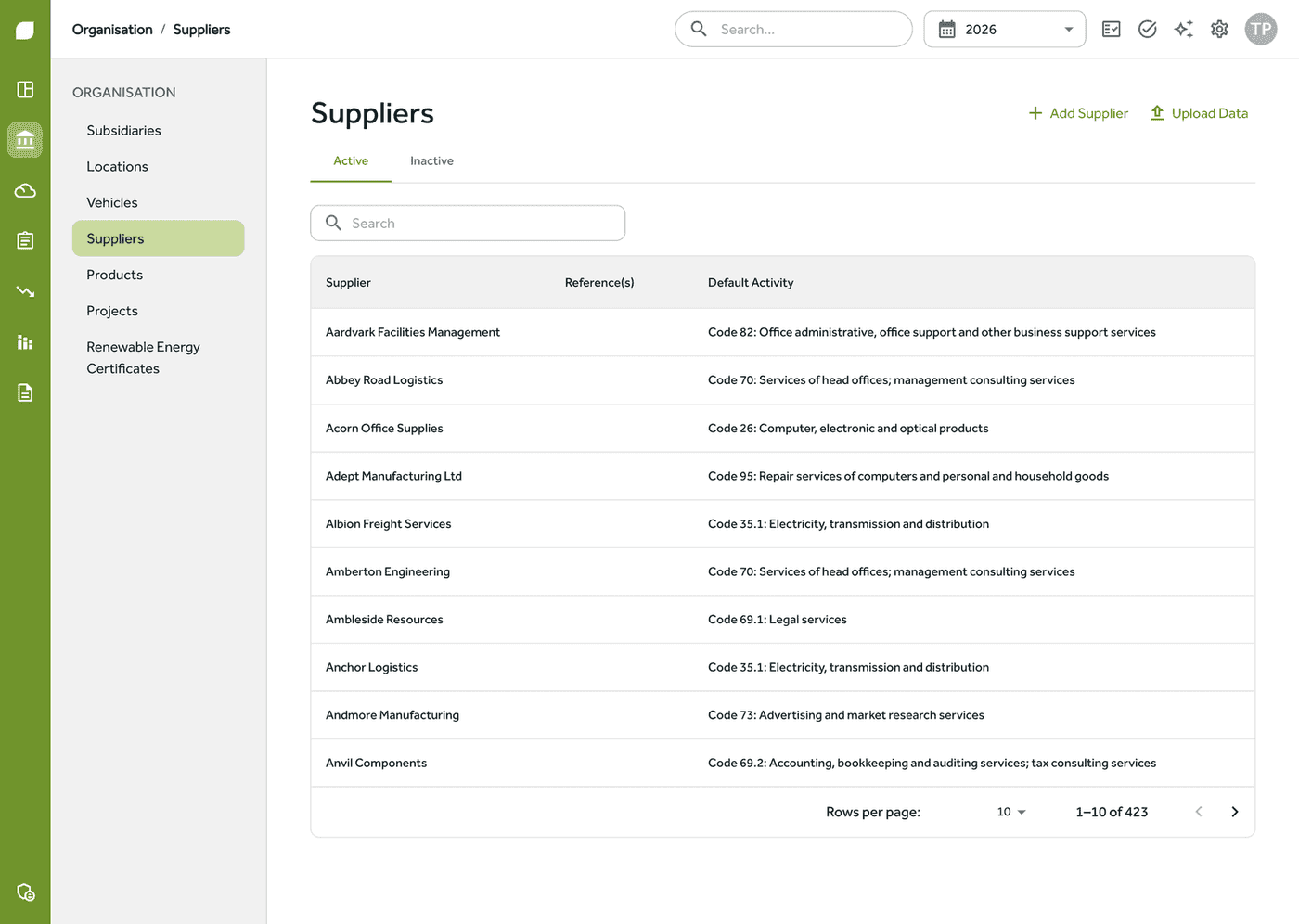
What Gaia helps manufacturers measure
The emissions across your plant floor and supply chain, tracked in one system.
Process emissions
Energy and fuel
Purchased materials
Supplier data
Manufacturing carbon accounting, answered
Can Gaia separate our process emissions from our energy emissions?
Yes. Gaia measures Scope 1, 2 and 3, and process emissions from reactions such as those in cement and steel making sit within your Scope 1 alongside on-site fuel. You can see energy and process contributions separately when you review your footprint.
Our customers want product-level carbon footprints. Can Gaia help?
Gaia isn't a dedicated product lifecycle assessment tool, but it gives you the underlying data those footprints rely on: your Scope 1, 2 and 3 emissions and supplier figures for purchased materials. That's the sourcing and materials data most product footprint requests come back to.
How do we collect emissions data from a large supplier base?
Gaia includes a supplier engagement feature that sends suppliers a survey to report their own figures, with responses attributed back and coverage tracked across your supplier register. You can also upload energy and fuel bills as a PDF or a photo and Gaia reads the consumption for you to confirm, while spreadsheets import through a wizard that validates every row.
Which reports can Gaia produce?
Gaia generates audit-ready reports for Streamlined Energy and Carbon Reporting (SECR), the Corporate Sustainability Reporting Directive (CSRD), the GHG Protocol and B Corp. You can export each as a web link or a PDF.
What methodology and conversion factors does Gaia use?
Gaia follows the GHG Protocol and applies UK government conversion factors from the Department for Environment, Food and Rural Affairs (DEFRA) and the Department for Energy Security and Net Zero (DESNZ). Every import is validated row by row, with every rejected row stating its reason, and every figure carries a data-quality tier so you can see how much of your footprint is measured rather than spend-based.
Trusted carbon data



Aligned with the standards your reports rely on
Gaia is aligned with the Greenhouse Gas Protocol (GHG Protocol) methodology and uses recognised industry-standard data to calculate your emissions, including the annual UK conversion factors published by the Department for Environment, Food and Rural Affairs (DEFRA) and the Department for Energy Security and Net Zero (DESNZ).
See it in sixty seconds
Nine real product screens in the order you would meet them. Press play, or step through at your own pace.
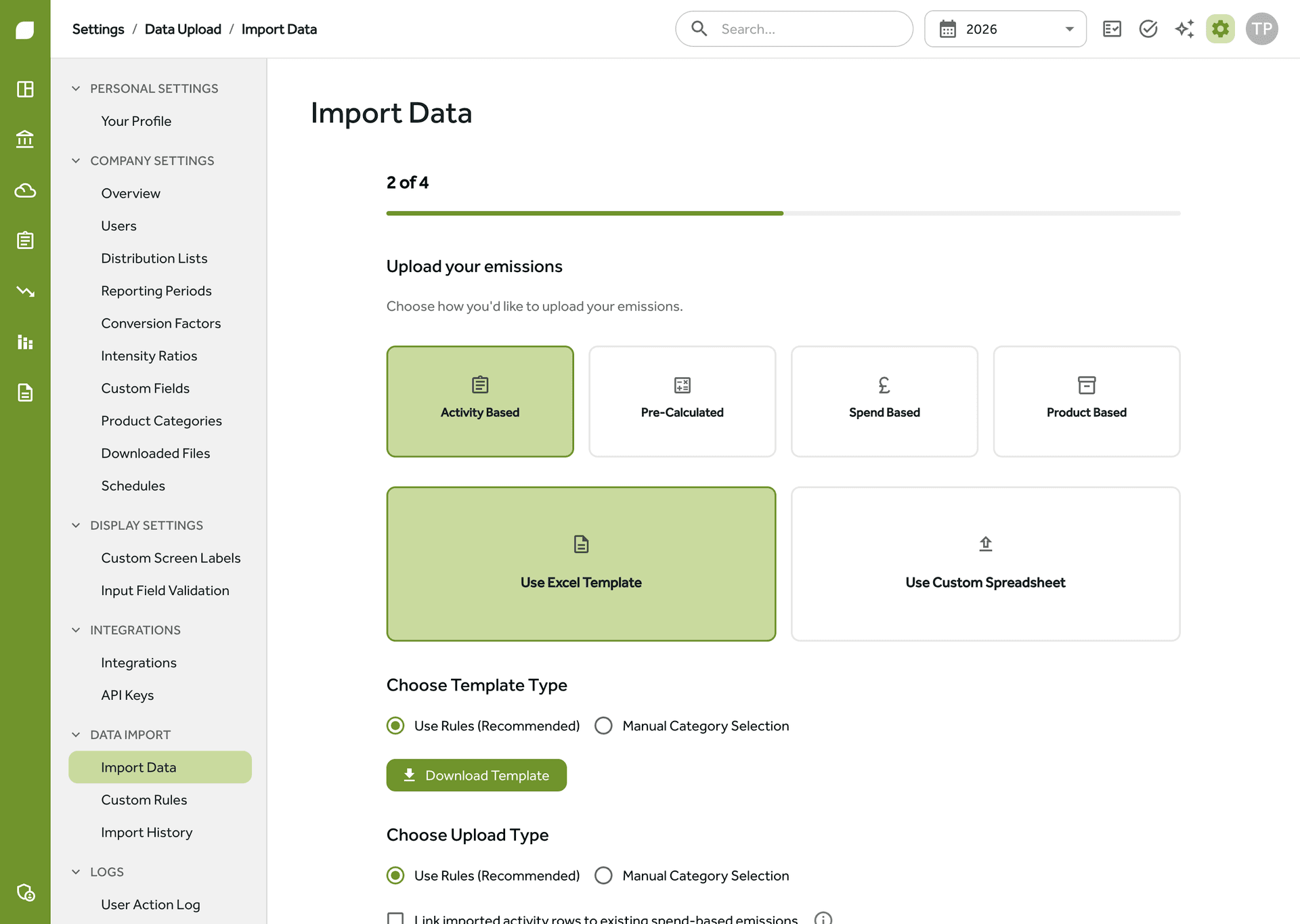
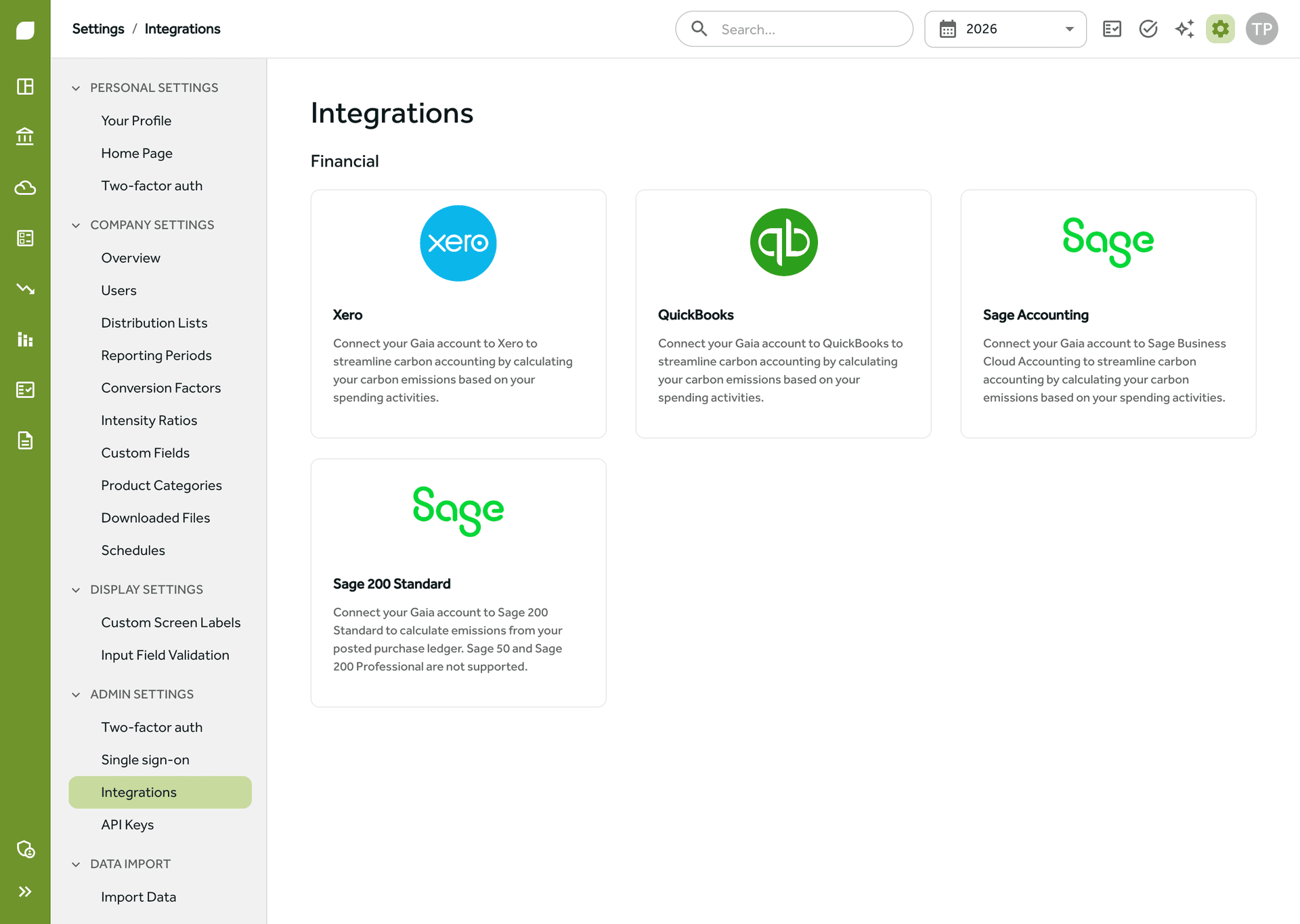
Every route in validates before anything counts
Spreadsheets, accounting integrations, bill extraction or the API: the import wizard checks every row and says exactly what failed and why, so you fix the file instead of hunting through it. See the full walkthrough