
Carbon accounting software built for UK regulation
Audit-ready SECR reports, PPN 006 Carbon Reduction Plans and UK SRS disclosures, generated from one measured dataset without spreadsheets or consultants. Used directly, or white-labelled by the firms that advise UK businesses.
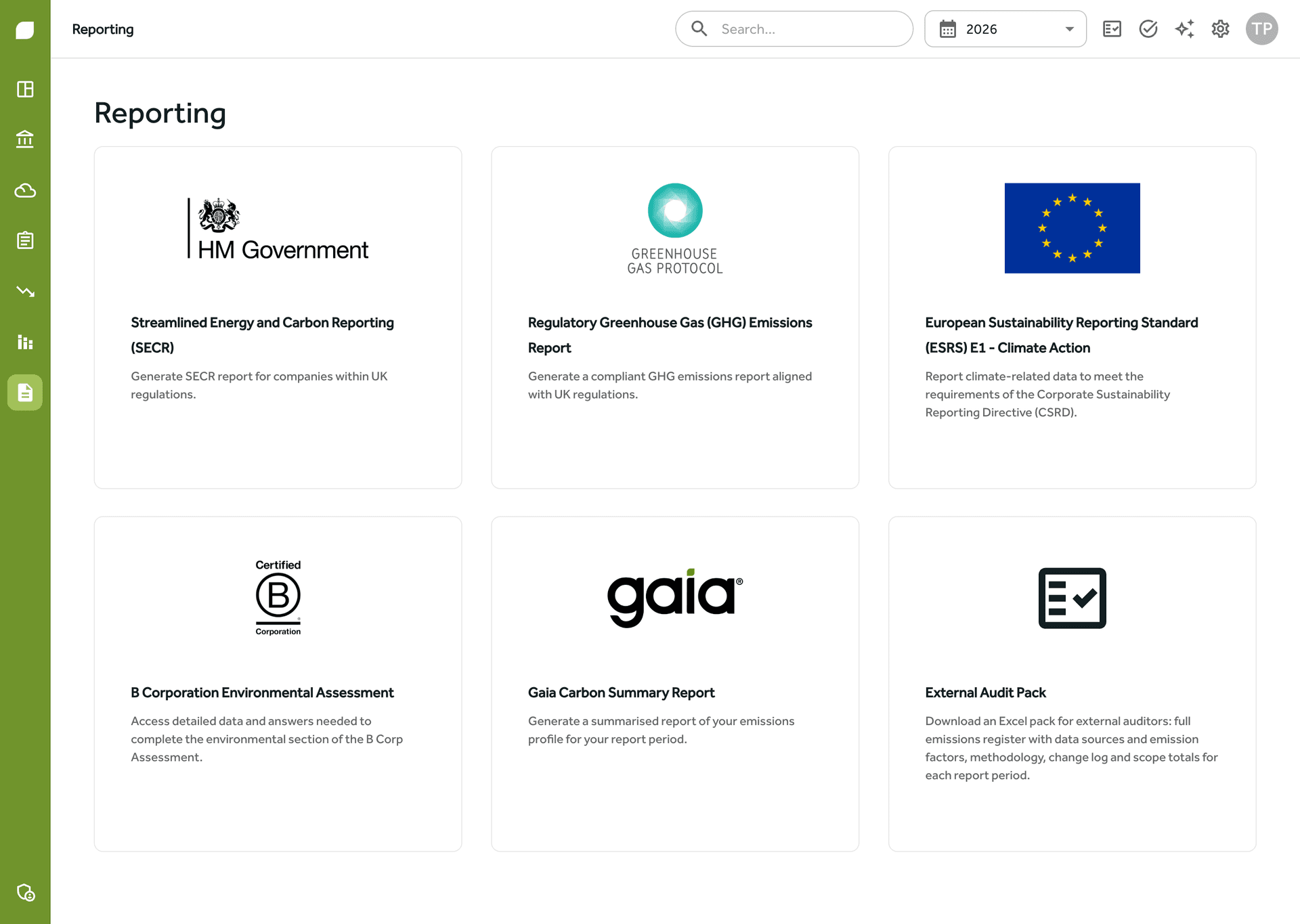
Built on the GHG Protocol and UK Government conversion factors
The Gaia Carbon Accounting platform is specialist software for organisations that need to measure, report and reduce their carbon emissions. It is aligned with the Greenhouse Gas Protocol (GHG Protocol) and covers Scope 1, 2 and 3 in full, whether you report under SECR in the UK, CSRD in the EU or a framework of your own. Every figure is calculated using industry-standard data, including the annual UK Government conversion factors published by DEFRA and DESNZ, updated each factor year. For a screen-by-screen walkthrough of the whole platform, see the features tour.


You’re in good company





See our carbon accounting platform before you book a call
Nine real product screens. Press play, or step through at your own pace.
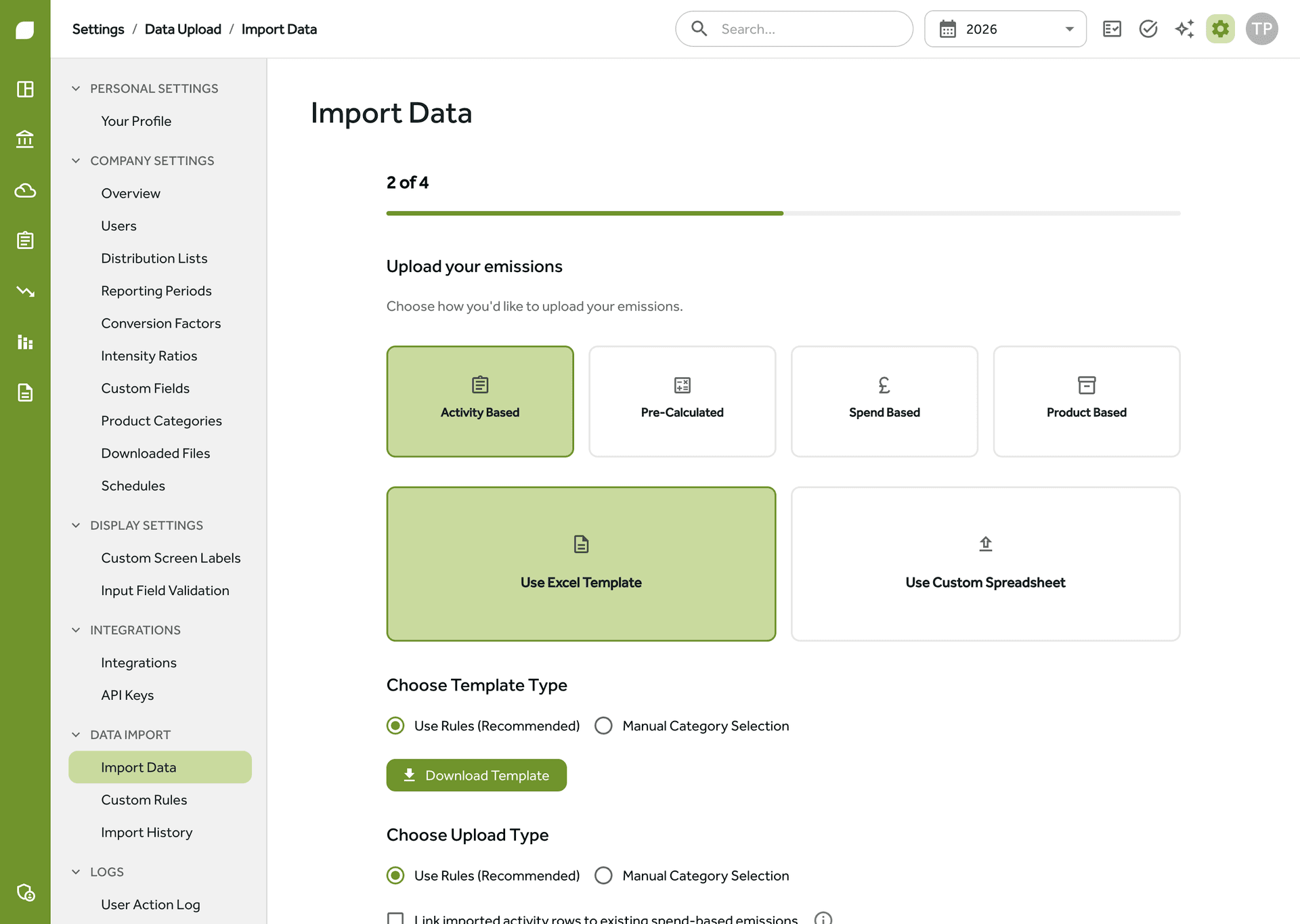
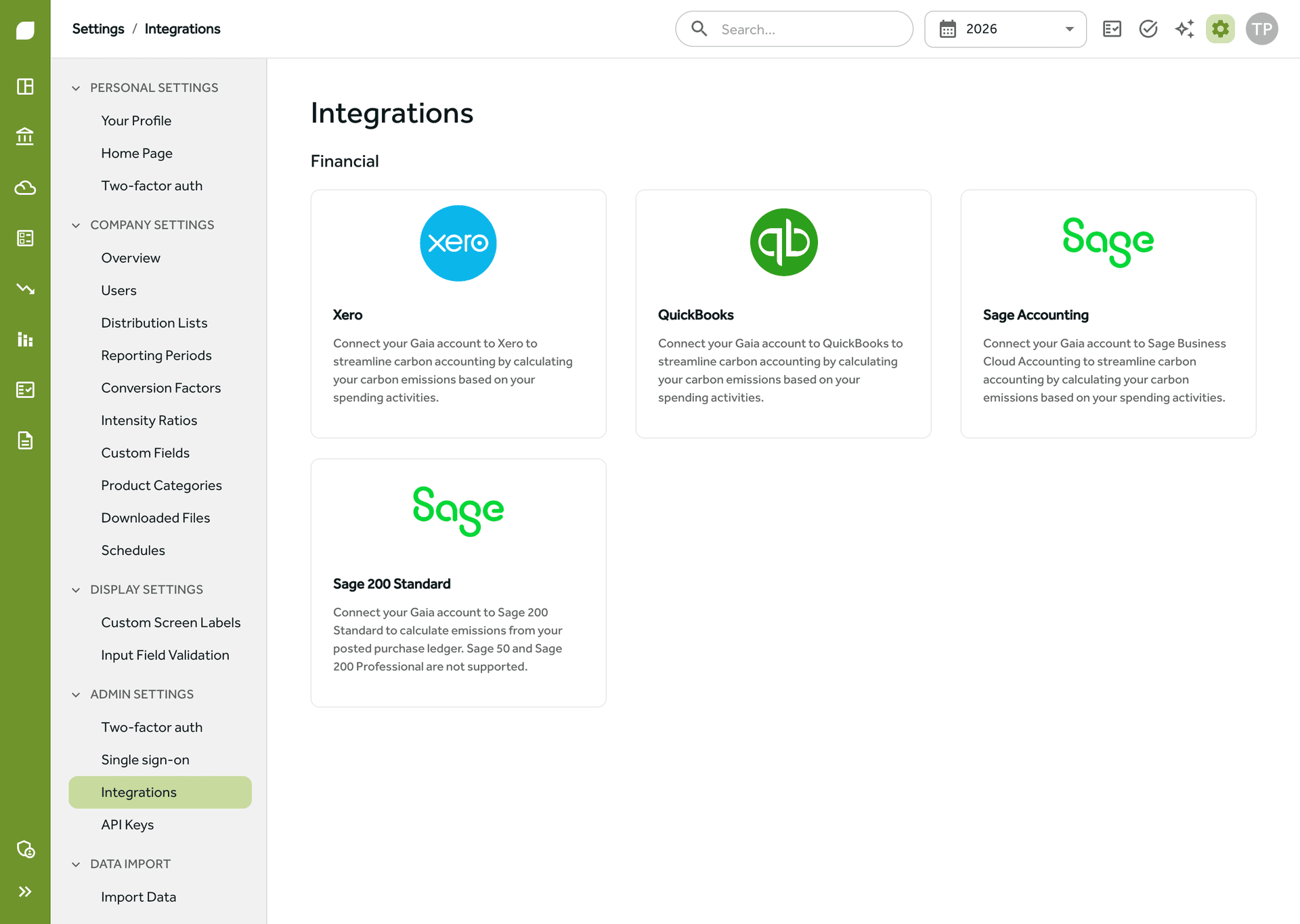
Every route in validates before anything counts
Spreadsheets, accounting integrations, bill extraction or the API: the import wizard checks every row and says exactly what failed and why, so you fix the file instead of hunting through it. See the full walkthrough
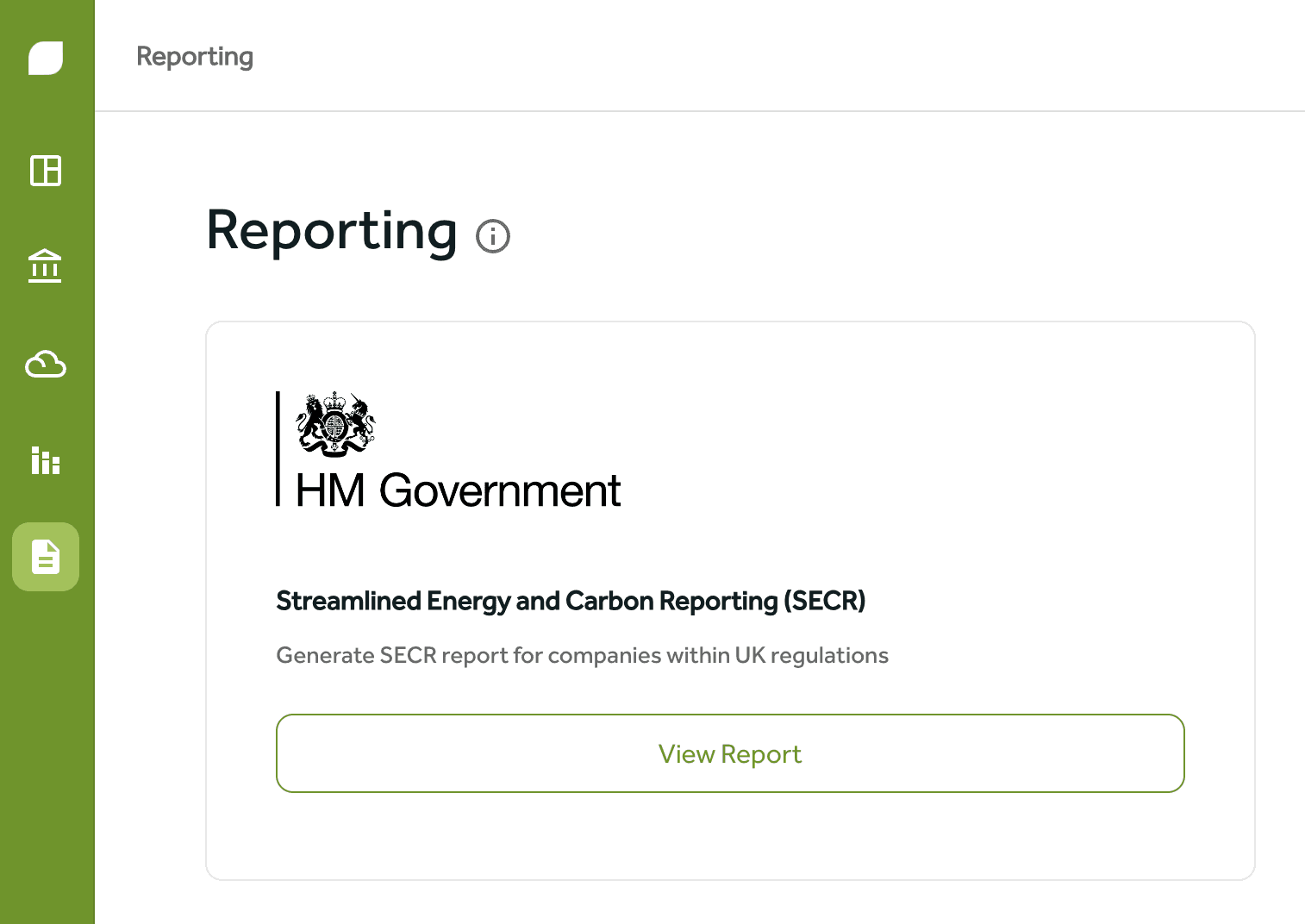
Streamlined Energy and Carbon Report (SECR)
Generate compliance reports, including the Streamlined Energy and Carbon Report (SECR), at the click of a button. Best practice is built in as standard: the statutory content, energy totals that reconcile with your emissions, intensity ratios, comparison years and a methodology narrative, all generated from the emissions you have measured, so the report is ready when your accounts are.
Faster data collection with AI
Let the platform do the reading. Upload a PDF or a photo of an electricity, gas or fuel bill and Gaia extracts the consumption and suggests the entry; a person confirms it before anything counts. The admin burden drops, and the final say stays with you.
Why Gaia
Accurate
Easy to use
Cost-effective
The solution for companies looking to measure, analyse and report their carbon emissions
Measure
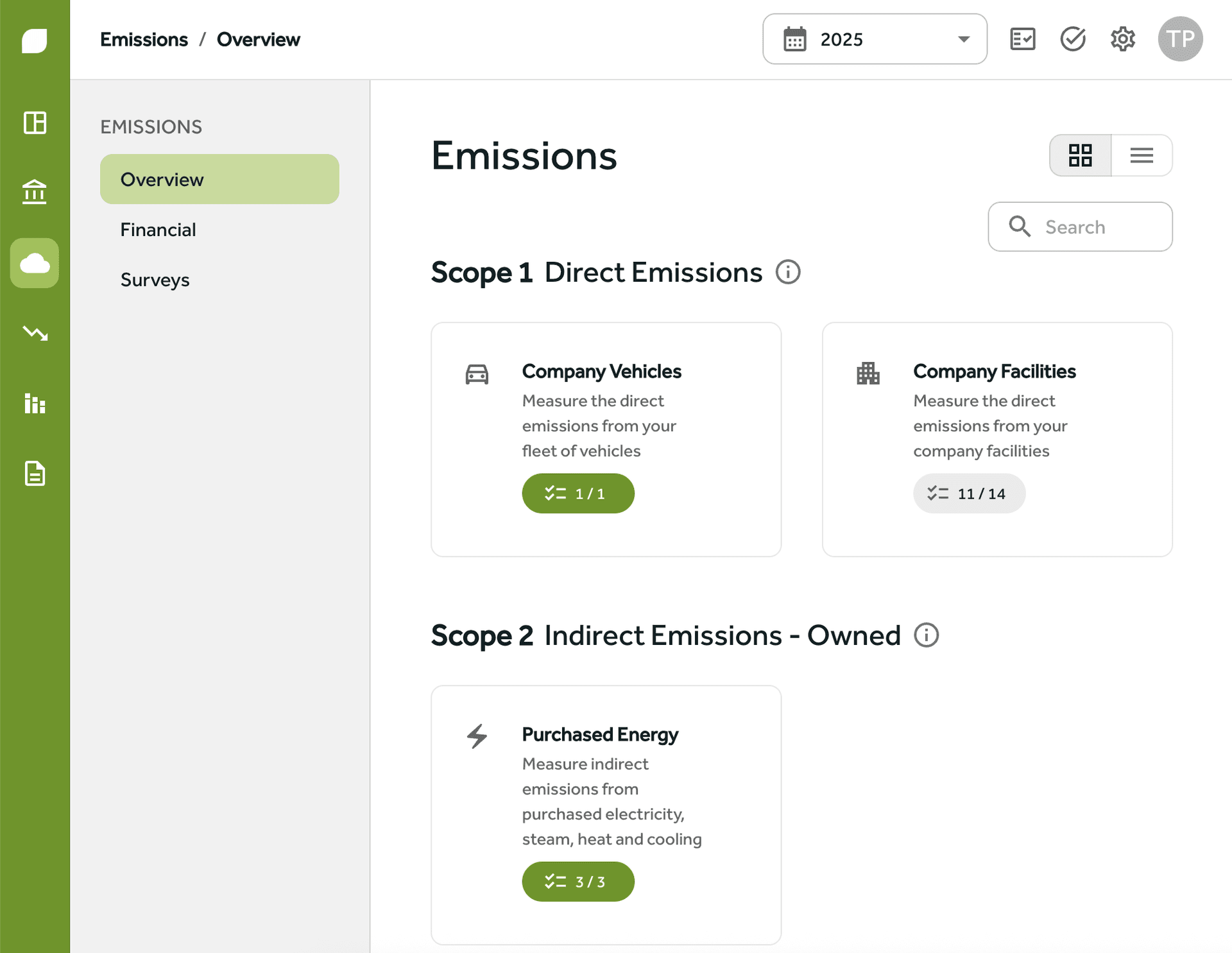
Gaia covers Scope 1, 2 and 3, and the first challenge is gathering the data. Connect your accounting software or push data straight in through the customer API, and send suppliers surveys whose answers come back as calculated emissions, tracked in one place.
For the paperwork, upload a PDF or a photo of an electricity, gas or fuel bill and Gaia reads the consumption and suggests the entry: a person approves it before anything counts, and the bill stays attached to the emission as audit evidence. Map each nominal code in your chart of accounts once and every future spend import categorises itself.
Analyse
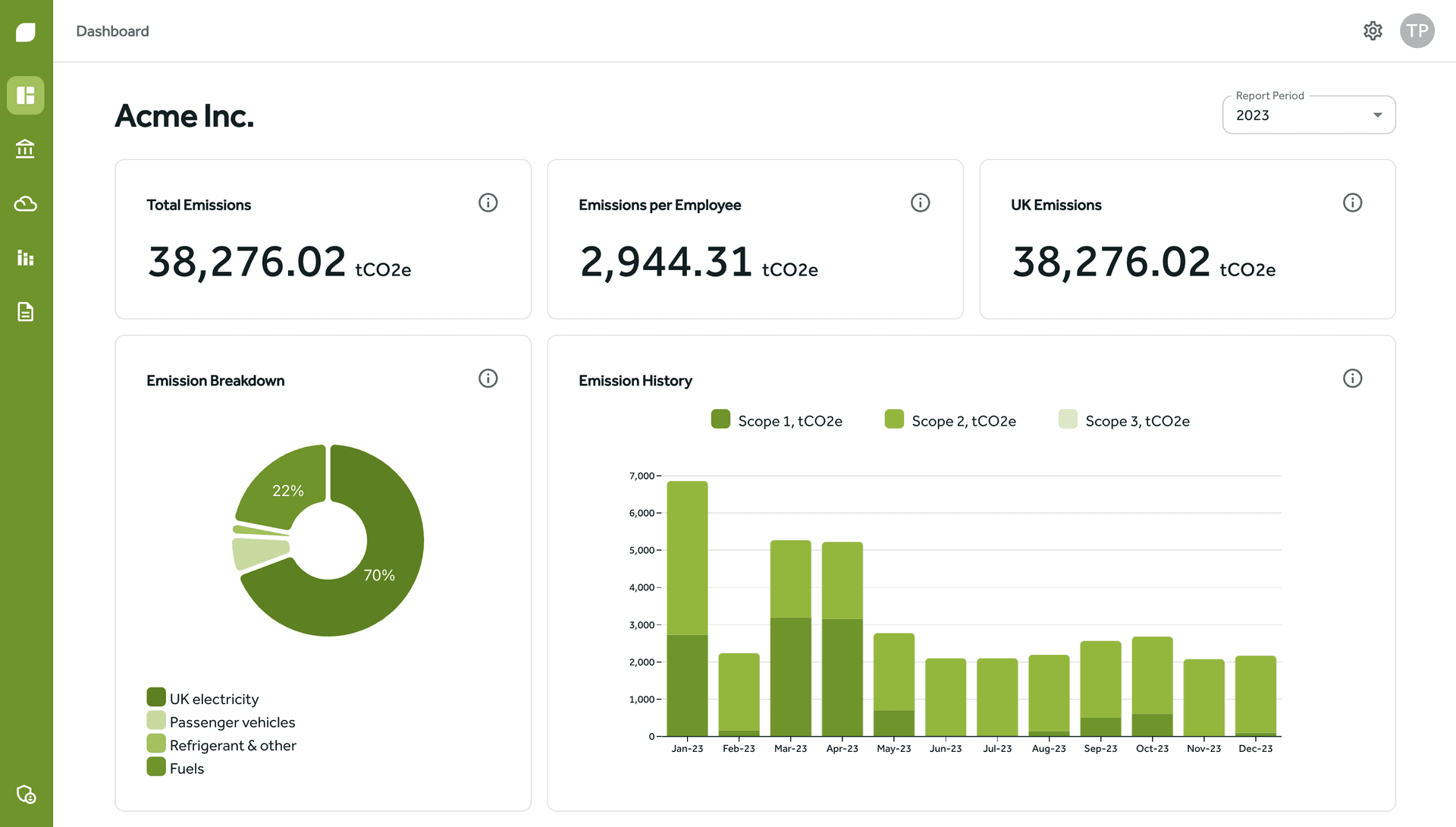
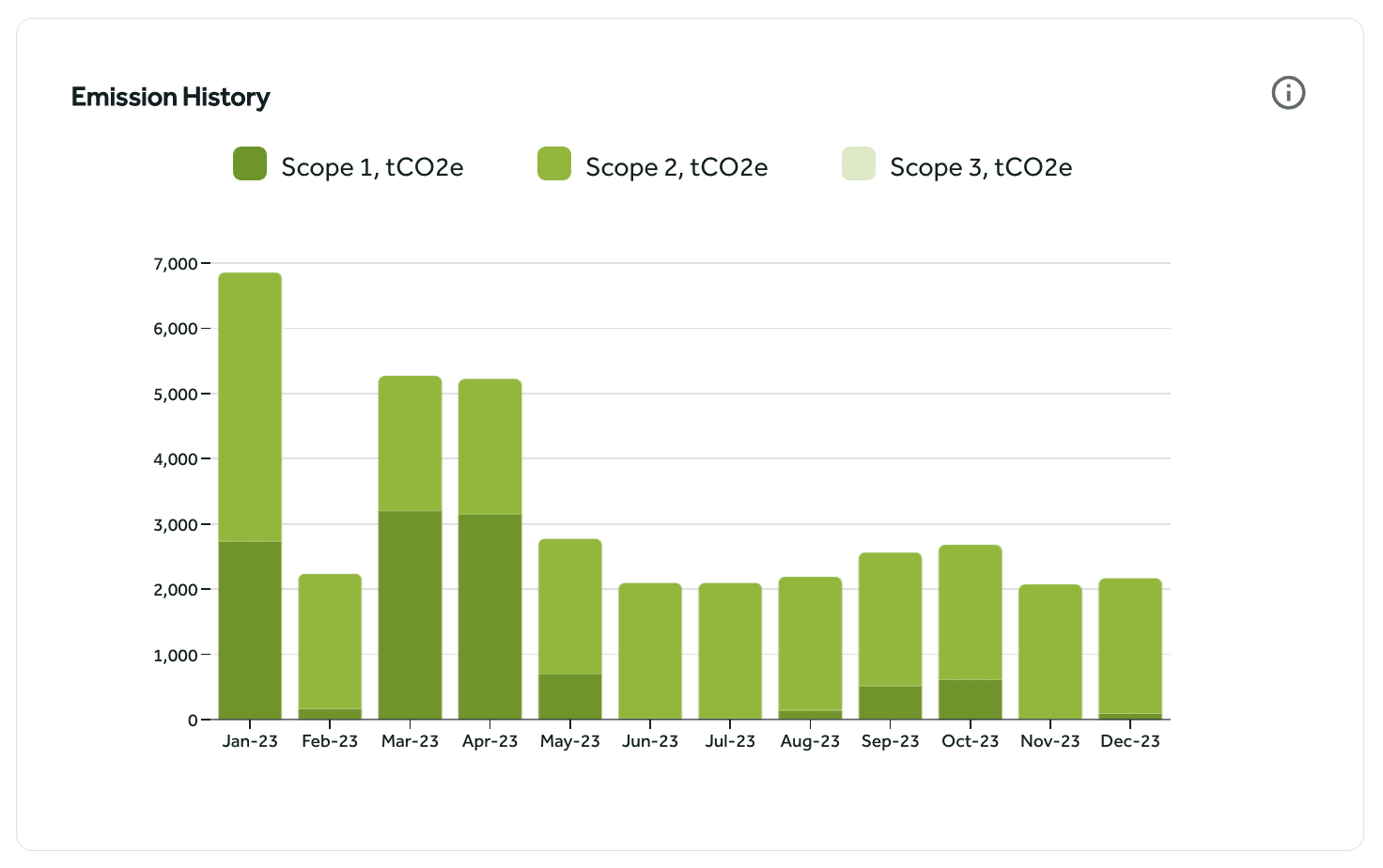
Collecting the data is one thing; understanding it is the next. Gaia's dashboards show your emissions hotspots by scope, category, site, supplier and time period, so you can see where the footprint actually sits and put your effort into the biggest levers.
Every figure also carries a data-quality tier from the GHG Protocol method hierarchy (supplier-specific, hybrid, average-data or spend-based), aggregated per scope and per report. You see not just what your carbon footprint is but how it was calculated and where to improve it: a composition of methods, never a vague accuracy score.
Get started with a free trial or book a demo
Report
Reporting is essential and time consuming, so Gaia generates the documents for you: SECR, the GHG Protocol report, the PPN 006 Carbon Reduction Plan for public-sector bids, the UK SRS climate disclosure, CSRD/ESRS E1 for UK companies with EU exposure, and B Corp environmental figures. All of them draw on the same measured data, so the numbers reconcile across every document.
Every heading and paragraph is editable per report, with the defaults restored when you clear an edit, and each document carries your organisation's logo. When scrutiny comes, the external audit pack exports every calculation with its factor, data-quality tier and evidence, ready for your auditor.
Reduce
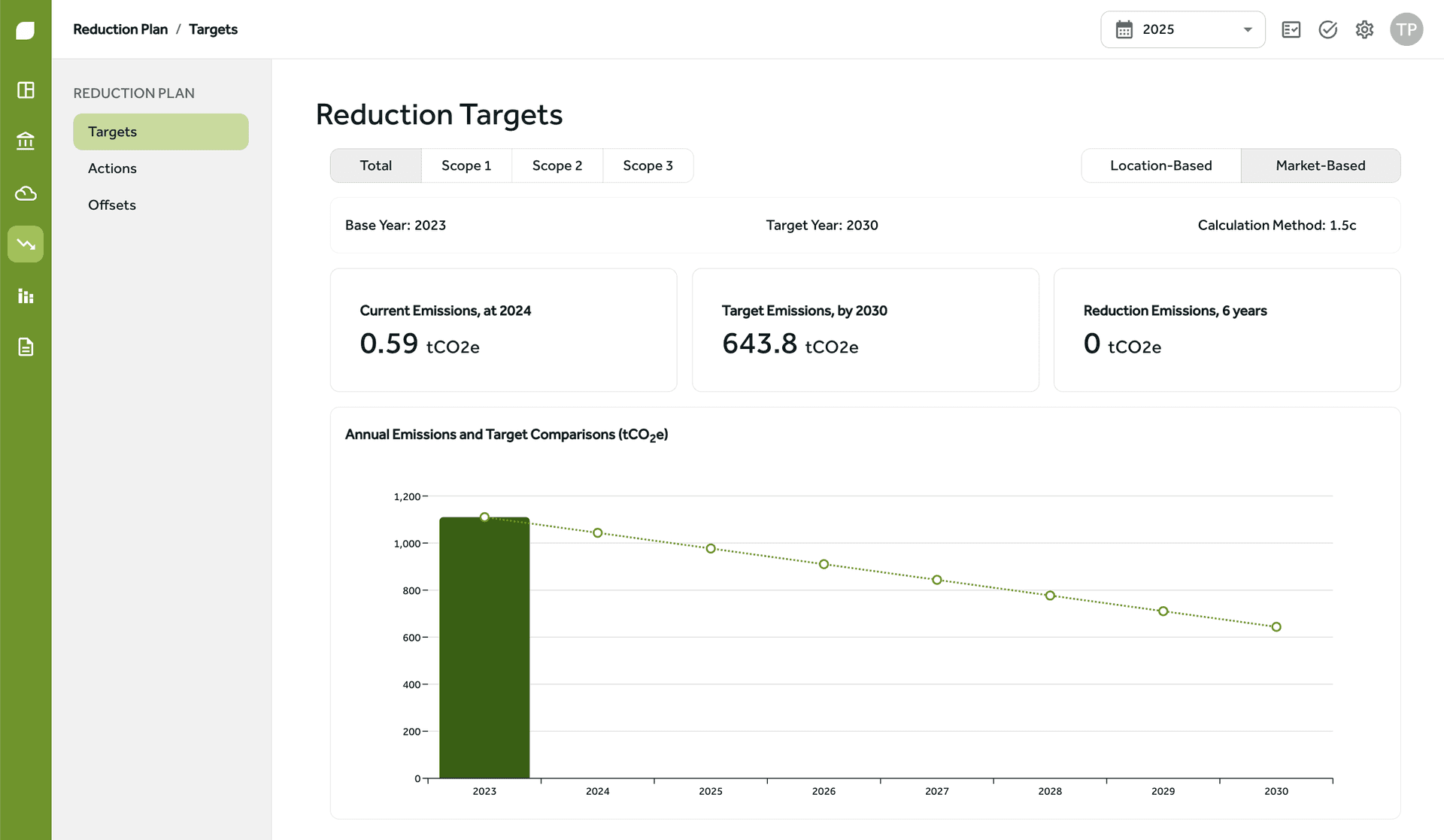
An accurate report is the start, not the finish. From here Gaia works as carbon management software: set reduction targets with a trajectory to 2050 and back them with an action plan of quantified annual reductions. Scenario modelling lets you compare decarbonisation options side by side, each with its own annual growth assumptions, so business-as-usual is never a flat line.
Offsets are handled with discipline. The offsets register records vintage, registry, serial range and retirement certificate, and offsets never reduce a scope total: your gross figures come first, always, with any net position clearly labelled as an informational memo. That is what credible reporting looks like.
G.AI turns artificial intelligence into climate intelligence
Meet G.AI, the AI that sits inside Gaia Carbon Accounting. It does the reading, matching and explaining; you keep the final say.
Document extraction
G.AI copilot
Supplier intelligence
Report generation
Integrate Gaia with your favourite apps
Centralise your data into a single application to track emissions across your organisation

Gaia Carbon Accounting pricing
Find the right plan for your business
Start-Up
For smaller businesses starting to measure and report their emissions
- Measure Scope 1, 2 and 3 emissions
- SECR and GHG Protocol reports
- Bill and document extraction
- Dashboards and hotspot analysis
- Reduction targets and action plan
Pro
For businesses reporting across frameworks or working towards a target
- Everything in Start-Up
- Accounting integrations (Xero, QuickBooks and Sage)
- PPN 006 Carbon Reduction Plan
- Scenario modelling and forecasting
- Supplier engagement and surveys
- Dedicated account manager
Enterprise
For larger organisations and partners running carbon accounting at scale
- Everything in Pro
- API access
- Single sign-on (SSO)
- White-labelling and client portals
- Custom integrations
FAQs
What is carbon accounting?
Carbon accounting (also known as Greenhouse Gas Accounting) is a form of measurement that allows companies to measure, analyse and track how many Greenhouse Gas (GHG) emissions are released into the atmosphere every year.
This is extremely important to both government and corporation net-zero targets because an accurate assessment of the current level is essential to any credible plan to reduce it.
With Net Zero emissions becoming an ever more important goal, Carbon Accounting enables businesses to measure their carbon footprint and work towards this goal.
Carbon Accounting can be broken down via direct emissions and indirect emissions, which are classified as either Scope 1, Scope 2 or Scope 3 emissions.
What are the benefits of carbon accounting?
Carbon Accounting is a hugely important part of a company’s approach these days and provides a huge amount of benefits.
- Regulatory Compliance: Ensuring a company is abiding by its climate responsibility and making sure there are no fines or financial penalties
- Competitive advantage: Showing a proactive approach to carbon accounting and reduction is a huge selling point to customers or clients, leading to increased customer loyalty and brand value as well as being very attractive to new customers.
- Cost savings: By identifying areas of high energy consumption and emissions, companies can implement efficient measures leading to lower utility bills and other cost savings.
- Employee production and retention: A strong carbon accountancy and reduction is a huge pull when it comes to both recruiting new employees and retaining existing ones. It can also have an increase in productivity.
- Revenue Growth: Companies that reduce their GHG emissions through carbon accountancy qualify for green certifications that open up new markets or allow them to charge a premium on products.
How does carbon reporting software work?
Carbon reporting software turns the records your business already keeps into a greenhouse gas (GHG) footprint, and then into the reports built on it. In Gaia that happens in four steps:
- Data collection: import spreadsheets of activity and spend data with per-row validation, connect Xero, QuickBooks or Sage, upload energy and fuel bills for the platform to read (a person confirms before anything counts), and send suppliers surveys whose answers come back as calculated emissions.
- Emission calculations: activity data is converted into CO2e across Scope 1 (direct emissions), Scope 2 (purchased energy) and Scope 3 (value-chain emissions) following the GHG Protocol, using the UK Government conversion factors published by DEFRA and DESNZ and updated each factor year.
- Analysis and reporting: dashboards show your emissions hotspots, every figure carries a data-quality tier from the GHG Protocol method hierarchy, and the platform generates SECR, GHG Protocol, PPN 006, UK SRS, CSRD/ESRS E1 and B Corp reports from the same numbers.
- Action planning: set reduction targets with a trajectory to 2050, model decarbonisation scenarios with per-scenario growth assumptions, and record any offsets in a register that reports them alongside, never against, your gross totals.
The responsibility that stays with you is the sign-off: a person approves extracted data before it counts, and board approval and publication remain yours. Gaia keeps the evidence behind every figure ready for the moment someone asks.