

Key Takeaways:
- UK woodland removed 316,454 tonnes of air pollutants in 2022, worth £1.785 billion in avoided health damage, and fine particulate matter accounted for 96% of that health value despite being only 5% of the tonnage removed (ONS, May 2024).
- The 16 ecosystem services the ONS currently measures were worth £41 billion in 2023, against a total asset value of £1.6 trillion, and flood protection is not among the 16 (ONS, December 2025).
- Nature was a net greenhouse gas emitter in the UK in 2023. The regulating service carried an annual value of negative £330 million, because degraded peatland emitted 15 million tonnes of CO2 equivalent while forestry sequestered 18 million.
- Defra's ENCA guidance deliberately drops supporting services such as soil formation and pollination from its valuation categories, because their effect is already counted inside the provisioning, regulating and cultural figures.
- Recreation produced the two largest single contributions to UK natural capital: £10 billion of annual visitor expenditure, and a £508 billion asset value from the health benefits of visiting nature for at least 120 minutes a week.
What is an Ecosystem Service?
An ecosystem service is a benefit people get from a natural asset. Drinking water off an upland catchment, crops set by insect pollination, the flood peak a wetland flattens before it reaches a town: each one is a service, and each comes from a stock of nature that produced it.
Defra's Enabling a Natural Capital Approach guidance draws the distinction precisely. Natural capital is the stock of assets, such as a woodland, a peat bog or a stretch of saltmarsh. Ecosystem services are the flows those assets supply over time, which is why a service is better thought of as something nature does than something nature is. A hectare of broadleaf woodland is the asset. The timber it yields, the ozone its canopy absorbs, the runoff it slows and the walk it hosts on a Saturday morning are four separate services coming off the same hectare.
Benefits sit one step further along. Services only become benefits once they combine with other inputs, and some need no input at all. Cool air in a city centre during a heatwave arrives without anyone doing anything; standing timber becomes a joist only after felling, haulage and a sawmill. The distinction matters in practice because valuation attaches to different points in that chain, and appraisals that blur the three end up counting the same value twice.
This article works through the examples by category, with the UK figures and their sources attached.
Types of Ecosystem Services
Three classifications are in active use in the UK, and they divide services differently.
The Millennium Ecosystem Assessment sets out four types: provisioning, regulating, cultural and supporting. Most teaching material follows it.
Defra's ENCA guidance sets out five, and this is the classification that governs UK government appraisal and accounting.
| ENCA category | What it covers | Examples |
|---|---|---|
| Provisioning services | Tangible outputs obtained from ecosystems | Food, timber, water supply, crops |
| Abiotic flows | Flows that do not depend on a functioning ecosystem | Minerals, oil and gas, solar, wind, tidal power |
| Regulating services | Ecological processes that reduce pollution and other harm | Air filtration, water regulation, carbon sequestration |
| Cultural services | Environmental settings enabling cultural activity | Settings for recreation, education, tourism |
| Aggregated and bundled services | Benefits that cannot be pinned to one service | Amenity, biodiversity, landscape, water quality, non-use values |
Source: ENCA guidance, Table 3, updated 10 February 2026.
The Common International Classification of Ecosystem Services, which underpins the UN's System of Environmental-Economic Accounting for ecosystems, sorts biophysical services into three sections: provisioning, regulation and maintenance, and cultural. Abiotic outputs such as minerals and wind power sit outside those three, in a separate geophysical extension.
Supporting services appear in the first of the three classifications only. ENCA leaves them out because their effect is already captured inside the other categories, so a separate line would double count. CICES V5.2 leaves them out for a different reason, treating soil formation and nutrient cycling as ecosystem functions rather than services, and reserving "intermediate" for flows passing from one ecosystem into another.
Which classification a document uses determines which categories appear in it, so check that first when a category you expect is missing.
Provisioning Services
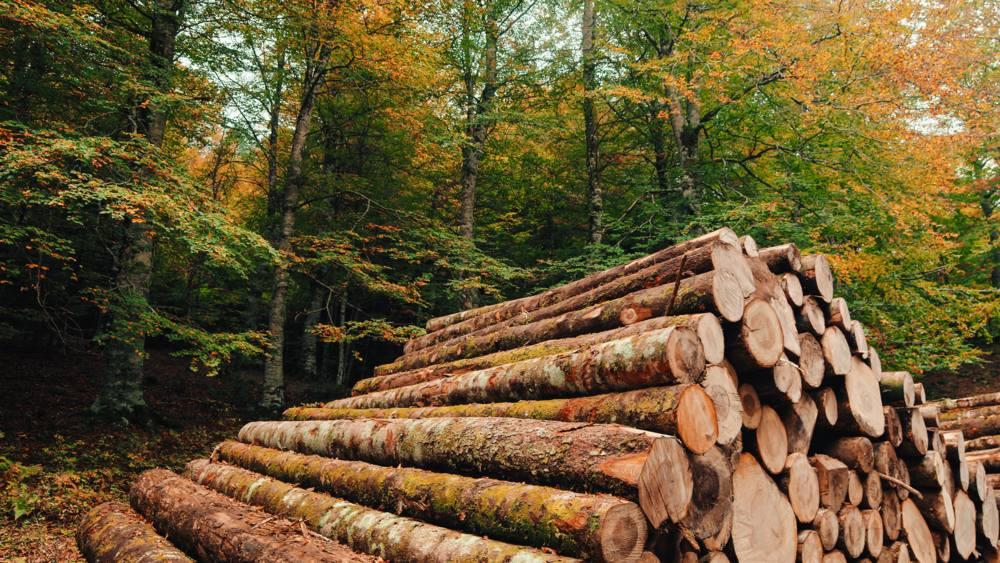
These are the examples that need least explaining, because they mostly have market prices.
UK woodland produced £399 million of timber in 2022, excluding woodfuel. Scotland accounted for 63% of harvests. Woodfuel added a further £116 million and made up 23% of total fellings, and both figures come from the ONS woodland account published on 15 May 2024.
Agricultural biomass, fish taken from mainland UK waters, water abstraction and mineral extraction all sit here too. Renewable electricity is the awkward case. It is a provisioning service in the ONS accounts and the fastest-growing one, up from £0.4 billion in 2014 to £3 billion in 2023. But wind and solar output do not depend on a living ecosystem, which is why ENCA files them under abiotic flows.
The habitat split inside that figure is worth noticing. In 2011, two thirds of UK solar electricity was generated in urban habitats. By 2023, 71% came from enclosed farmland, contributing £305 million of annual value against £105 million from urban solar.
Regulating Services

These are the processes that strip out pollution, moderate temperature and hold back water. Each one below carries its physical flow alongside its value, because the two routinely point in different directions.
Air pollution removal
UK woodland stripped 316,454 tonnes of pollutants from the atmosphere in 2022, valued at £1.785 billion in avoided health damage. Ground-level ozone made up 259,142 tonnes of that. And yet PM2.5, at roughly 5% of the volume removed, accounted for 96% of the health value. Anyone using tonnage as a proxy for benefit will get the answer badly wrong.
Carbon sequestration
UK woodland sequestered 19.6 million tonnes of CO2 equivalent in 2021, worth £5.1 billion. The national picture is not so comfortable. Across all habitats in 2023, the greenhouse gas regulating service carried an annual value of negative £330 million, because peatland emitted a net 15 million tonnes of CO2 equivalent while forestry sequestered a net 18 million. Northern Ireland's habitats came out as net emitters. Wales did not, because degraded peat covers a smaller share of its land and larger forestry areas offset what remains.
Tree planting is slower than it looks, too. ONS notes that sequestration by Scottish forestry fell by 2.2 million tonnes of CO2 equivalent between 2003 and 2023, partly because planting disturbs soil organic carbon and the emissions can outrun the removals for decades on organic soils.
Urban cooling
Parks, street trees and urban water bodies cool cities on days at or above 28°C. The service was worth £1,016 million across Great Britain in 2023 and £486 million in 2024, the drop tracking a fall in the number of hot days. Value concentrates where hot days and economic output coincide, which is why Westminster topped the local authority table in 2024 and West Devon sat at the bottom. Glasgow City and Cardiff led Scotland and Wales.
Flood regulation
Woodland flood regulating was valued at £911 million annually in 2022, with an asset value of £27 billion. This one comes with a caveat that matters for anyone quoting the headline national number: flood protection is not included in the 16 services the UK natural capital accounts currently measure, which is one reason ONS describes its £41 billion total as a partial or minimum valuation.
Noise mitigation
The smallest of the woodland figures, and the most concrete. Trees reduced road noise for 167,000 urban buildings in 2022, worth £17 million.
Pollination
Insect pollination of UK crops was valued at £430 million, around 8% of total crop production value, in a 2014 report to Defra using 2007 prices. The report's authors flagged their own estimate as resting on limited evidence and not accounting for how farmers would adapt if pollinators declined. Treat it as an order of magnitude, not a current figure.
Cultural Services

Nothing else in the UK accounts comes close to recreation.
Recreation and tourism expenditure was the largest single contributor to annual value in 2023 at £10 billion.
There is a documented problem with that number. ONS issued a notice on 6 August 2026 confirming an error in supplier input data affecting the physical flow, annual value and asset value of the recreation and tourism (expenditure) service for the UK and Scotland in 2022 and 2023.
ONS will not correct the 2025 release, and the entire time series will be replaced in the November 2026 edition. Cite it with that caveat or wait for the replacement.
The health benefits service is separate, and it carries no such caveat. It values the benefit of visiting nature for at least 120 minutes a week, and came to £7.9 billion in 2023 across 19.9 million people. Its asset value of £508 billion was the highest of any single UK ecosystem service. Urban habitats delivered more of those health benefits than any other habitat type, a useful corrective to the assumption that cultural services live in national parks.
Woodland alone took 748 million recreation visits in 2022. That produced £907 million of expenditure and £1.149 billion of health benefit across 3.2 million people.
Education settings, amenity and non-use values also belong here. ENCA files landscape amenity, biodiversity and non-use values under aggregated and bundled services rather than cultural, on the grounds that they reflect a mix of cultural and regulating contributions.
Supporting Services and the Double-Counting Trap
Photosynthesis, soil formation, nutrient cycling, the water cycle and the maintenance of genetic diversity are the standard examples. They are real and they are foundational. They are also the reason so many natural capital totals are wrong.
Every timber value already contains photosynthesis. Every crop value already contains soil formation and pollination. Add a separate line for the supporting service and the same contribution appears twice. ENCA's quality assurance checklist asks directly whether multiple services or benefits involve double counting of the same benefit, and its Green Book four-step method repeats the warning at the valuation stage.
Which is why supporting services appear in teaching material and disappear from accounts.
Example - What a Hectare of UK Woodland Supplies
The ONS woodland account puts total annual value at £10.4 billion and asset value at £382 billion for 2021, across roughly 3.3 million hectares of UK woodland, equal to 13% of land area.
| Measure | Woodland total | Crude per-hectare average |
|---|---|---|
| Annual value of services | £10.4 billion (2021) | About £3,150 per hectare per year |
| Asset value | £382 billion (2021) | About £116,000 per hectare |
Those per-hectare figures are arithmetic, not evidence. ENCA says so explicitly: crude average service values per hectare derived from the accounts are very partial, may not capture full welfare benefit, and regulating and cultural values vary widely within a national average because ecosystems and beneficiary populations are not evenly spread. A hectare of woodland on the edge of Birmingham and a hectare in Sutherland deliver wildly different air filtration and recreation value from identical tree cover.
Note also that the £10.4 billion is a 2021 figure and the 3.3 million hectares a 2023 one, so the division mixes years.
Use per-hectare averages for scoping. Do not use them in an appraisal of a marginal change.
Where These Examples Enter UK Decisions
Four routes, in rough order of how often a UK professional will meet them.
- Appraisal - HM Treasury's Green Book recommends ENCA as supplementary guidance. Any policy or project answering yes to one of ENCA's screening questions, or possibly to the land question, triggers a four-step natural capital assessment: understand the environmental context, work out how natural assets are affected, value the welfare implications, then handle uncertainty.
- Accounting - The UK natural capital accounts project service flows over 100 years, which under the Green Book's declining discount rates captures around 92% of the discounted value of an infinite lifespan. Health-related effects discount at 1.5% rather than the standard rate, because the real consumption growth element drops out.
- Biodiversity net gain - Schedule 7A to the Environment Act 2021 sets the relevant percentage at 10% and requires habitat enhancement to be maintained for at least 30 years after completion. ENCA treats habitat change as an indirect proxy for biodiversity value, valuing the measurable services associated with the habitat, and accepts that this remains a partial estimate.
- Corporate reporting - Climate regulation is the ecosystem service that most directly meets carbon accounting. A company measuring its Scope 1, 2 and 3 emissions is quantifying pressure on the same regulating service the ONS accounts price at a national level.
How Are Ecosystem Services Valued?
Provisioning services mostly take market prices. Everything else needs a method, because no market exists.
ENCA groups the approaches into revealed preference, stated preference, direct wellbeing and cost-based. Air pollution removal and flood regulation rely on modelled biophysical effects combined with avoided damage costs, which is where most of the uncertainty enters. Recreation and amenity lean on revealed and stated preference work. Non-use values, by definition, only come from stated preference surveys.
Value transfer is the normal route in practice: identify the population affected, describe the change in benefit, pick appropriate existing evidence, convert study-year prices to a base year using the GDP deflator, then run sensitivity analysis. ENCA's value transfer guidance treats that last step as non-optional where the robustness of the favoured estimate is uncertain.
A benefit to cost ratio of 5 means every £1 spent returns £5 of monetised benefit. When the monetised benefits are partial, as they almost always are for ecosystem services, that ratio is a floor rather than an estimate.
Habitats and the Services They Supply
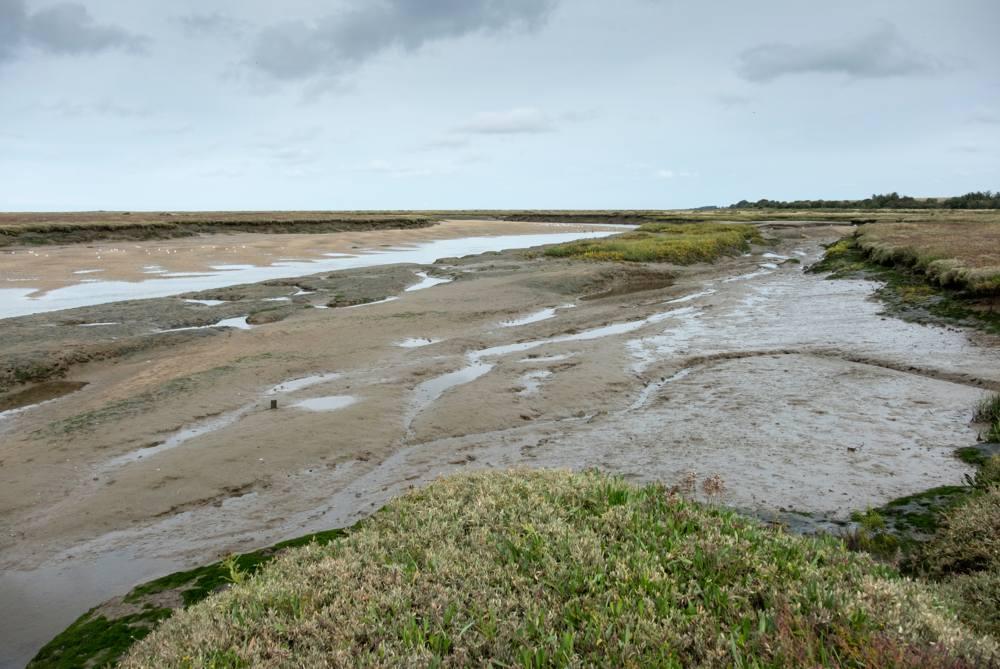
ENCA and the UK natural capital accounts both use eight broad habitat types, taken from the National Ecosystem Assessment.
| Broad habitat | UK extent | Services it is known for |
|---|---|---|
| Enclosed farmland | About 52% of land area | Most of the UK's food, plus the field pattern of lowland Britain |
| Woodland | 13% of land area | Timber, carbon storage, recreation, air filtration |
| Mountains, moors and heathland | 11% of land area | Around 70% of UK drinking water, an estimated 40% of UK soil carbon, livestock grazing |
| Semi-natural grassland | Around 10% of land cover | Biodiversity, low-intensity grazing, scenic value |
| Urban | Just under 7% of land area | Urban cooling, recreation, noise mitigation, amenity |
| Freshwater | About 5% of the UK | Water supply, recreation, flood regulation |
| Coastal margins | 2% of land area | Coastal defence, sediment transport, fish nursery grounds |
| Marine | Over 3.5 times the land area | Fisheries, tourism, regulating services |
Source: ENCA guidance Table 1. Extent figures in the ONS accounts move: enclosed farmland fell from 54% of UK land area in 1990 to 52% in 2024, woodland rose from 10% to 13%, urban from 6% to 8%, and mountains, moorland and heath dropped from 14% to 9%.
FAQs
What are the four types of ecosystem services?
Provisioning, regulating, cultural and supporting, as set out in the Millennium Ecosystem Assessment. UK government guidance uses a different five-category split (provisioning, abiotic flows, regulating, cultural, and aggregated and bundled services) and excludes supporting services to avoid double counting. CICES uses three biophysical sections plus a separate geophysical extension.
What is the most valuable ecosystem service in the UK?
By annual value in 2023, recreation and tourism expenditure at £10 billion, though ONS has confirmed a data error in that figure for 2022 and 2023. By asset value, the health benefits of recreation at £508 billion. Both come from the ONS natural capital accounts published in December 2025.
Are ecosystem services the same as natural capital?
No. Natural capital is the stock of natural assets. Ecosystem services are the flows those assets supply. A peat bog is natural capital; the carbon it holds and the water it filters are services. Conflating the two produces double counting, because an asset value is already the discounted sum of expected future service flows.
Why is the UK's greenhouse gas regulating service worth a negative amount?
Because more greenhouse gas came out of UK habitats than went into them in 2023. Peatland emitted a net 15 million tonnes of CO2 equivalent, largely through degradation, against a net 18 million tonnes sequestered by forestry, leaving nature a net emitter of 1 million tonnes and the service valued at negative £330 million.
Can ecosystem services be used to value biodiversity directly?
Only partially. ENCA recommends using habitat change as a proxy and valuing the measurable services attached to those habitats, while acknowledging that this misses non-use values, insurance value and resilience value. Where the loss cannot be valued adequately, ENCA suggests setting a target or constraint instead, such as no net loss on a biodiversity metric.
Does a per-hectare ecosystem service value work for a specific site?
Not for appraisal. National averages hide very large spatial variation in regulating and cultural values, and marginal values can differ substantially from averages. Use national averages for scoping and order-of-magnitude checks, then value transfer or primary valuation for anything load-bearing. A qualified environmental economist or ecologist should advise on a specific site.
More Information
For how ecosystem service thinking translates into UK planning and land management, see Gaia's guides to biodiversity net gain and biodiversity units, the ecological assessment examples explainer, and Gaia Enterprise for organisations managing natural capital assets at portfolio scale. For the climate regulation side, see carbon accounting.
Primary sources:
- Enabling a Natural Capital Approach guidance, Defra, updated 10 February 2026
- UK natural capital accounts: 2025, ONS, released 5 December 2025
- Woodland natural capital accounts, UK: 2024, ONS, released 15 May 2024
- CICES V5.2 guidance
- Environment Act 2021, Schedule 14 (inserting Schedule 7A to the Town and Country Planning Act 1990)