
Key Takeaways:
- The wren is the UK's most numerous breeding bird at an estimated 11 million territories, roughly one in eight of all the birds breeding here.
- Twenty-one species have UK breeding populations above one million. Between them they account for close to 80% of the roughly 85 million breeding pairs of all species in the UK.
- The house sparrow tops the RSPB Big Garden Birdwatch and has done for 23 years, because that survey counts what people see in gardens rather than what breeds nationally.
- Ten of the twenty commonest birds are on the UK Red or Amber list, including the wren itself, which moved from Green to Amber in 2021.
- Chaffinch has lost 36% of its UK abundance since 1995 and starling 61%, and both are still in the top fifteen.
The most common bird in the UK is the wren, at about 11 million breeding territories.
Below it on this list sit nineteen more species with populations above a million. This article ranks all twenty using the published national population estimates, gives the abundance trend for each from the Breeding Bird Survey, and says which conservation list every species sits on.
It then explains why the garden survey everyone quotes produces a different order, and what "common" means once one of these birds turns up on land you are about to develop, sell units from, or manage for thirty years.
Where These Numbers Come From
Population sizes are from APEP 4, the fourth report of the Avian Population Estimates Panel, published in British Birds in February 2020. Trends are from the BTO/JNCC/RSPB Breeding Bird Survey, taken from the 2025 report published in April 2026, and cover 1995 to 2024 unless stated. The full species trend tables sit on the BBS trends page and are published as Official Statistics by JNCC. Conservation status is from Birds of Conservation Concern 5, published on 1 December 2021.
The units are not uniform, which matters when comparing entries. Some species are counted in territories, some in pairs, and the pheasant in females.
Why so many entries share the same figure
Five pairs of species in this list carry an identical number due to rounding, not coincidence. APEP publishes its estimates to three significant figures, so blackbird and chaffinch both surface as 5,050,000 and great tit and pheasant both as 2,350,000 even though the underlying calculations are unrelated to each other.
The 20 Most Common Birds in the UK
1. Wren
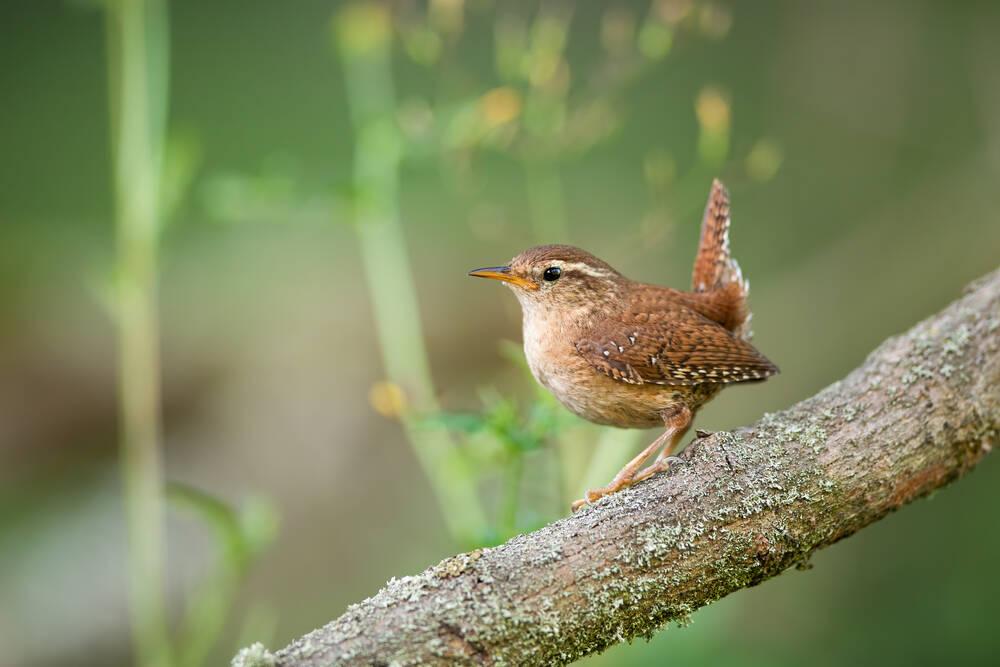
11,000,000 territories · Amber list · up 41% since 1995
Tiny, round and reddish-brown, with a short tail held cocked and a song far louder than a nine-gram bird should manage. Wrens breed almost everywhere in the UK: woodland, hedgerows, reedbeds, sea cliffs, conifer plantations, town gardens. That tolerance is why they outnumber everything else.
Numbers swing hard with winter weather. BBS recorded a 40% fall in Scotland's wrens between 2009 and 2010 after successive hard winters, and the species has climbed as winters have softened. Wren moved from the Green list to the Amber list in 2021.
2. Robin
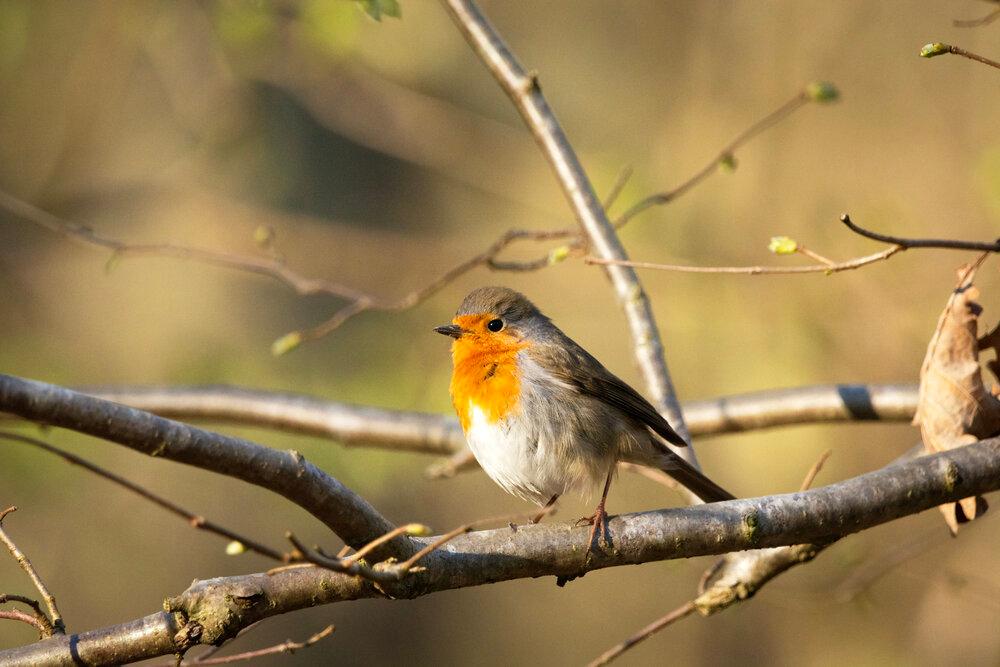
7,350,000 territories · Green list · up 31% since 1995
The orange-red breast is worn by both sexes, so the bird on the Christmas card could be either. Robins hold territory year-round and sing through the winter, which is why you hear them in December when almost nothing else is calling.
They breed across woodland, farmland hedges, parks and gardens in every part of the UK. The tameness is a British quirk. Robins on the continent are far warier of people.
3. House sparrow
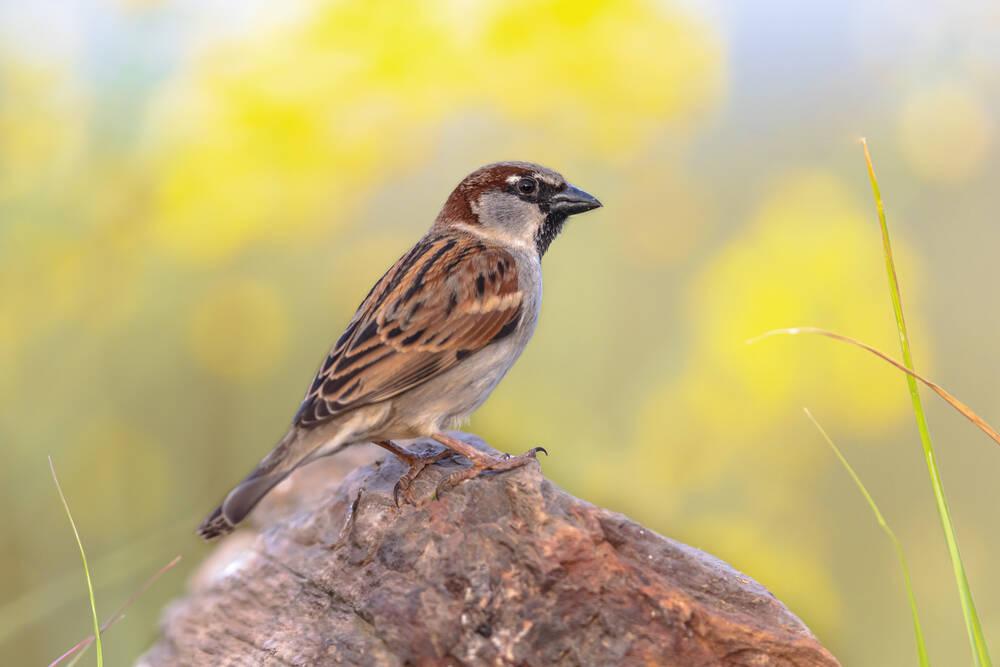
5,300,000 pairs (4,800,000 to 5,750,000) · Red list · down 18% since 1995
Chunky, short-billed and sociable. Males have a grey crown and black bib, females a plain brown head with a pale stripe behind the eye. Sparrows nest in roof cavities and under eaves, which ties them tightly to buildings.
The national figure hides four different stories. In England the 2025 BBS index was the lowest recorded across 46 years of survey data, and the long-term English decline stands at 32%. Northern Ireland has gone the other way, up 62% between 1997 and 2024, and Wales is up 86%. All four country figures are in the 2025 BBS report. This is the bird that tops the Big Garden Birdwatch every year while sitting on the Red list.
4. Woodpigeon
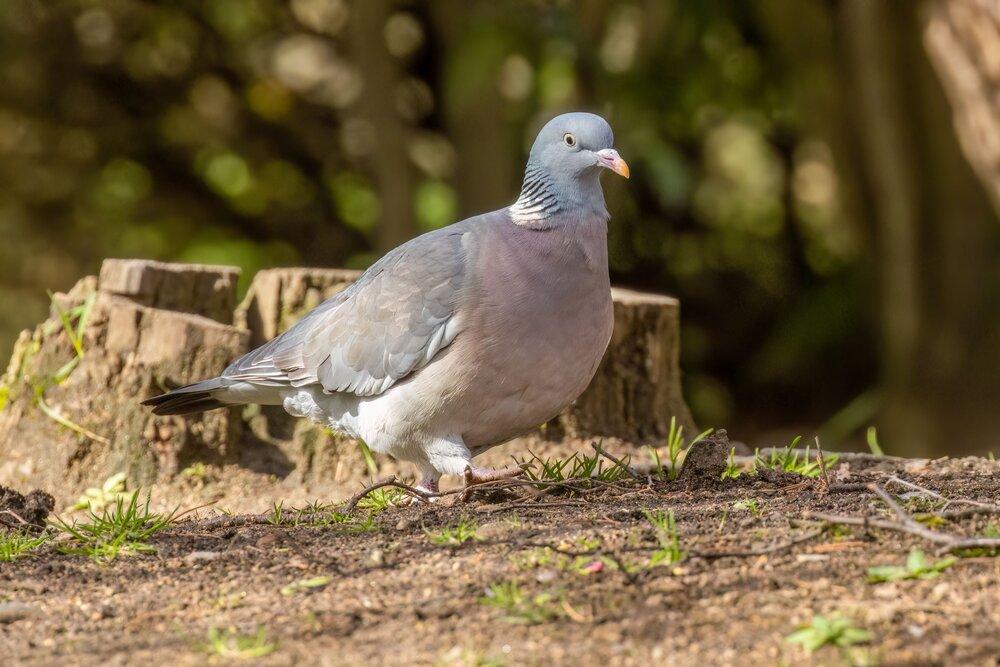
5,150,000 pairs (4,850,000 to 5,450,000) · Amber list · up 33% since 1995
Large, grey, with a white neck patch and a white wing bar visible in flight. The five-note song is one of the more recognisable sounds of a British summer.
Woodpigeons grew steadily from the 1960s to around 2010 and have been broadly level since. They are now as much an urban bird as a farmland one.
5= Blackbird
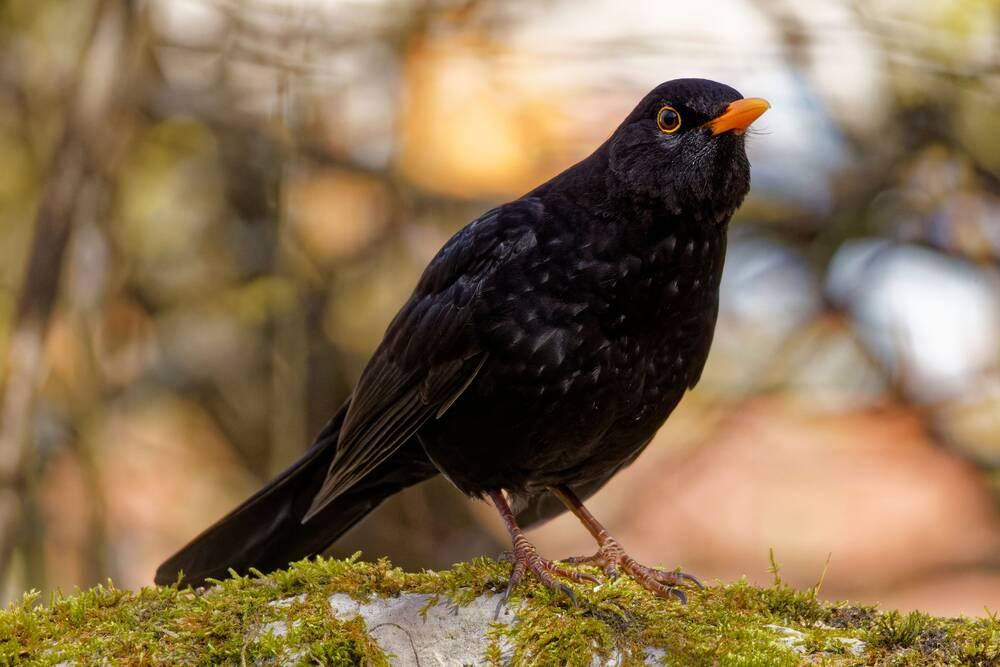
5,050,000 pairs (4,800,000 to 5,250,000) · Green list · up 15% since 1995
Males are glossy black with a yellow bill and eye ring. Females are brown with a streaked throat and are regularly taken for a different species altogether. Both work over lawns and leaf litter for worms.
Numbers have slipped 6% in the last decade after a long period of growth. Blackbirds breed throughout the UK and are joined each autumn by large numbers of continental birds arriving for the winter.
5= Chaffinch
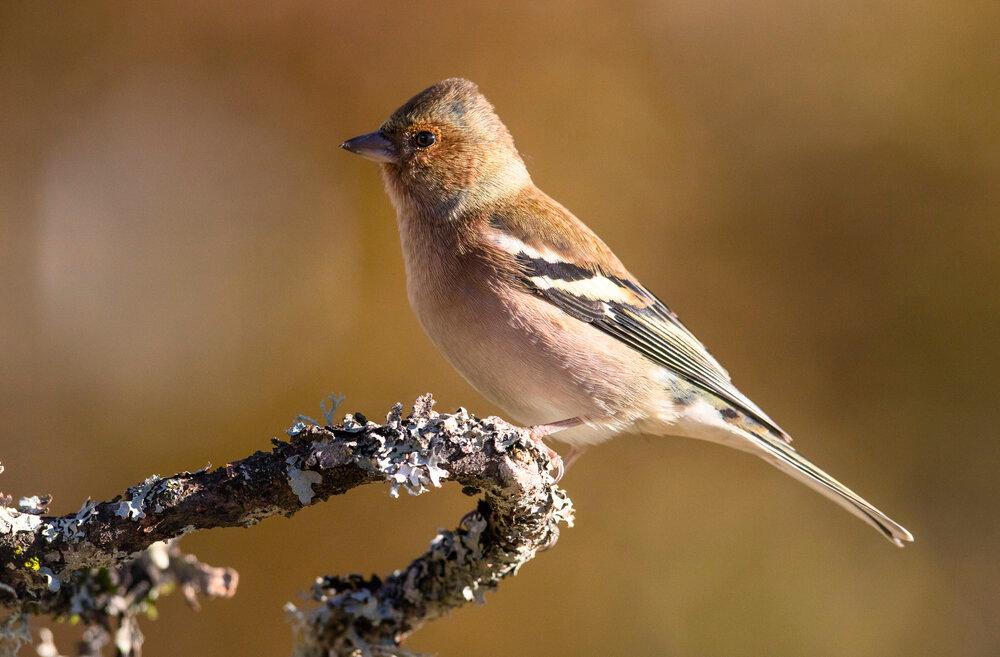
5,050,000 territories · Green list · down 36% since 1995
Still joint fifth commonest, and falling faster than almost anything else in the top twenty. UK abundance is down 38% in the last decade alone, and APEP recorded a drop of 1.15 million pairs between its 2013 and 2020 assessments.
The BBS report attributes the crash to trichomonosis, the disease that also hit greenfinch. Geography matters here. England is down 48% while Scotland is down 11%, where the decline started later and has been shallower, and the report offers no cause for that difference. Males have a pink breast and a blue-grey crown, females a muted brown, and both show bold white wing bars.
7. Blue tit
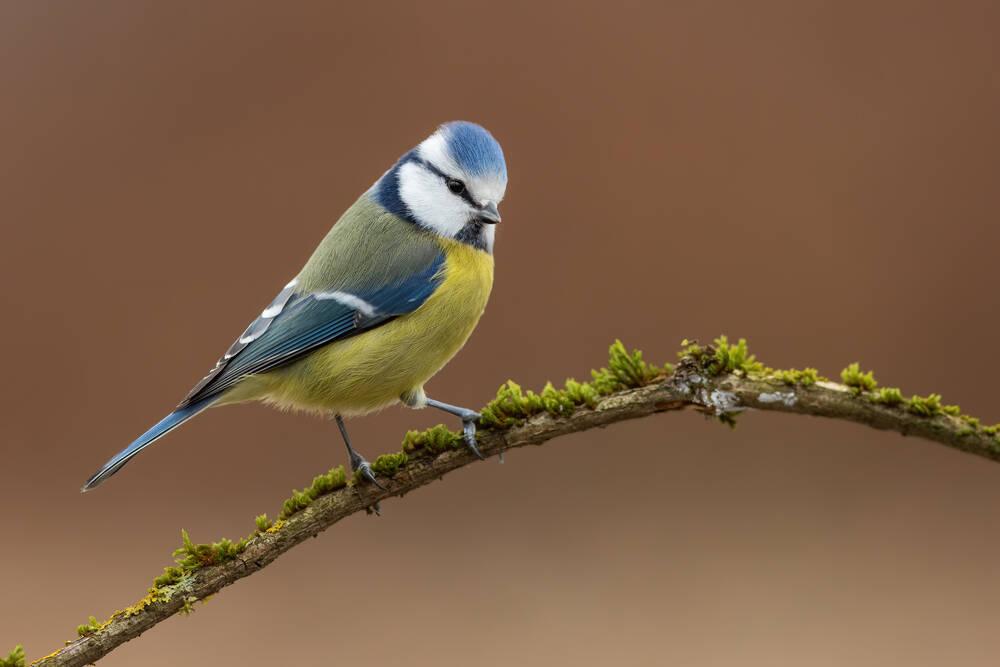
3,400,000 territories · Green list · down 6% since 1995
Blue cap, white cheeks, yellow underparts, a dark line through the eye. Blue tits nest in tree holes and boxes and will investigate anything that might hold food.
The long-run trend is close to flat, but the last ten years show an 8% decline. Research involving the RSPB links years of strong blue tit population growth to years of high moth abundance (Evans et al. 2024, Ecology Letters, doi 10.1111/ele.14362), a useful reminder that a garden bird's fortunes rest on insects rather than on feeders.
8. Dunnock
2,500,000 territories · Amber list · down 14% over the last decade
Brown and streaked with a slate-grey head and a fine pointed bill, quite unlike the sparrow's stubby one. Dunnocks shuffle along the base of hedges and borders and are easy to miss.
The UK long-term trend is flat, but England has lost 17% in ten years. The species had already halved between 1965 and 1995 before recovering somewhat, so today's figure sits on a much reduced base.
9. Meadow pipit
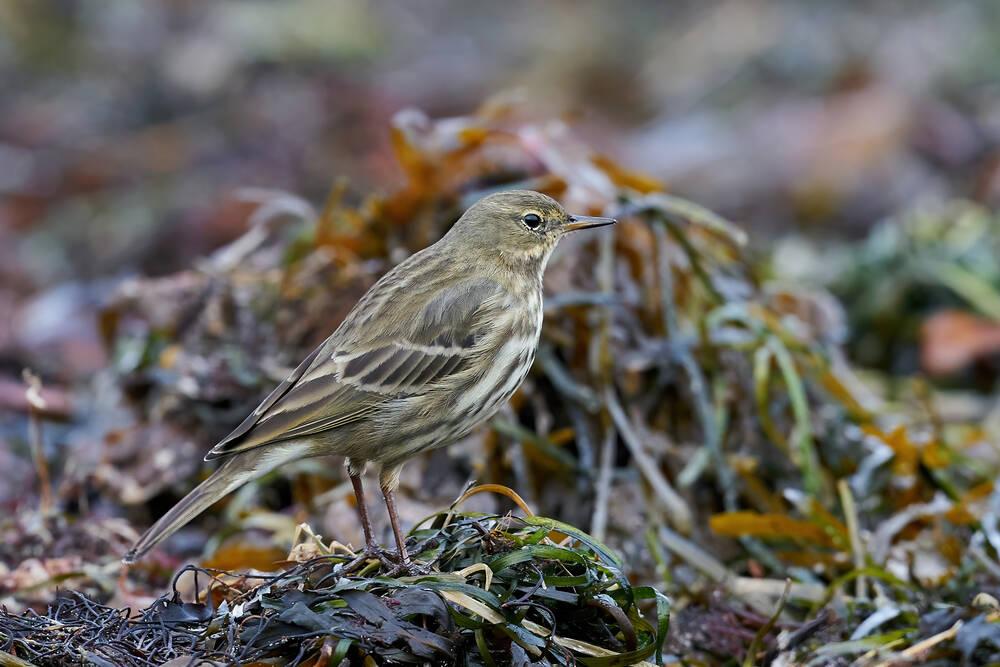
2,450,000 pairs (2,100,000 to 2,750,000) · Amber list · down 19% since 1995
Ninth commonest bird in the country and the one fewest people can name. Small, streaky and brown, with a thin bill and a song delivered on a parachuting descent.
Meadow pipits belong to moorland, rough grassland and upland edge rather than gardens, which is why they stay invisible in garden surveys despite outnumbering starlings.
They are also the main host of the cuckoo across upland Britain.
10= Great tit
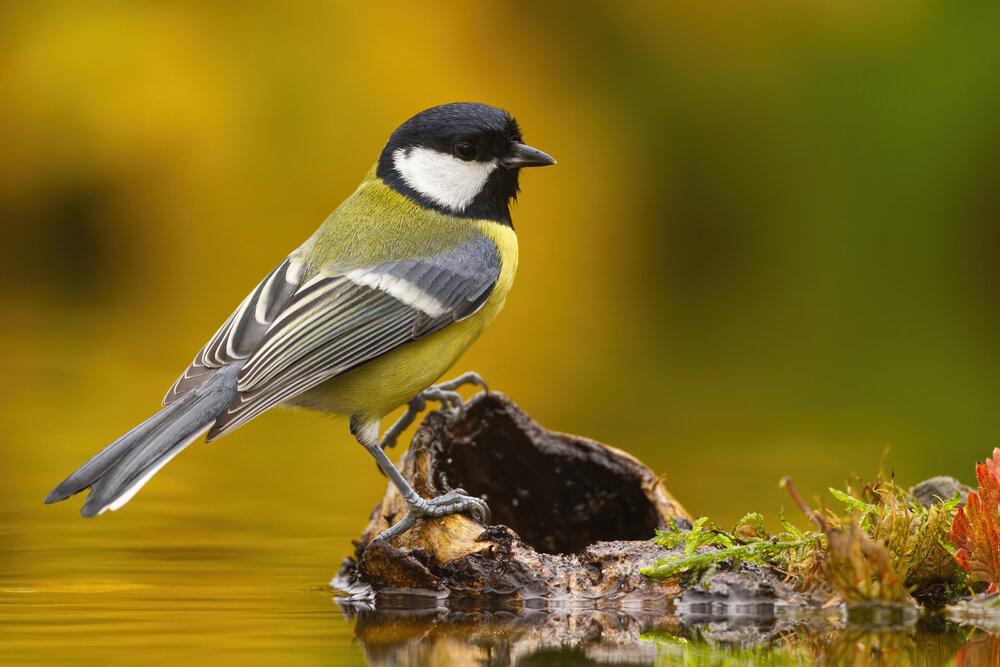
2,350,000 territories · Green list · up 15% since 1995, down 17% over the last decade
Bigger and bolder than the blue tit, with a black head, white cheeks and a black stripe down a yellow chest. The two-note song carries a long way through February woodland.
The recent decline is the notable thing. It shows up in all four UK countries and across habitat types, and the same pattern appears independently in BTO Garden BirdWatch reporting rates. Numbers still sit well above where they were in the 1960s.
10= Pheasant
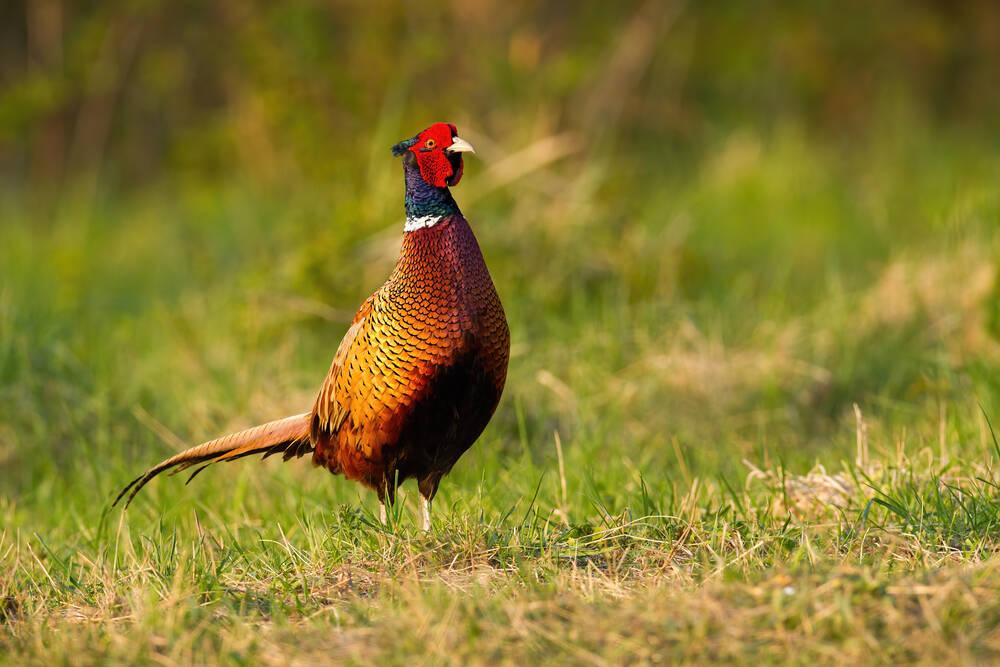
2,350,000 females · not Red or Amber listed · up 18% since 1995
Pheasant is the odd entry in this list. It is counted in females rather than pairs or territories, so the figure is not directly comparable with the rest of the list, and it is an introduction rather than a native. Males are unmistakable: bronze body, dark green head, very long tail.
The UK figure has fallen 9% in the last decade, and in Wales the five-year decline is 26%. [EDITOR: pheasant numbers are strongly influenced by annual rearing and release for shooting, but no source is cited here for release volumes. Either add a GWCT or Defra figure or cut this note.]
12. Willow warbler
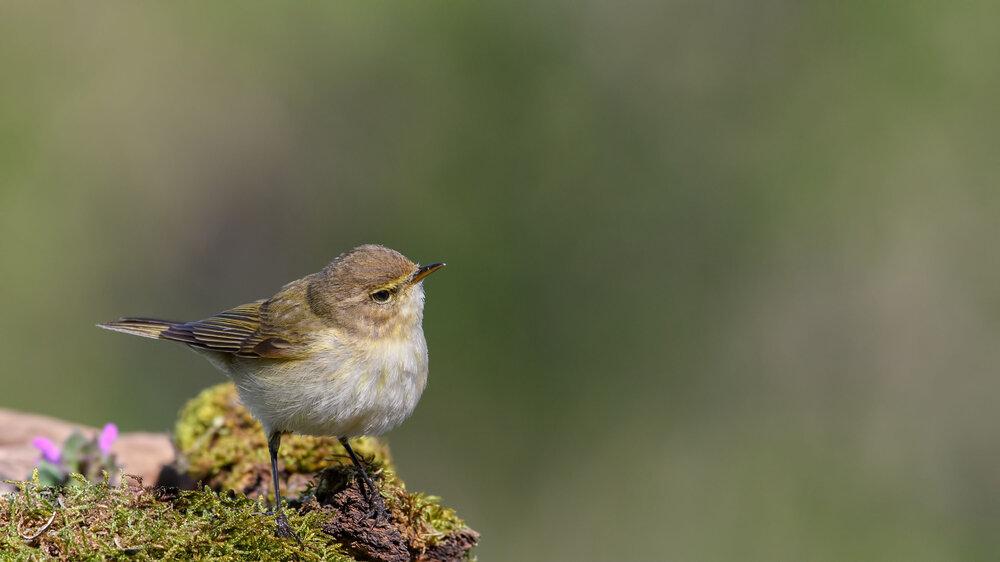
2,300,000 territories · Amber list · UK trend broadly stable, England down 47%
A small olive-green and yellow warbler that arrives from sub-Saharan Africa in April. It is almost identical to the chiffchaff by eye, and the reliable separation is song: a soft descending cascade from the willow warbler, a flat two-note repetition from the chiffchaff.
The national trend conceals a split down the country. England has lost 47% since 1995 while Scotland has gained 35%, one of several species now shifting north as the climate warms and Scottish woodland cover grows.
13= Chiffchaff
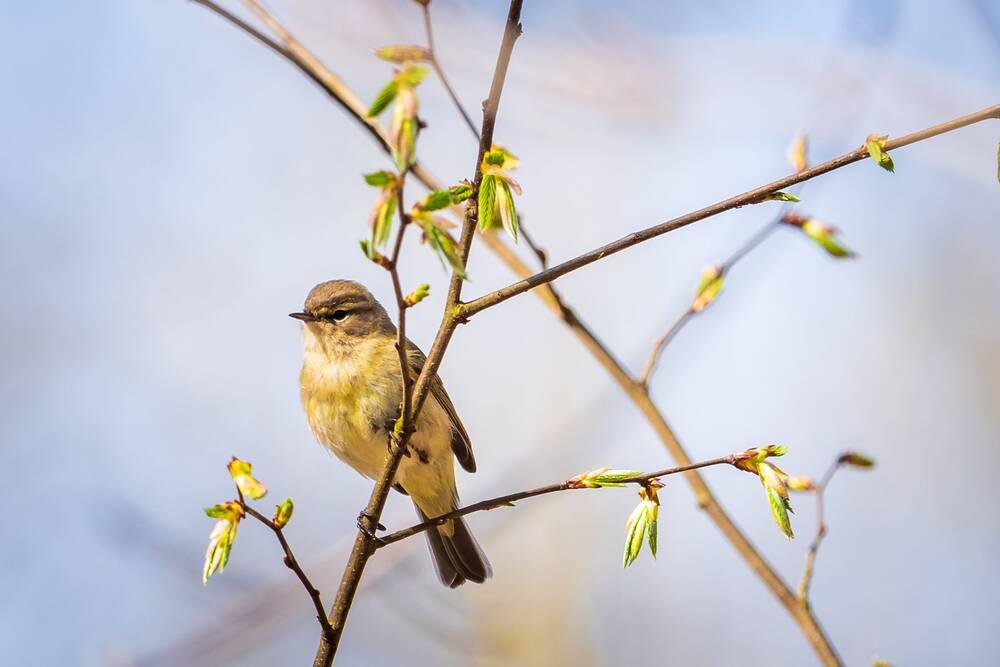
1,750,000 territories · Green list · up 227% since 1995
One of the clearest winners of the last three decades. The UK population has more than tripled on BBS squares, and the Scottish increase runs to 1,443%. Small numbers now spend the winter in southern Britain rather than migrating.
Olive-brown above and pale below, with dark legs. Most people identify it by ear long before they see it.
13= Starling
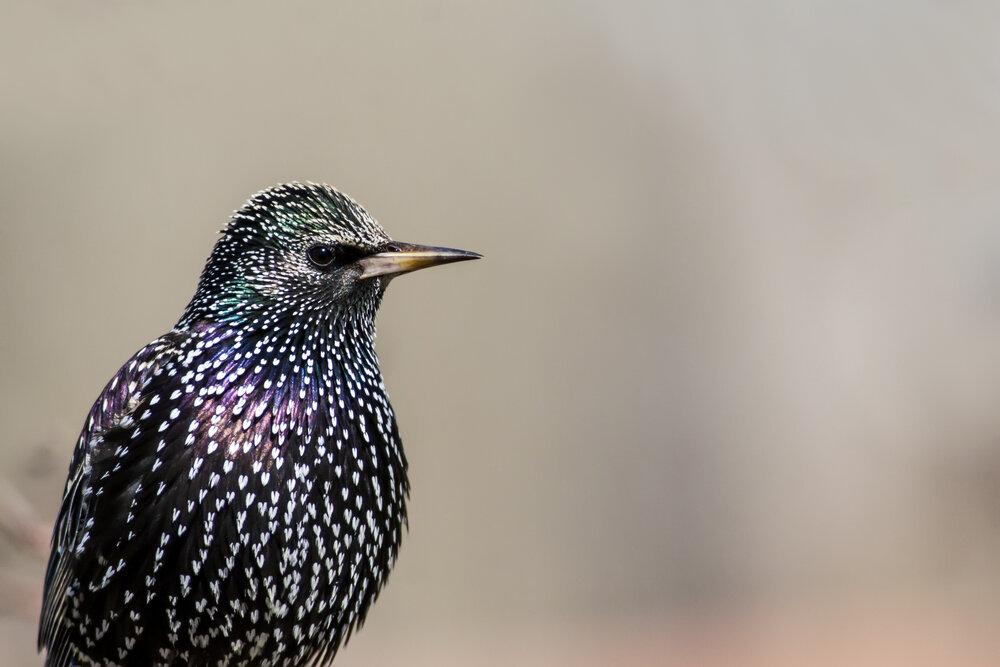
1,750,000 pairs (1,550,000 to 1,950,000) · Red list · down 61% since 1995
Glossy black with a green and purple sheen and pale spotting in winter plumage, walking rather than hopping. Starlings nest in cavities in buildings and trees and gather in winter roosts that can run to tens of thousands.
The decline is severe. UK abundance is down 61% since 1995 and England is down 70%, with a further 23% lost in the last ten years. Starling still came third in the 2026 Big Garden Birdwatch, which is precisely why garden rankings are a poor guide to how a species is faring.
15= Blackcap
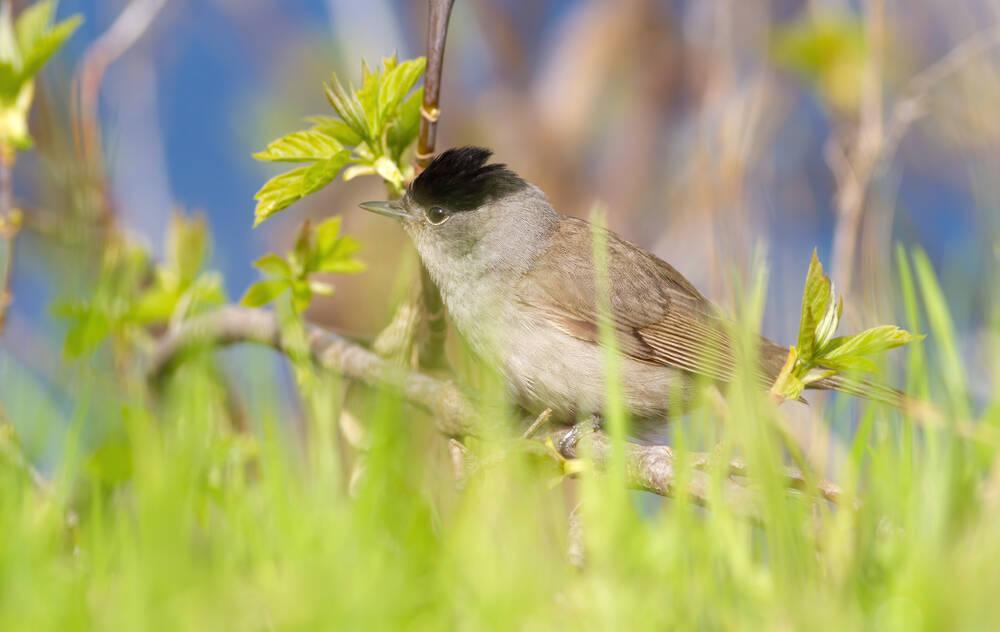
1,650,000 territories · Green list · up 195% since 1995
A grey warbler with a neat black cap on the male and a red-brown one on the female. The song is a rich tumbling warble that gets mistaken for a nightingale more often than it should.
Blackcap has nearly tripled on BBS squares since 1995. It is also the clearest case of a changing migration pattern in British birds, with breeding birds heading south for the winter while central European blackcaps arrive here instead.
15= Goldfinch
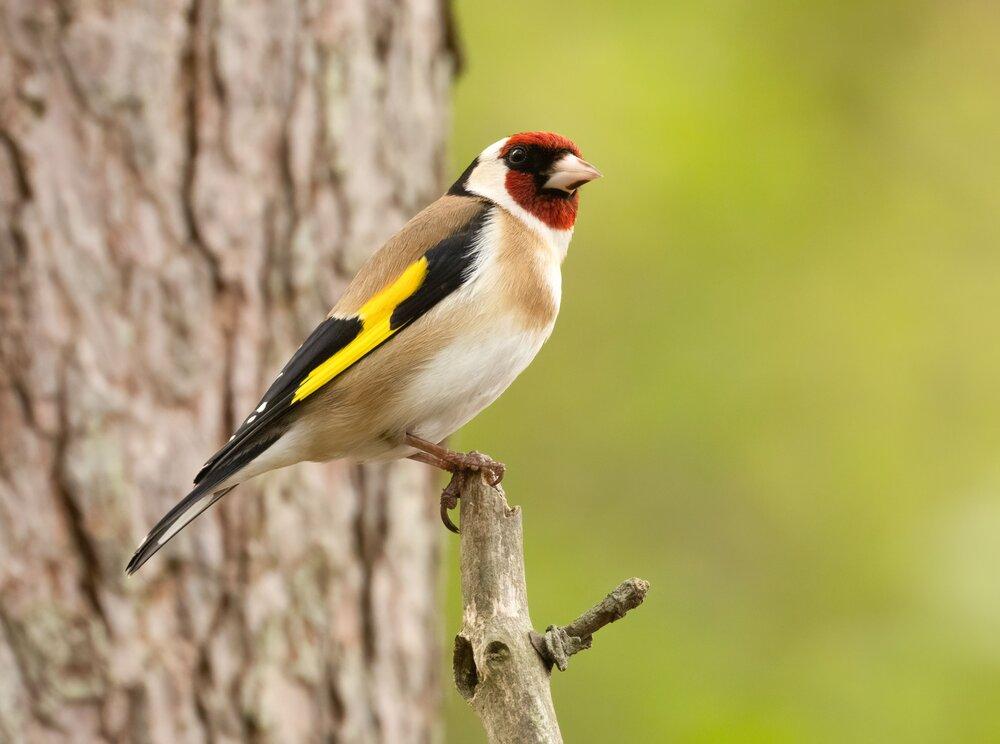
1,650,000 pairs (1,450,000 to 1,800,000) · Green list · up 148% since 1995
Red face, black and white head, broad yellow wing bar. Goldfinches feed on small seeds and were scarce garden visitors within living memory.
Research led by BTO connects the rise directly to garden feeding, particularly the spread of nyjer and sunflower hearts (Plummer et al. 2019, Nature Communications, doi 10.1038/s41467-019-10111-5). The trend has softened in places recently. London recorded a 34% fall over five years, on the back of the largest regional increase anywhere in England.
17= Jackdaw
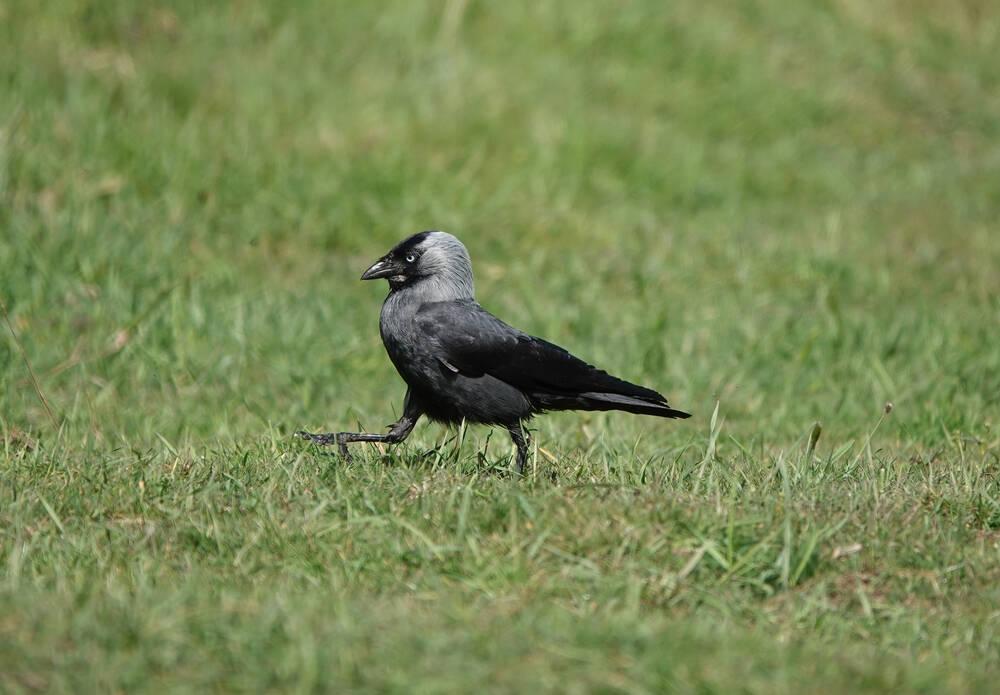
1,550,000 pairs (1,350,000 to 1,750,000) · Green list · up 61% since 1995
The smallest of the common British crows, grey-naped with a pale eye and a sharp clipped call. Jackdaws nest in chimneys, church towers, quarry faces and tree holes, and pair for life.
Jackdaws have gained steadily across the UK for three decades.
The rook, a bird of much the same country, has fallen 26% over the same period.
17= Skylark
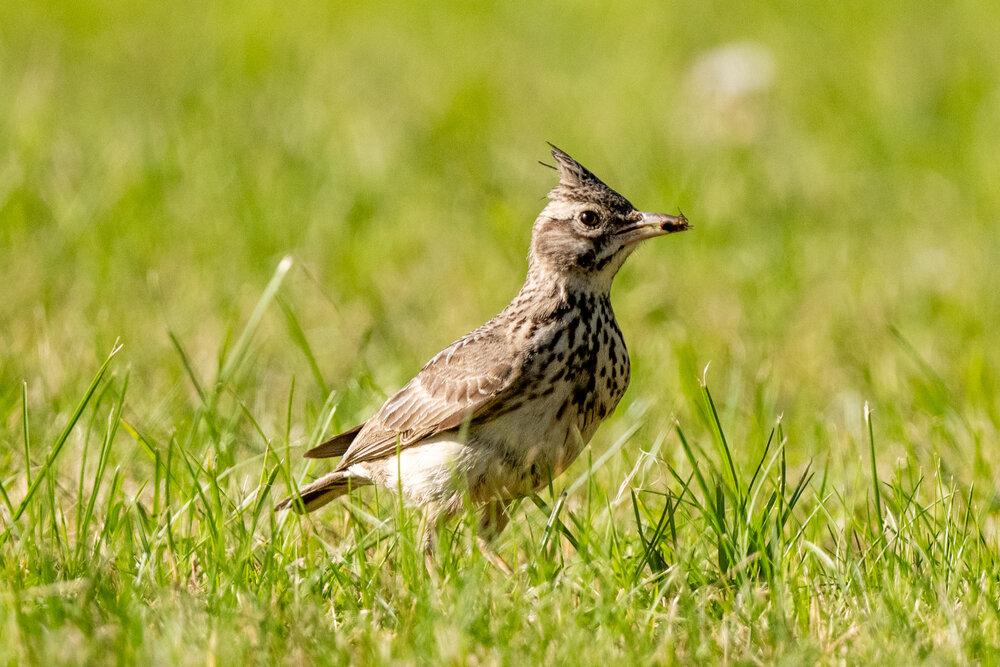
1,550,000 territories · Red list · down 9% since 1995
Streaky brown and crested, best known for the sustained song delivered while hovering high over open ground. Skylarks need open farmland, grassland and moorland. They will not use hedges or gardens.
The UK ten-year trend is positive at 18%, but the long-run picture is a decline and England is down 12% since 1995. Skylark is Red-listed on the strength of a much longer collapse that began well before BBS started recording.
19. Song thrush
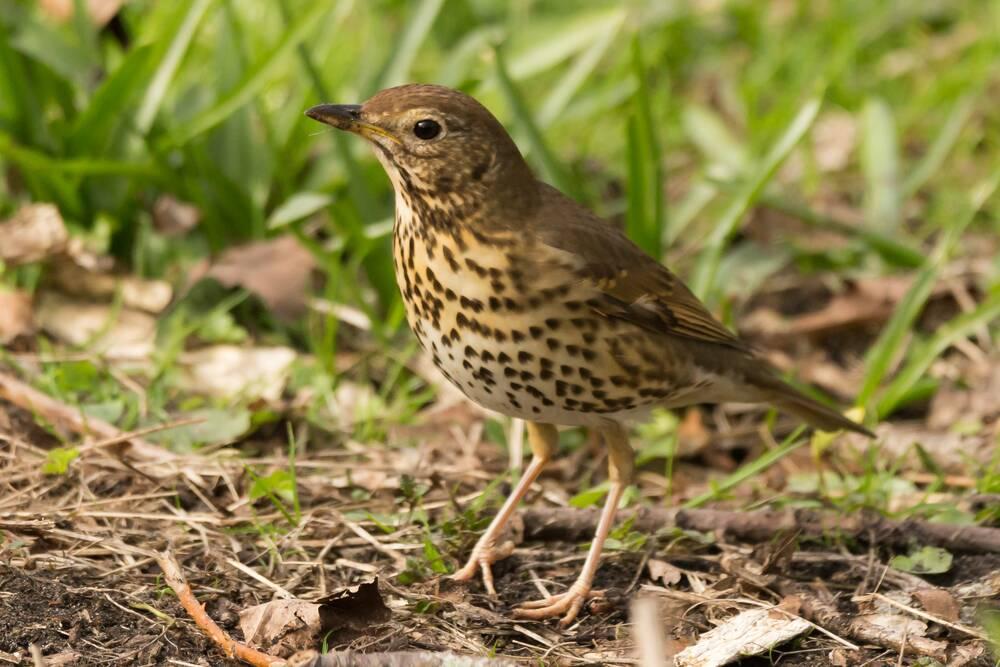
1,300,000 territories · Amber list · up 37% since 1995
Warm brown above, cream below, with dark arrowhead spots. Song thrushes repeat each phrase two or three times, which is the quickest way to separate them from a blackbird. This is the bird that leaves broken snail shells around a favoured stone.
It is also the recovery story in this list. Song thrush moved off the Red list to Amber in 2021 after decades of decline, though the assessment noted it remains close to the Red list threshold.
20. Whitethroat
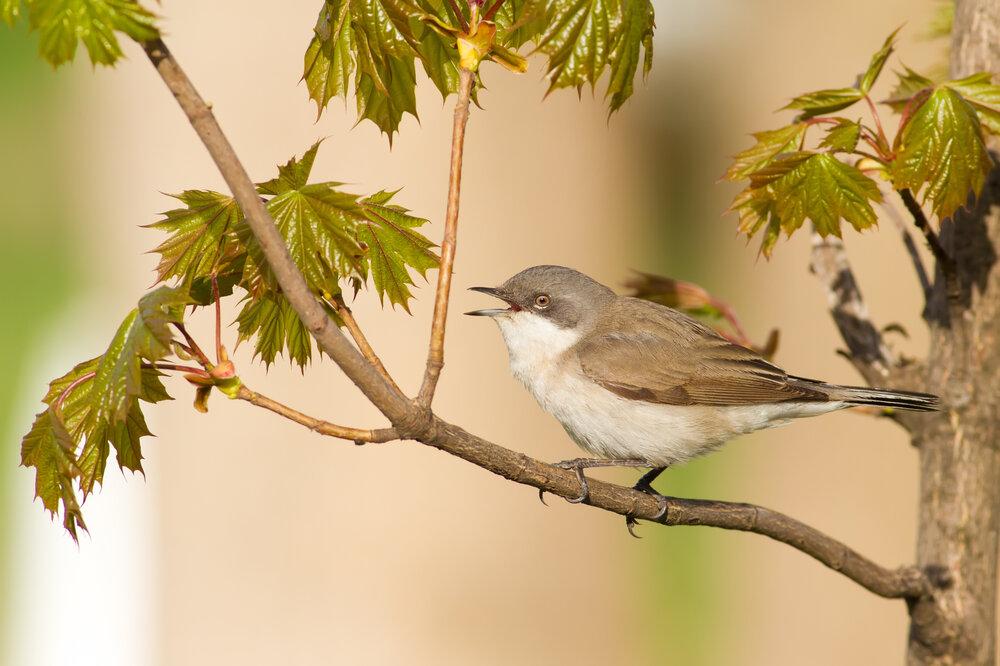
1,100,000 territories · Amber list · up 15% since 1995
A scrubby-hedgerow warbler with a grey head, rusty wings and a white throat, usually singing from the top of a bramble or in a short scratchy song flight.
Whitethroats winter in the Sahel, and the population responds to rainfall there: the crash of 1969, when a drought in the wintering grounds wiped out most of the British population in a single year, remains one of the best-documented migrant collapses in British ornithology. [EDITOR: the 1969 crash is long established in the literature but is not stated in either of the two primary sources used for this article. Add a citation or cut the sentence.] The last decade has taken 15% off the UK figure.
Common Now, Red-Listed Anyway
Birds of Conservation Concern 5 assessed 245 regularly occurring species and placed 70 on the UK Red List, the longest that list has ever been. Three of the twenty commonest breeding birds are on it: house sparrow, starling and skylark. Seven more are Amber-listed, the wren at number one among them.
Greenfinch shows how fast a familiar bird can fall. It moved straight from the Green list to the Red list in 2021 after a crash driven by trichomonosis, a disease of the digestive tract that spreads at feeding stations. It sat 18th in the 2026 Birdwatch, with average counts down 67% since the survey began and a UK decline of more than 65% over three decades.
That is why the RSPB changed its feeding advice alongside the 2026 results. The new guidance asks people to pause seed and peanut feeders between 1 May and 31 October, clean and reposition feeders weekly, change water daily, and stop using bird tables and any other feeder with a flat surface where contaminated food can collect.
More Information
· APEP 4: Population estimates of birds in Great Britain and the United Kingdom, BTO, the source of every population figure above.
· The Breeding Bird Survey 2025, BTO/JNCC/RSPB, for the trend figures and the country-level breakdowns, with the full trend tables available separately.
· Birds of Conservation Concern 5, for the Red and Amber list assessments quoted throughout.
· Wild birds: advice for making planning decisions, GOV.UK, on protection under the Wildlife and Countryside Act 1981 and what to expect in a planning context.
· Gaia's guide to biodiversity net gain, covering the statutory metric, the 30-year obligation and how off-site units are secured, plus the BNG Marketplace for buyers and sellers of units.
FAQs
What is the most common bird in the UK?
The wren, with an estimated 11 million breeding territories in the UK according to APEP 4. That makes roughly one in eight of the UK's breeding birds a wren. Robin is second on 7.35 million territories, house sparrow third on 5.3 million pairs, woodpigeon fourth on 5.15 million, and blackbird and chaffinch share fifth on 5.05 million each.
Why do some lists say the house sparrow instead?
Because they are quoting the RSPB Big Garden Birdwatch, which measures what people see in gardens rather than the national breeding population. House sparrow has led that survey for 23 years, most recently in 2026 with 1,275,378 birds counted. Wrens are solitary and insect-feeding, so they rarely appear in numbers at a garden feeder even where they are abundant nearby.
How many birds breed in the UK?
Around 85 million pairs across all species, on the APEP 4 estimate, which was similar to the previous total from 2013. Twenty-one species have populations above one million pairs and together make up close to 80% of that figure. The ten commonest species alone account for 58%.
Why do several species in the list have identical population figures?
Because APEP rounds its estimates to three significant figures. Blackbird and chaffinch both appear as 5,050,000 and great tit and pheasant both as 2,350,000, from calculations that have nothing to do with each other. The confidence intervals overlap between neighbouring entries anyway, so the ordering within any close group is not a firm ranking.
Which of the common UK birds are declining fastest?
Of the top twenty, starling has fallen furthest at 61% since 1995, followed by chaffinch at 36%, meadow pipit at 19% and house sparrow at 18%. Great tit is down 17% over the last decade despite being up 15% across the longer run. Skylark, starling and house sparrow are all Red-listed.