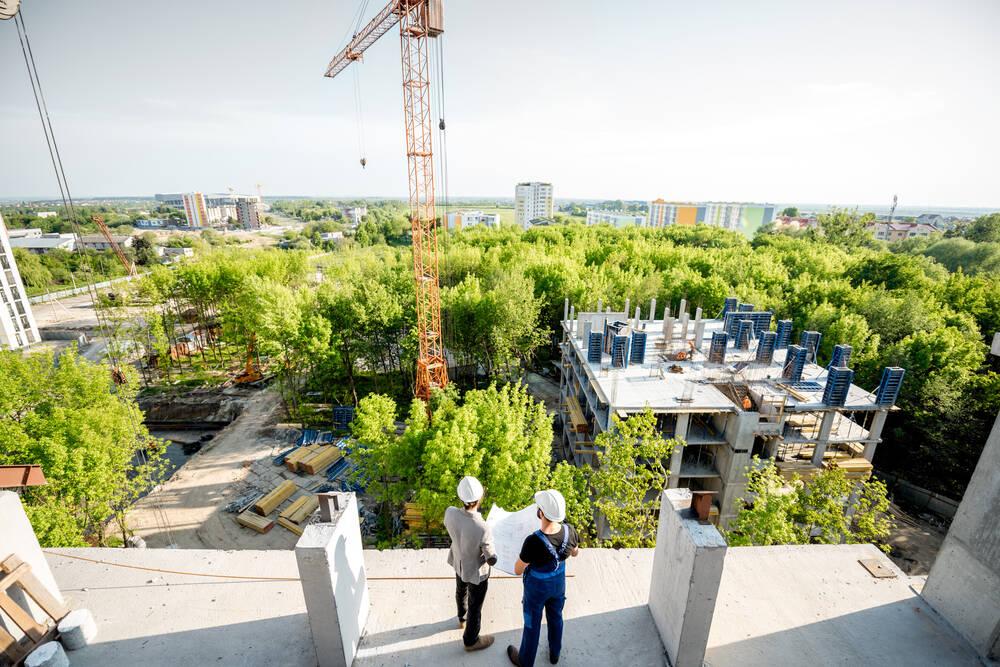
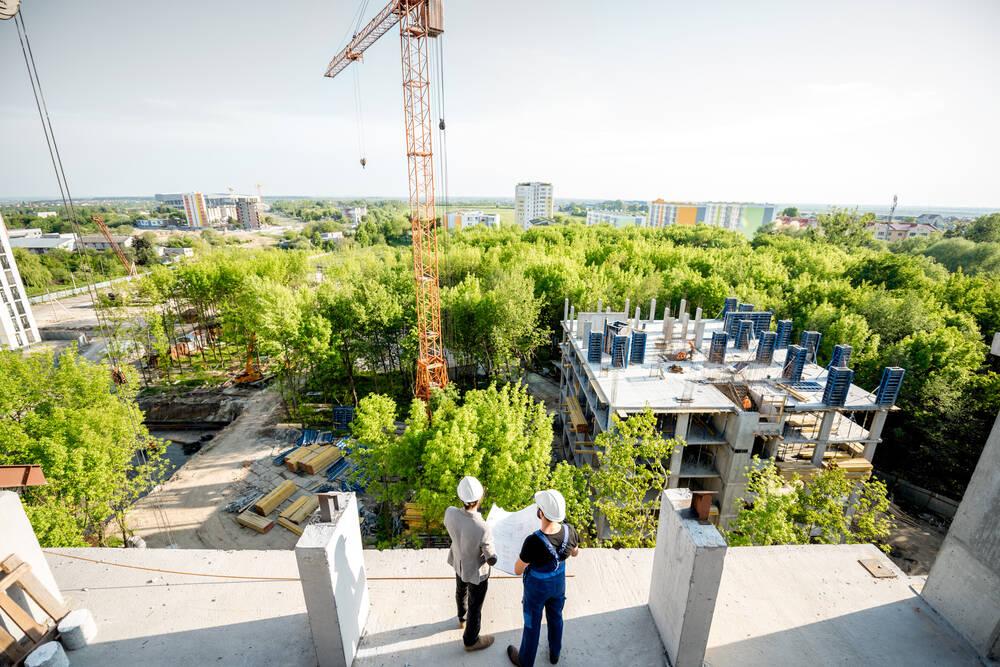
The Environment Act 2021 made BNG a legal requirement for most developments in England.
Under BNG, most new developments must demonstrate measurable ecological value through habitat creation that leaves the site in a better state than before.
For developers, navigating BNG correctly the first time allows the project to move forwards instead of facing major delays. Our latest article outlines 36 of the most common reasons for rejection, and how to avoid each one.
Whether you’re aiming for the full 10% gain on-site, doing a hybrid approach, or sourcing off-site BNG units, this is the most comprehensive free resource for developers navigating BNG compliance in England.
1. Failure to Achieve the Required 10% Biodiversity Net Gain
A common bottleneck of BNG applications is failure to achieve the 10% mandated gain, resulting in the LPA’s (Local Planning Authority) rejection.
The outlined 10% is the absolute minimum of biodiversity gain that must be achieved, and if the true uplift is ultimately under due to incorrect calculations or underestimated losses, the application won’t move forwards.
2. Missing or Incomplete Application Forms
There are many documents within the process of BNG: the planning application itself, the BNG statement, the Biodiversity Metric, even the HMMP (Habitat Management and Monitoring Plan) or a Biodiversity Gain Plan.
If forms are left incomplete or some are missing, the entire application stalls.
With the policy constantly evolving and re-shaping, it’s instrumental to ensure you’re using the latest version of available documents and forms. Download fresh from the planning portal, or keep updated on the UK government website.
3. Missing Pre-Development Biodiversity Value Data
The pre-development biodiversity data is the level of nature at the site, before any works have occurred.
This sole calculation is crucial for BNG. From it you measure exactly what habitats will be lost in development, so the 10% can be accurately calculated, secured and evidenced before works begin.
This occurs within the statutory BNG metric (Excel spreadsheet), which is split into pre-development (baseline) and post-development (uplifted).
Call the ecologist before anything on-site is touched, and you’ll prevent this from the start.
4. Missing Metric Calculation Details
It’s crucial to employ a BNG-specific ecologist or environmental consultancy to undertake your metric calculations.
Using the metric with no ecological expertise is like building structural calculations with no engineer.
Beyond the form and its calculations, user comments must be inputted alongside data to justify why each habitat parcel was scored the way it is.
Without it, the LPA can’t verify your scores nor approve your application.
5. Missing Statement on Habitat Degradation
The statement on habitat degradation is a written declaration within the application form.
It simply confirms whether habitats have been at all degraded on-site prior to application. It’s purely to validate the baseline, and confirm that what’s submitted reflects a true pre-development state.
It’s a quick integrity check, but one that can’t be skipped.
6. Using the Wrong Version of the Biodiversity Metric
Rules have recently been updated so that you can use any version of the statutory Biodiversity Net Gain metrics, not just the very latest version.
That means that Version 4.0 or earlier will be rejected, but anything later is acceptable.
7. Incorrect or Outdated Baseline Data
The baseline survey must be accurate, which professional ecologists are trained and qualified to deliver.
Even if the LPA doesn’t pick it up due to lacking ecological expertise (41% of LPAs were concerned about this), the risk is still there, and compounds over time.
Rejection could well occur later when the Biodiversity Gain Plan is reviewed or monitoring begins. This could incur costly habitat delivery or legal enforcement action years down the line.
8. Lack of Sufficient Ecological Surveys

A BNG application requires multiple ecological surveys, and skipping one means it can’t be processed at all.
This will vary depending on your development, but most could include a UKHab baseline habitat survey, habitat condition assessments, river condition assessments, or hedgerow surveys.
9. No Topographical or Habitat Map Provided
A topographical map shows the physical shape of the land including elevations, slopes, and contours.
Especially important for watercourse, it helps understand drainage, flood risks and a habitats’ relation to the landscape surrounding it.
A habitat map showcases the habitats within the site, linking directly into the BNG metric.
The ecologist does the habitat map within a UKHab survey, and the topographical map is not nationally mandatory, but only asked for by some LPAs.
It’s part of your ecologist’s job to understand your LPA’s local validation checklist.
10. Absence of a Habitat Management and Monitoring Plan
If you’re doing full or partial BNG on-site, you’ll get nowhere without a HMMP.
This extensive document outlines exactly how the habitats will be maintained and uplifted throughout the mandated 30 year period to achieve the 10% gain.
It’s created by the ecologist, sets out the granular route of Biodiversity Net Gain, and must be completed before plans can be submitted to the LPA.
If you’re taking the straightforward route and just purchasing off-site units, you won’t need a HMMP, and the landowner selling units will have this good-to-go.
11. HMMP Not Covering the Required 30-Year Period
If doing on-site BNG, you are tied into your BNG commitments for at least 30 years. The HMMP must reflect this.
This involves managing the habitats, monitoring, reporting back to the LPA, and funding the ecological work over the 3 decades.
If doing off-site, the 30 year management responsibility lies solely with the landowner that sold you the BNG units.
12. Non-Compliance with the Mitigation Hierarchy
The mitigation hierarchy is one of the central concepts within BNG, the priority that developers must use for their biodiversity impacts: avoid, mitigate, then compensate.
What this means is that on-site should always be considered first, to improve nature directly at the site.
When it comes to it, it’s highly common for the full 10% delivery to be unfeasible on-site. After exhausting all on-site options, developers must then look at purchasing BNG units off-site.
13. Attempting to Use Off-Site Units Without Legal Security
You must purchase BNG units that are legally secured.
Any off-site BNG units used to meet your 10% gain must be formally registered on the Natural England BNG Register before they can count toward your application. Units that aren’t registered, regardless of how credible the landowner or how genuine the habitat, will be rejected outright.
The land delivering those units must be protected by a legal agreement (a Section 106 or a Conservation Covenant), locked in for the mandatory 30 years, and officially recorded with Natural England before you submit.
The register is publicly searchable, and LPAs will check it. If the units don’t appear, your application stalls. Confirm registration before anything else.
14. Lack of Section 106 Agreements or Conservation Covenants
When buying units off-site, they must be legally secured, else your application will fail.
Two legal mechanisms exist for this. A Section 106 agreement is a planning obligation between the landowner and the LPA, binding the land to its BNG commitments for 30 years. A Conservation Covenant is a private, voluntary agreement between the landowner and a responsible body, such as a local authority, the National Trust, or another approved organisation, and runs with the land regardless of future ownership changes.
Both are valid routes. What they share is permanence: the habitat delivery cannot be undone, sold away from, or quietly abandoned. The legal agreement ensures the gains you’re purchasing will actually exist and be managed for the full three decades.
Without one of these in place, the BNG units have no enforceability behind them. The LPA cannot accept units that rest on a handshake, and Natural England won’t register them either. Get legal security confirmed before purchase, not after.
15. Applying BNG Requirements to Exempt Developments
The latest Biodiversity Net Gain update was published last week, with new exemptions rules coming in from July 31st.
The self-build and custom-build exemptions are now dropped, which many sites used as a ‘loophole’ to avoid BNG responsibilities last year.
Now streamlined, sites under 0.2 hectares are entirely exempt.
Temporary planning permissions of 5 years or less are exempt (i.e. construction compounds or short-term land uses).
Developments on parks, public gardens, playing fields, or any primarily observing / conserving biodiversity are also exempt from the policy.
Until 31st July, original rules still apply. Self-build exemptions are valid, and sites under 0.2 hectares require BNG unless below de minimis (too small to matter).
16. Errors in Habitat Condition Scoring

Habitat condition scores follow poor, moderate, or good, assessing the quality of each habitat parcel.
Depending on this score, it determines how many biodiversity units the habitat is worth.
It applies to the pre-development baseline habitats, and post-development new or enhanced habitats.
An LPA could challenge condition scores that look implausibly high, so don’t cut corners on survey timing. The best survey season for most habitats is mid-April through the end of August, with plants flowering and identifiable.
Miss the August cutoff and you’re waiting until mid-April, delaying the application by a potential 7-8 months.
17. Incorrect Calculation of Habitat Units or Biodiversity Units
The metric has strict trading rules. The 10% gain must be achieved in each of the three unit types (area, hedgerow, watercourse) independently.
18. Failure to Properly Account for Habitat Losses Due to Development
It’s essential that all habitat losses during development have been properly accounted for.
Most common reasons for developers to make errors here are not including all habitats within the red line boundary. Nothing can be missed.
Temporary habitat loss must be dually treated as habitat loss. Unless they will be fully restored within 2 years, they cannot be ignored within the metric.
Indirect impacts must be treated with the same severity as direct impacts. This could be compaction, drainage changes, light pollution or increased footfall.
Moreover, things like phased developments. Later phases’ habitat losses cannot go unaccounted for.
19. Incomplete or Missing Evidence of Habitat Enhancements
Any habitat enhancement claimed in the post-development metric must be evidenced with plans, specifications, and a credible delivery strategy.
20. Failure to Prioritise On-Site Measures Before Off-Site Measures
The mitigation hierarchy is one of the key concepts within Biodiversity Net Gain.
As covered, on-site BNG options must be fully explored before off-site options are considered.
At times, the 10% gain is achieved partially onsite, and topped-up off-site, through a hybrid approach.
21. Insufficient or Inaccurate Evidence of Species Presence
Most sites will have species present, from bats on roofs to bees in shrubbery.
Different species surveys have different seasonal windows, meaning the ecologist has to thoughtfully set timelines and structure plans accordingly.
To minimise the risk of insufficient evidence, the developer should commission surveys as early as possible.
22. Misidentification of Habitat Types
Another reason for BNG applications is the misidentification of habitat types, which can occur for a variety of reasons.
Some habitats are genuinely ambiguous and require a vigorous ecological eye, which your ecologist should have no problem navigating.
A desktop assessment in lieu of a site visit could certainly return errors.
Moreover, timing matters. Grassland can look entirely different at different times of the year, and flowering plants are the biggest giveaway.
23. Not Including Cumulative Impact Assessments if Relevant
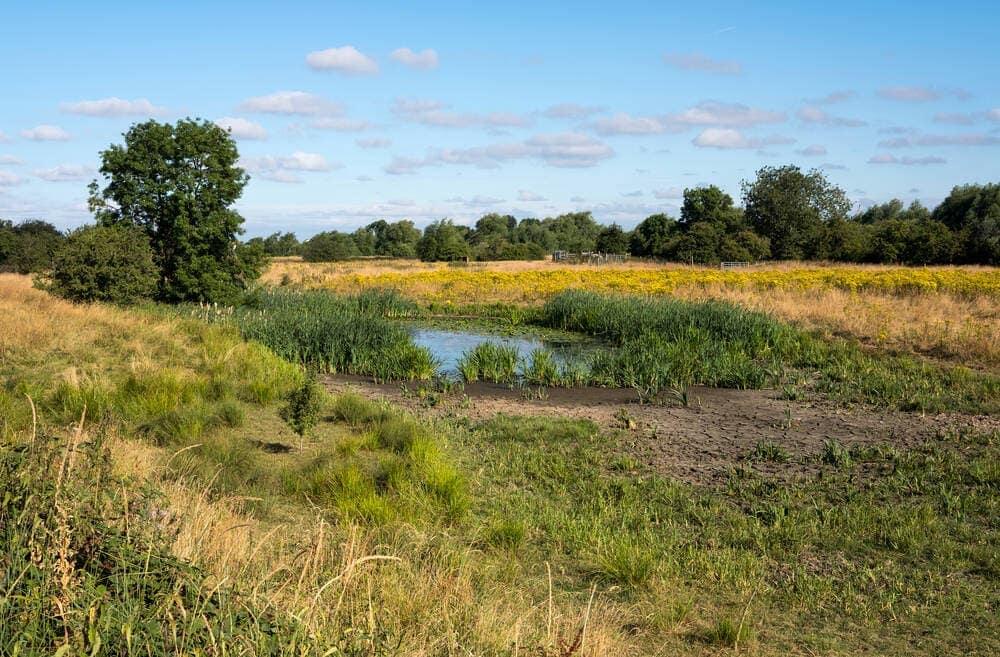
A cumulative impact assessment is only required when multiple developments happen in the same area with a combined biodiversity impact greater than a single development alone.
It’s essential for most larger phased developments, where phase 2 and 3 might compound the impact of phase 1.
24. Overlooking Statutory Protected Species or Habitats
Statutory protected species and habitats include newts, badgers, otters, water voles, nesting birds, or other animals equally rare and ecologically irreplaceable.
For habitats, this includes SSSIs, involving irreplaceable habitats like blanket bog or ancient woodland.
If these are identified by the ecologist, the developer must commission specialist reports or mitigation licences in due turn.
If a protected species is harmed, Natural England can prosecute with fines or custodial sentences.
25. Failure to Justify Deviations from Standard Metric Methodology
If the ecologist deviates from the standard metric, it has to be well-justified.
For instance a rare habitat type, a complex habitat mosaic, or an irreplaceable habitat.
Rule 4 is the formal name of the exception clause, creating room for exceptional ecological circumstances, but insufficient justification will result in rejection.
26. Insufficient Monitoring or Reporting Arrangements
If you’re doing on-site BNG, it’s a full 30-year commitment, not just a quick sign-off to secure the new development.
If going down the off-site route, the operational responsibility lies with the landowner that sold the units.
When committing to your own on-site gains, you must ensure that you have sufficient reporting and monitoring systems planned out for the full period, or the LPA will reject your HMMP and halt any development.
27. Failure to Include Maintenance Funding Details
The LPA needs to see how the 30-year habitat management will be funded, not just planned.
Either a ring-fenced fund, an upfront sum, or a management company with a long-term contract in place.
28. Not Demonstrating Long-Term Viability of Habitats
In the same vein, the HMMP must demonstrate that habitats will be managed long-term.
For instance, proposing a wildflower meadow and funding management for 5 years, assuming it will self-sustain, while in actuality they require annual cutting and on-going works.
29. Incomplete or Missing Proof of Landowner Agreements for Habitat Areas
Any land used from outside the development boundary for the stated on-site BNG gains will trigger rejection, unless you can prove the right to use the land for BNG for 30 years.
For instance, striking a private deal with an adjacent farmer, or using a nearby field. Both legitimate routes, but requiring their own specific legal agreements.
30. Inaccurate or Misleading GIS or Mapping Data
GIS (Geographic Information System) data is a digital mapping layer behind habitat maps, showing habitat parcels with coordinates, measurements, spatial relationships, attribute data and more.
Your ecologist will employ GPS equipment or total station surveying to acquire this data, however it’s not necessary for small sites.
The LPA then checks the ecologist’s measurements against their LPA-wide GIS data to confirm credibility and verify habitat locations.
Make sure to employ a BNG-specific ecologist or environmental consultancy that understands the nuance and levels required to on-site BNG.
31. Missing or Incorrect Supporting Documents (Plans, Photos, Surveys)

Applications must showcase supported documents to offer a comprehensive and full picture of the site.
Photos could be the job of the developer, so take them as early on as possible.
The planning agent or architect must prepare the plans, and the ecologist must prepare the surveys.
Each party has a responsibility to submit current, accurate and consistent documents.
32. Submission After the Deadline
Planning applications and BNG documents have fixed submission deadlines. They must be met.
33. Incorrect Submission Format
The statutory biodiversity metric must be submitted as a macro-disabled Excel file (.xlsx) with all sheets unhidden.
34. Lack of Evidence for Ecological Expertise or Consultant Credentials
Name your ecologist on the start page of the statutory biodiversity metric.
You should include their qualifications, as an uncredentialled submission can be rejected outright.
35. Misalignment with Local Planning Authority Biodiversity Policies
Each LPA sets their own biodiversity policies depending on their Local Plans.
Some may require stronger evidence that on-site is impossible, some charge for the 30-year monitoring fees, some require extra validating documents, and so forth.
You should be aware of your LPA’s policies before setting out all BNG plans and documents, as misalignment will delay the process.
36. Failure to Integrate Green Infrastructure or Ecological Corridors
You must take into account the immediate ecological vicinity.
Not just ticking a spreadsheet, but strategic on-site gains that connect to external habitats and ecological corridors beyond the site’s boundary.
For on-site BNG, you must consider your site’s surroundings, local ecology, wildlife corridors, and the Local Nature Recovery Strategy (LNRS)’s priorities for your area.
With 36 potential reasons for rejections, getting BNG right the first time matters. Be aware of all your options, and browse 53,000+ verified off-site units on the Gaia BNG Marketplace with unlimited searches and enquiries for free.
Gaia BNG MarketplaceMore Information
FAQs
Do I need a HMMP if I’m buying off-site BNG units?
If you’re taking the straightforward route and just purchasing off-site units, you won’t need a HMMP, and the landowner selling units will have this good-to-go.
What happens if I miss the ecological survey season?
The best survey season for most habitats is mid-April through the end of August, with plants flowering and identifiable. Miss the August cutoff and you’re waiting until mid-April, delaying the application by a potential 7-8 months.
Do I need an ecologist for my BNG application?
It’s crucial to employ a BNG-specific ecologist or environmental consultancy to undertake your metric calculations. Using the metric with no ecological expertise is like building structural calculations with no engineer.
What is the 30-year commitment in on-site BNG?
If doing on-site BNG, you are tied into your BNG commitments for at least 30 years. This involves managing the habitats, monitoring, reporting back to the LPA, and funding the ecological work over the 3 decades.