
Supplier engagement and data collection surveys
The biggest part of most footprints sits in the supply chain, in data you do not hold. Gaia collects it: send your suppliers and your staff a survey, see who has responded, and turn their answers into emissions.
Primary data beats a spend-based estimate
Ask the people who hold the real figures, then bring their answers back into your footprint
Why primary data matters
Scope 3, the emissions in your value chain, is usually the largest part of a footprint and the hardest to measure, because the figures sit with your suppliers rather than in your own accounts. A spend-based estimate, money spent multiplied by an average emission factor, is a legitimate starting point and what most footprints run on. What it cannot do is tell one supplier apart from another: two firms you pay the same get the same number, however differently they actually operate.
The frameworks are moving on. The EU's Corporate Sustainability Reporting Directive (CSRD) asks for Scope 3, the Science Based Targets initiative expects suppliers to be engaged, and the Greenhouse Gas Protocol ranks supplier-specific data above every other method. The way to improve a Scope 3 number is to ask the people who hold the real figures. Gaia's surveys do exactly that, for your suppliers and for your own staff, and bring the answers back into the same footprint as the rest of your data.
Supplier data requests and staff surveys, in one place
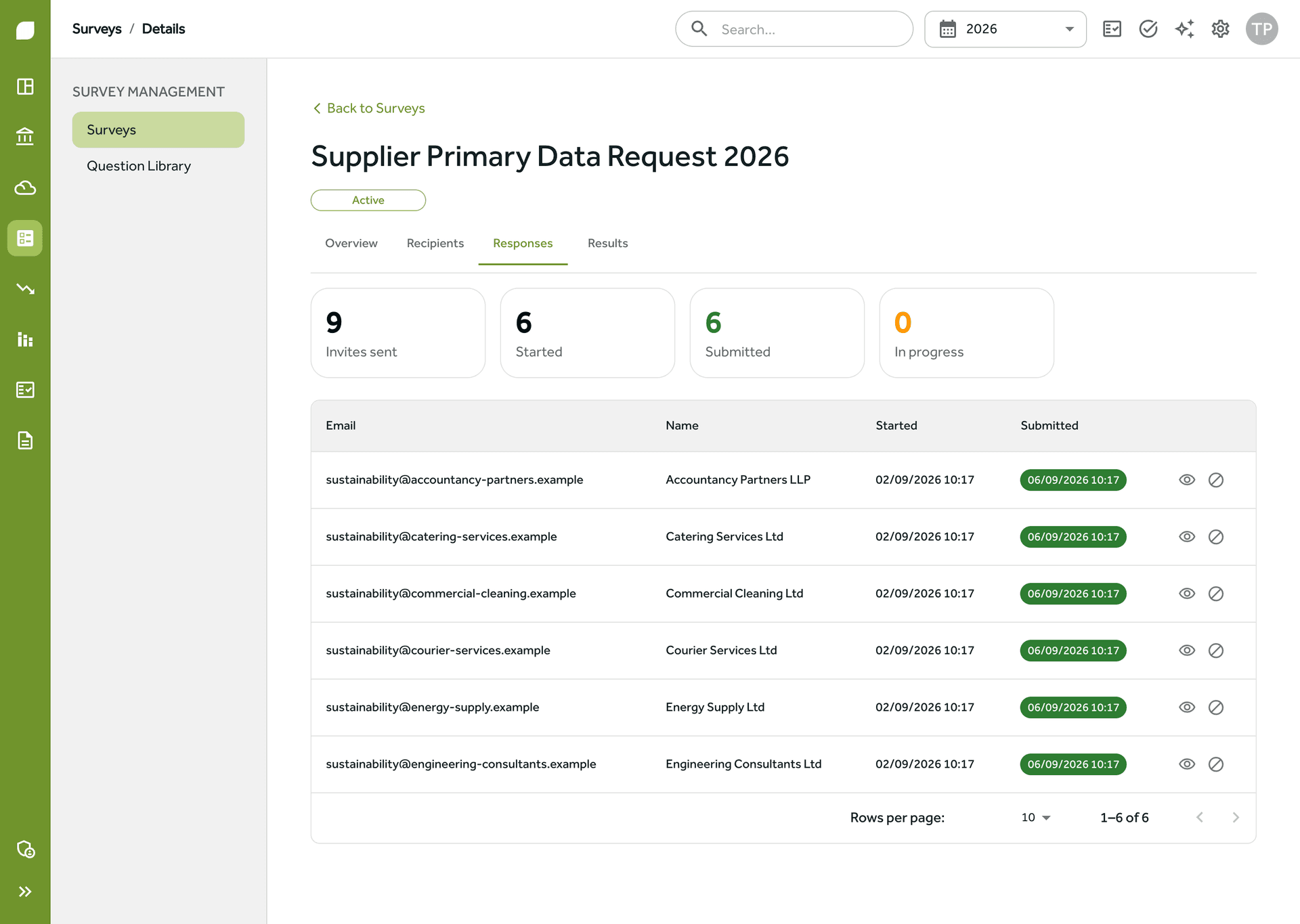
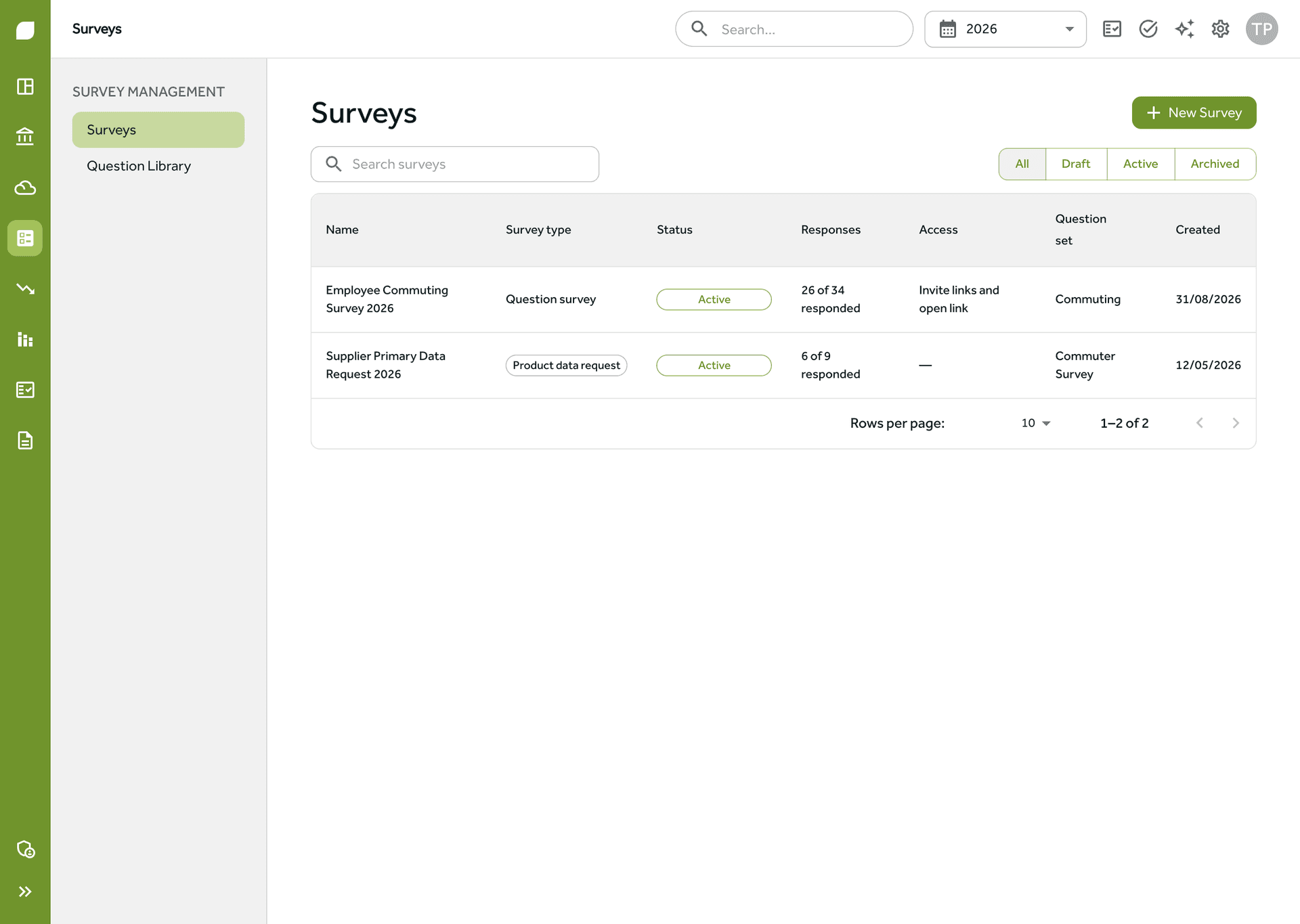
Send a supplier a product-data request, or your staff an employee commuting survey, from the same tool. Each survey carries a status, a response count and the question set behind it, so you can see at a glance which data collection is live and how far along it is. Distribute by personal email invitations, a single shareable link, or both.
See who has responded, remind only who has not
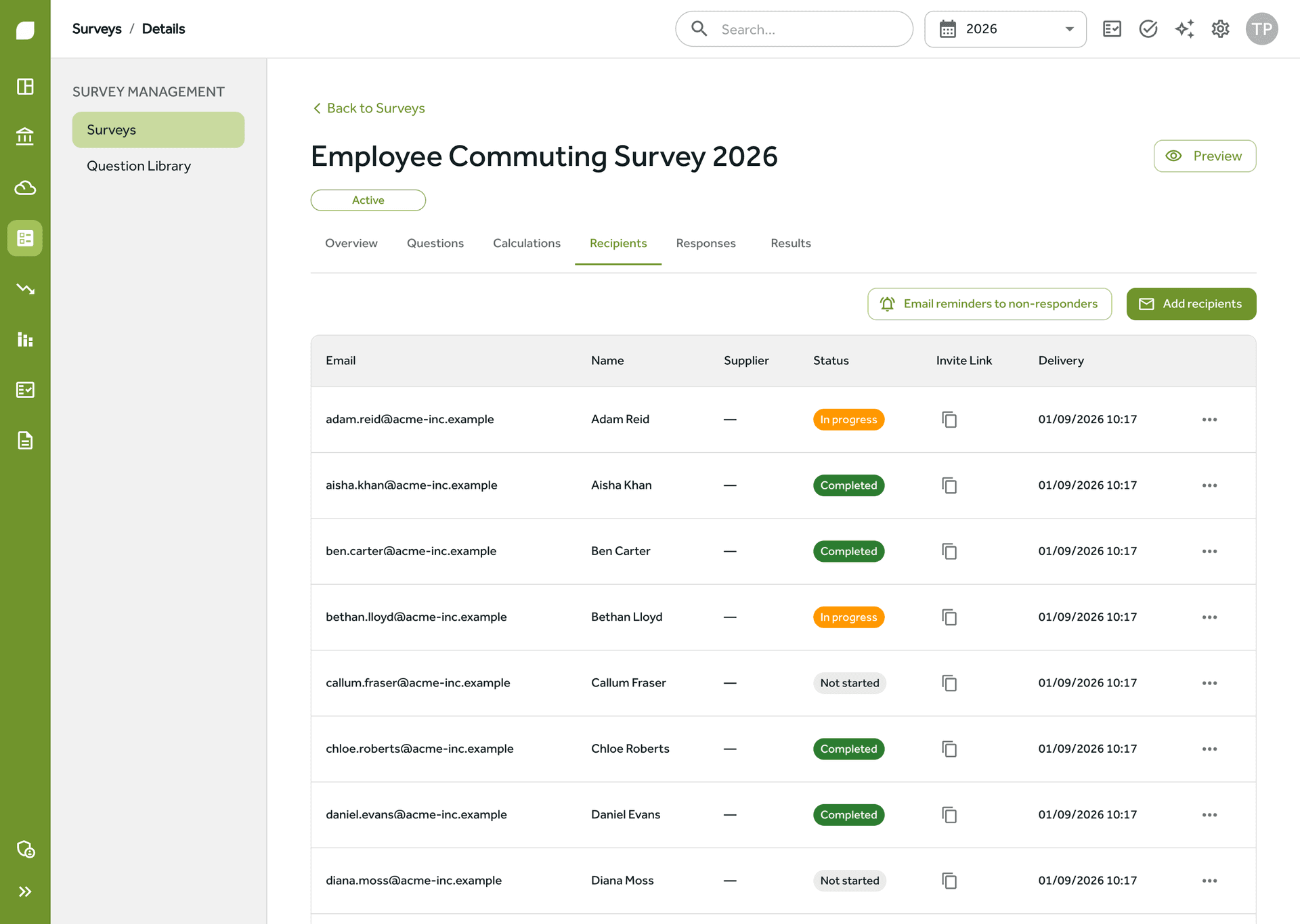
Every recipient carries a status, from not started through in progress to completed, so your coverage is never a guess. When it is time to chase, one button emails a reminder to the people who have not answered rather than the whole list, so the suppliers and colleagues who already replied are left alone.
Build the questions once, reuse them every year
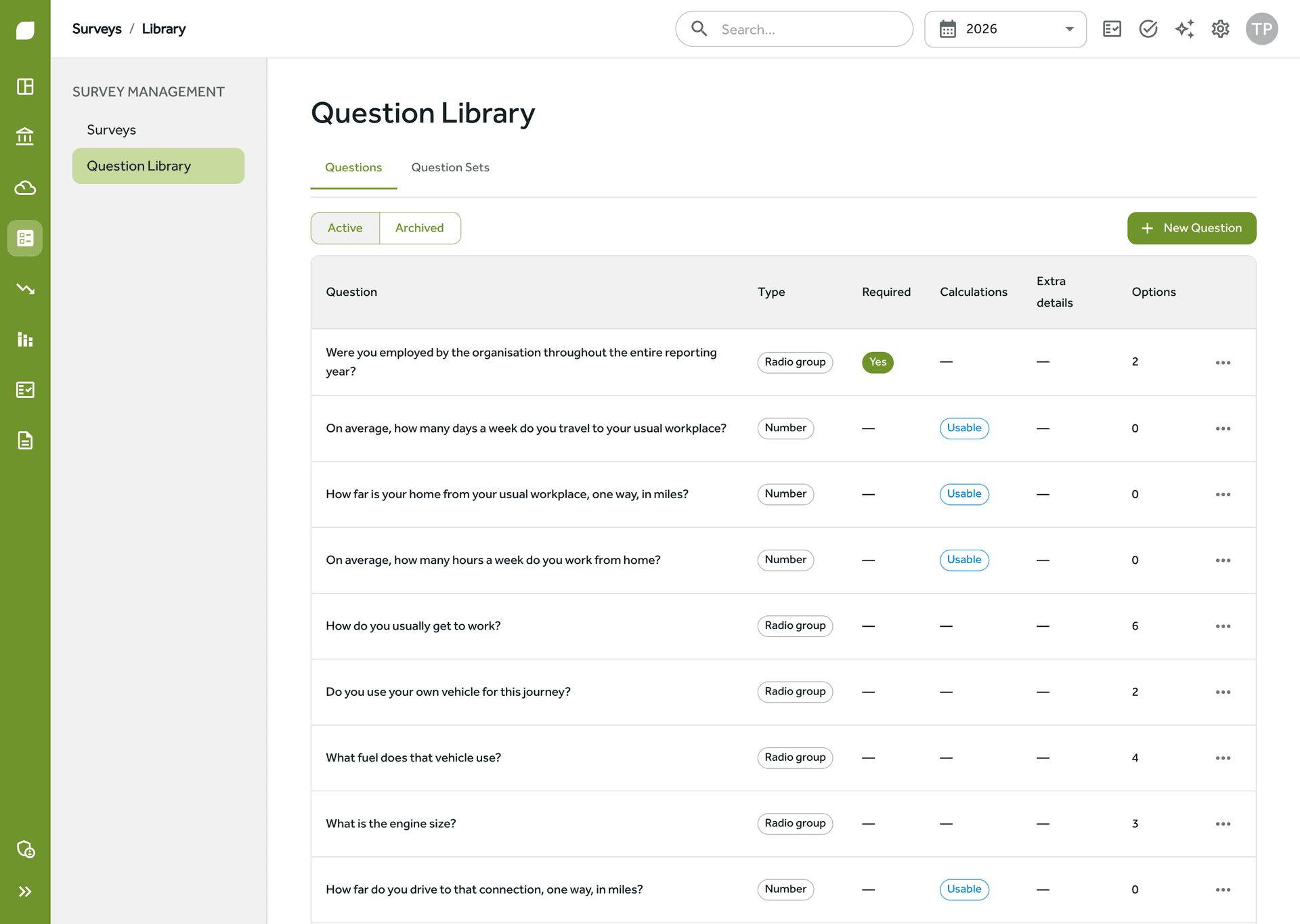
A question library holds your reusable question sets with the calculation rules attached, so next year's commuting survey or supplier request is a reuse rather than a rebuild. Questions carry their own answer types and validation, and the ones that feed a calculation are marked, so you can see which answers will become emissions before you send a thing.
See supplier data collection built into the footprint
Collection you can trust, not just a form
Email or one shared link
Anonymous where it helps
Reviewed before it counts
The GHG Protocol's top method
Common questions about supplier engagement and surveys
Why not just use spend-based estimates?
A spend-based estimate is a fair starting point and is how most footprints begin, but it treats every supplier you pay the same as identical. Supplier-specific primary data is more accurate and ranks higher in the Greenhouse Gas Protocol method hierarchy, and frameworks such as CSRD and the Science Based Targets initiative increasingly expect it. Gaia lets you start on spend-based figures and replace them with primary data as suppliers respond.
How do suppliers and staff respond?
You invite them by email, or share a single open link, and they answer the questions in their own time. A supplier product-data request asks for figures such as the amount of a product and its emissions per unit; an employee survey asks about things like commuting distance and mode. Responses come back into the platform rather than your inbox.
Does a response change my footprint automatically?
No. A supplier answering a data request proposes figures; nothing is applied to your emissions until someone reviews and confirms them. It is the same principle as everywhere else in Gaia: the platform does the collecting and the matching, and a person keeps the final say.
Can employee surveys be anonymous?
Yes. Employee surveys, such as a commuting survey, can be answered anonymously so people reply honestly, while the answers still aggregate into your emissions total.
What can I collect with a survey?
Supplier primary data for Scope 3, employee commuting and homeworking, and any other activity you can turn into a question with a calculation behind it. Question sets are reusable, so once a survey is built it becomes next year's starting point rather than a blank page.
Turn your supply chain from an estimate into evidence
See how Gaia collects primary data from suppliers and staff and brings it into the same footprint as the rest of your emissions, with pricing from £300 + VAT per month.