
Carbon accounting for events companies
Every event has its own footprint, and for most organisers the biggest slice sits in how people get there. Gaia measures Scope 1, 2 and 3 for each event, covering venue energy, staging, and the travel of your audience and crew, then turns the result into audit-ready reports your clients can trust.
Carbon measurement built around the event
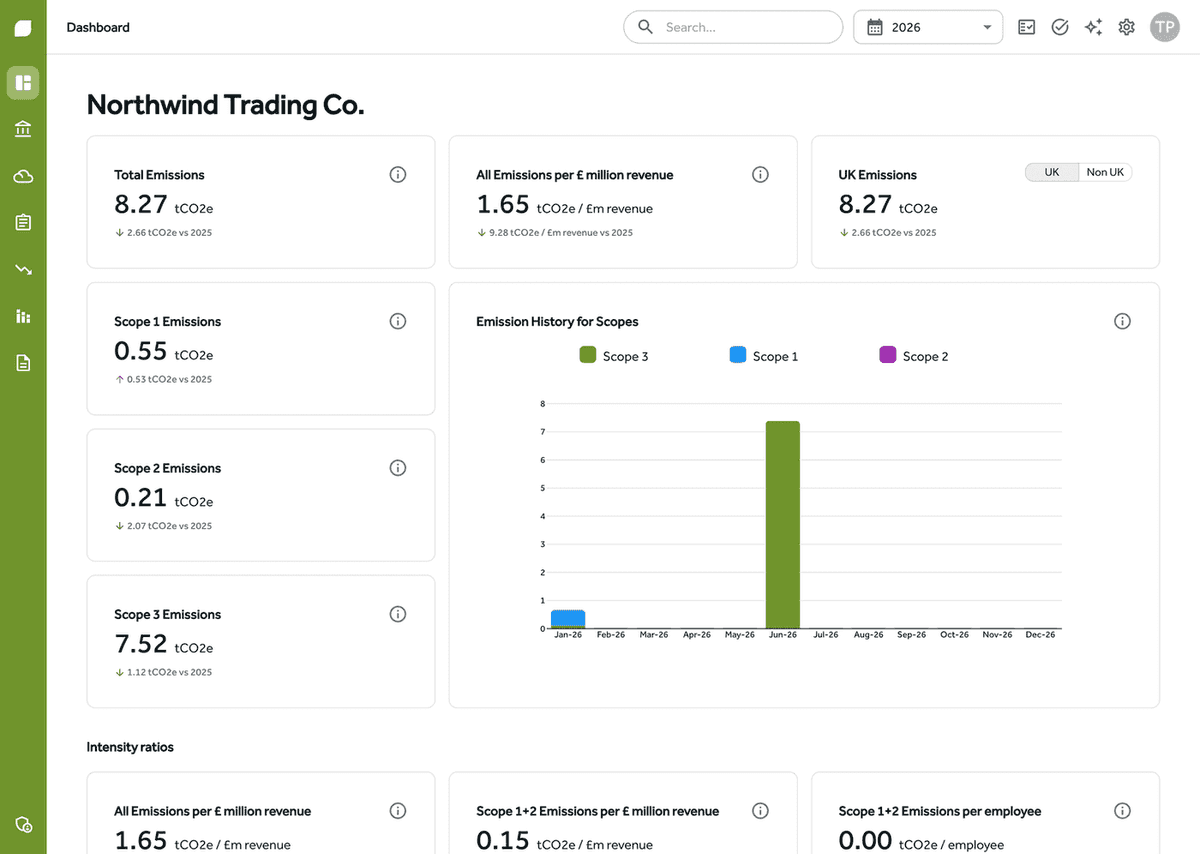
Events don't run on a steady baseline. You might deliver a 200-person conference one week and a 20,000-capacity festival the next. Each has a different venue, supplier list and travel pattern, so a single annual number tells the people planning the next show almost nothing.
Gaia lets you measure the footprint of each event on its own terms, then roll those numbers up when you need a company-wide picture. Drop in the data you already collect from venues, production suppliers and travel bookings, and Gaia calculates emissions across Scope 1, 2 and 3 using the Greenhouse Gas Protocol (GHG Protocol) and Department for Environment, Food and Rural Affairs (DEFRA) and Department for Energy Security and Net Zero (DESNZ) UK conversion factors.
The emissions that arrive with your audience
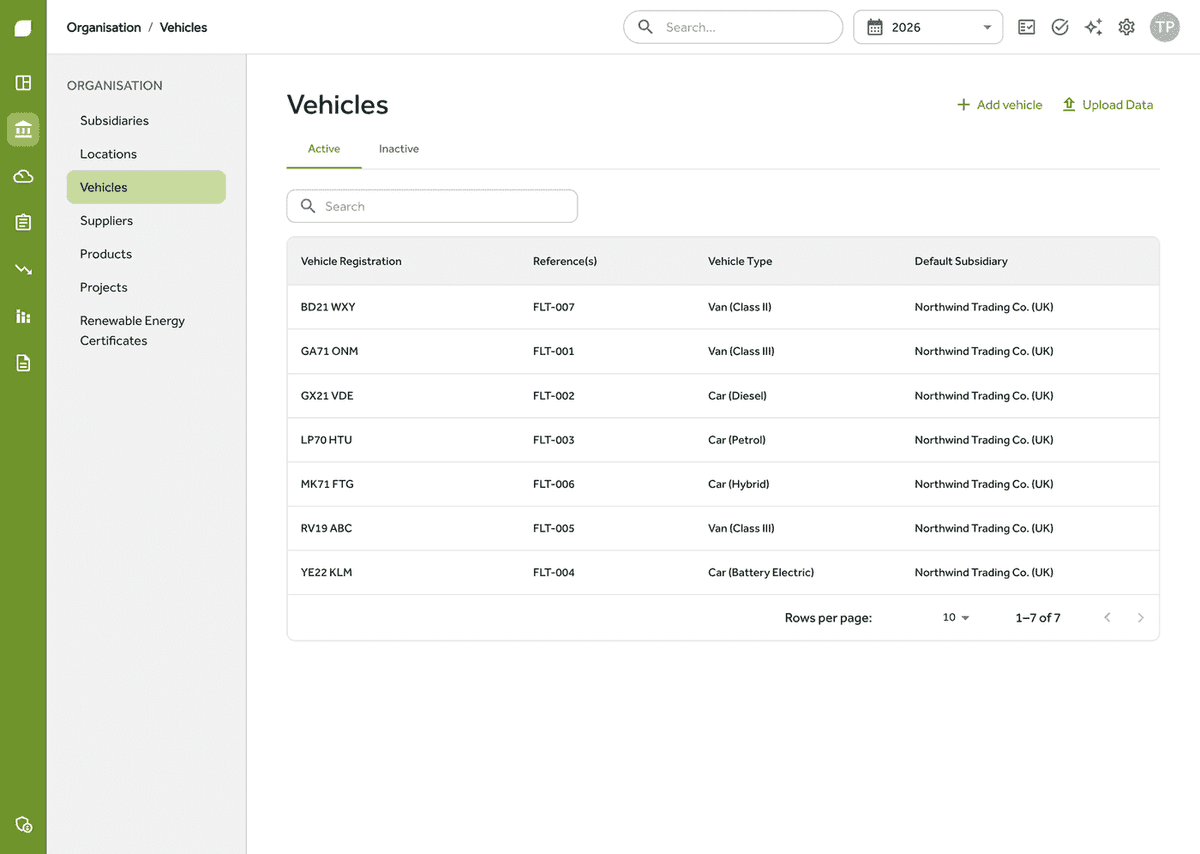
For a lot of events, getting people to the venue produces more carbon than everything happening inside it. Flights, rail, coaches and car journeys are hard to pin down because the data is scattered across ticketing systems, delegate surveys and rough assumptions. Gaia's surveys and supplier engagement help you gather travel data from attendees and partners, so the largest part of your footprint stops being a guess.
Staging, production and what's left afterwards
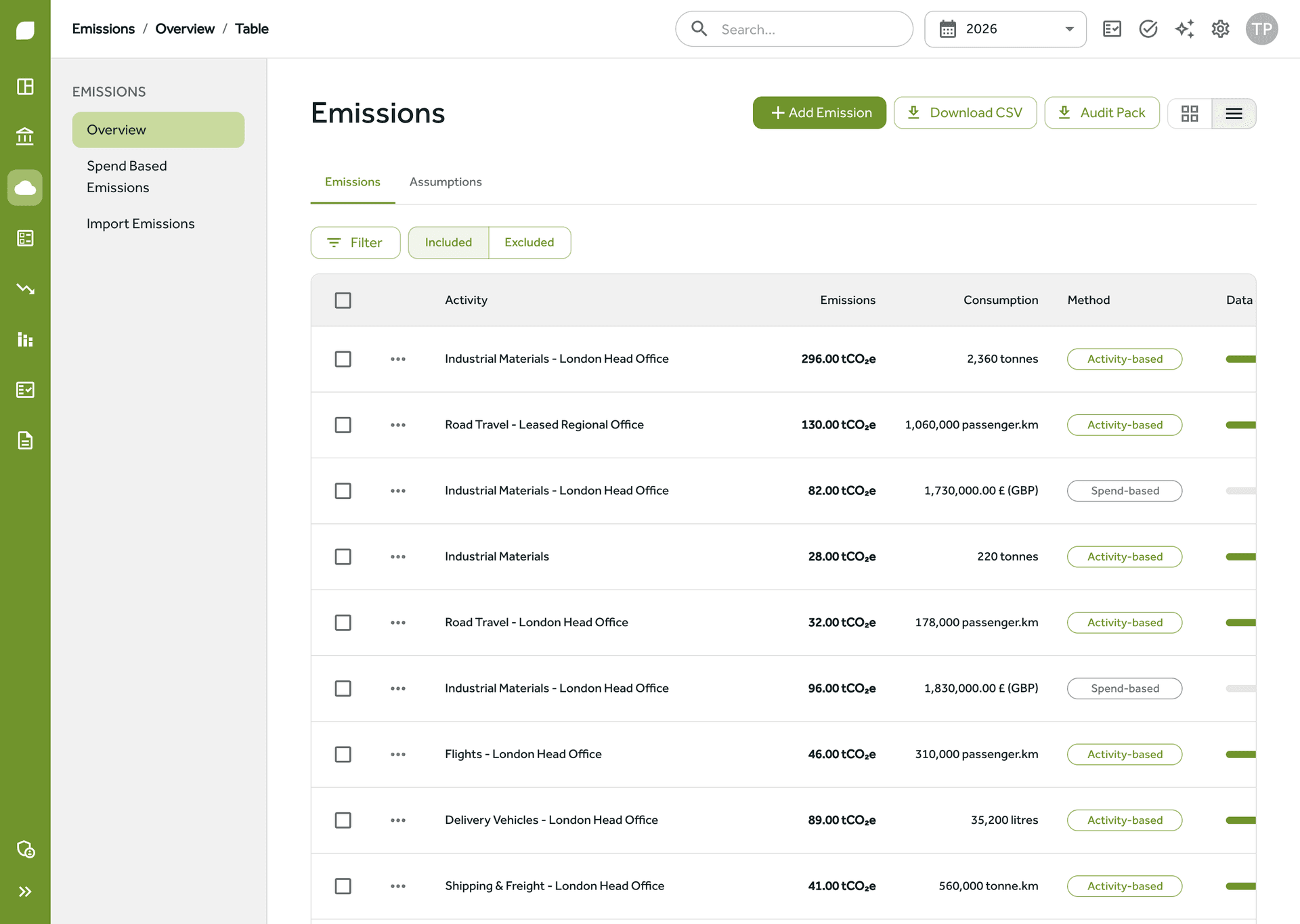
Sets, signage, temporary power, catering and the waste it all becomes tend to arrive as invoices, delivery notes and supplier spreadsheets in a dozen formats. Energy and fuel bills upload as PDFs or photos and Gaia's document extraction reads the consumption, with a person confirming before anything counts, while spreadsheets import through a wizard with per-row validation, so any rejected figure states its reason before it reaches a client report.
Credible offsetting for the footprint you can't cut
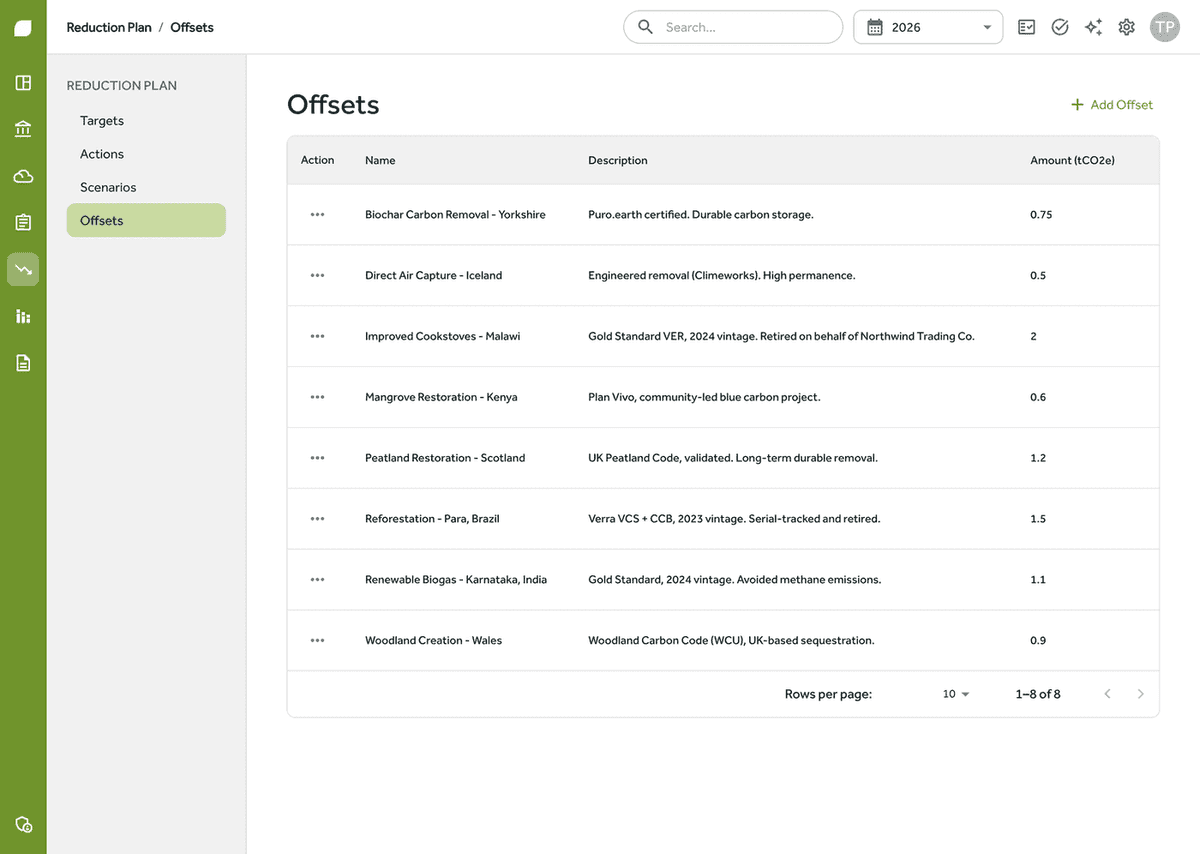
Once you've measured an event and reduced what you can, clients often want the remaining emissions offset. Gaia doesn't sell credits; it records the ones you buy in an offsets register, with the registry, vintage, serial range and retirement certificate, next to the measured event footprint. Offsets never reduce a scope total: they sit alongside it, reported gross-first, so you can show a sponsor or client exactly what was measured and what was offset when they ask you to back up a sustainability claim.
What Gaia helps events companies measure
From the first site visit to the final load-out, Gaia captures the emissions sources that make up an event footprint.
Venue energy
Attendee travel
Materials and staging
Catering and waste
Reporting that stands up to scrutiny
When an event wraps, the numbers often need to travel further than an internal review. Gaia generates audit-ready reports for Streamlined Energy and Carbon Reporting (SECR), the Corporate Sustainability Reporting Directive (CSRD), B Corp and the GHG Protocol, and you can export them as a shareable web link or a PDF.
You can run the same measurement across a whole season with multi-location tracking. Gaia also forecasts an event's footprint before you deliver it, and the decarbonisation strategy builder helps you plan where to cut next.
Events carbon accounting, answered
Can I measure a single event rather than just an annual total?
Yes. Gaia is built to measure the footprint of each event on its own, then roll those results up into a company-wide view when you need one. You can compare shows, see which sources drive the most carbon and act before the next event.
How does Gaia handle attendee travel data?
Attendee and staff travel is usually the largest source for an event and the hardest to collect. Gaia's surveys and supplier engagement feature gather travel information from attendees and partners. Where only a sample responds, you can extrapolate to the full audience, with the scale factor recorded.
We get supplier data in all sorts of formats. Is that a problem?
No. Energy and fuel bills upload as PDFs or photos and Gaia's document extraction reads the figures, with a person confirming before anything counts. Spreadsheets from venues, caterers and production suppliers import through a wizard with per-row validation, so every rejected row states its reason and errors don't reach your reports.
Can Gaia help us offset an event's emissions?
Gaia doesn't sell carbon credits, but it records the ones you buy in an offsets register: registry, vintage, serial range and retirement certificate, next to the measured event footprint. Offsets never reduce a scope total; they're reported alongside it, gross-first, which makes it easy to show clients exactly what was measured and what was offset.
What standards and factors does Gaia use?
Gaia follows the GHG Protocol methodology and applies DEFRA and DESNZ UK conversion factors. It produces audit-ready reports for SECR, CSRD, B Corp and the GHG Protocol, which you can export as a web link or a PDF.
Trusted carbon data



Aligned with the standards your reports rely on
Gaia is aligned with the Greenhouse Gas Protocol (GHG Protocol) methodology and uses recognised industry-standard data to calculate your emissions, including the annual UK conversion factors published by the Department for Environment, Food and Rural Affairs (DEFRA) and the Department for Energy Security and Net Zero (DESNZ).