
Carbon accounting for consultancies
Consultancies carry two carbon jobs at once. You measure your own footprint, and you report for the clients who rely on your advice. Gaia handles Scope 1, 2 and 3, keeps each client's data in one place with multi-location tracking, and turns the numbers into audit-ready reports you can put your name to.
Built for both sides of the work
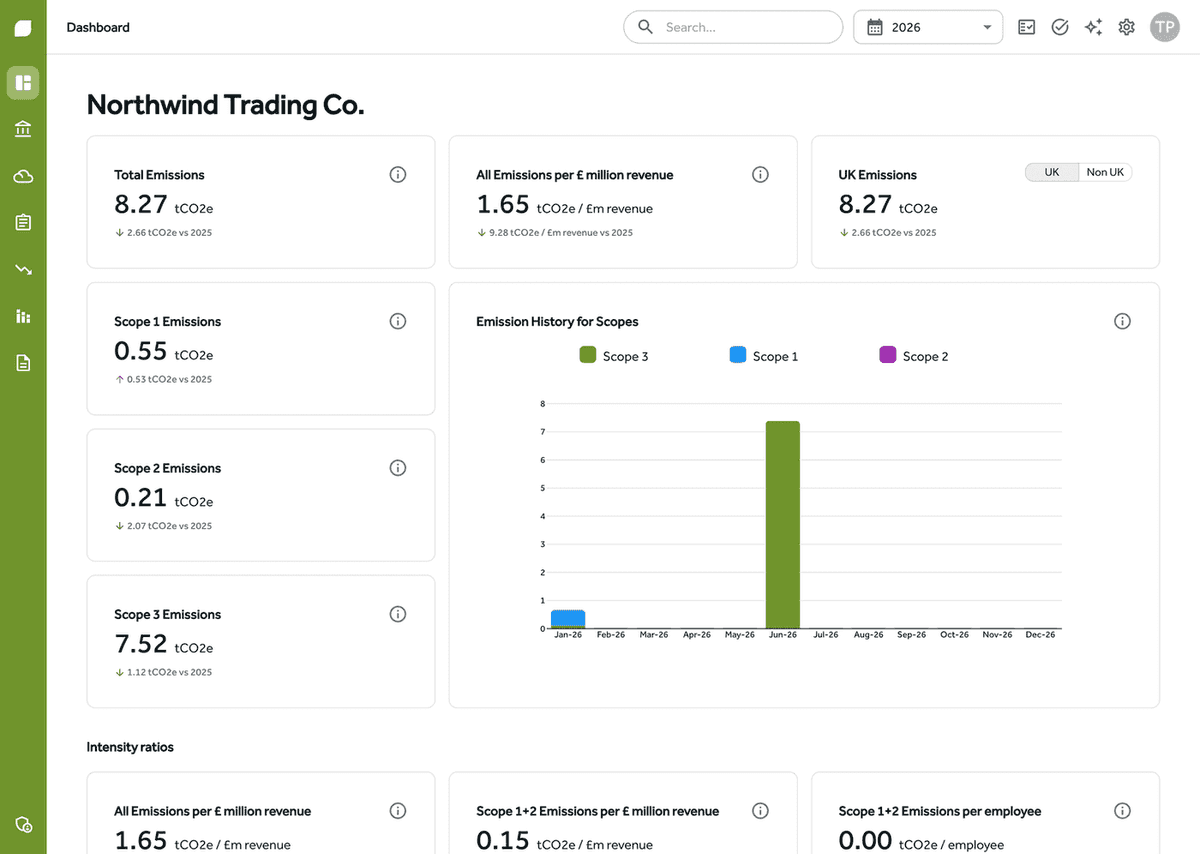
Your own emissions are mostly travel, office energy and the IT that keeps the practice running. That side matters, and clients increasingly ask to see it before they hire you. The bigger demand sits with the reporting you do for them, where the data has to hold up to scrutiny and the deliverable has to look like it came from an expert.
Gaia handles both from one account. Track your own operational footprint alongside each client's, using multi-location tracking to keep every client's data and reports separate. You always know which figure belongs to whom.
One workspace for every client
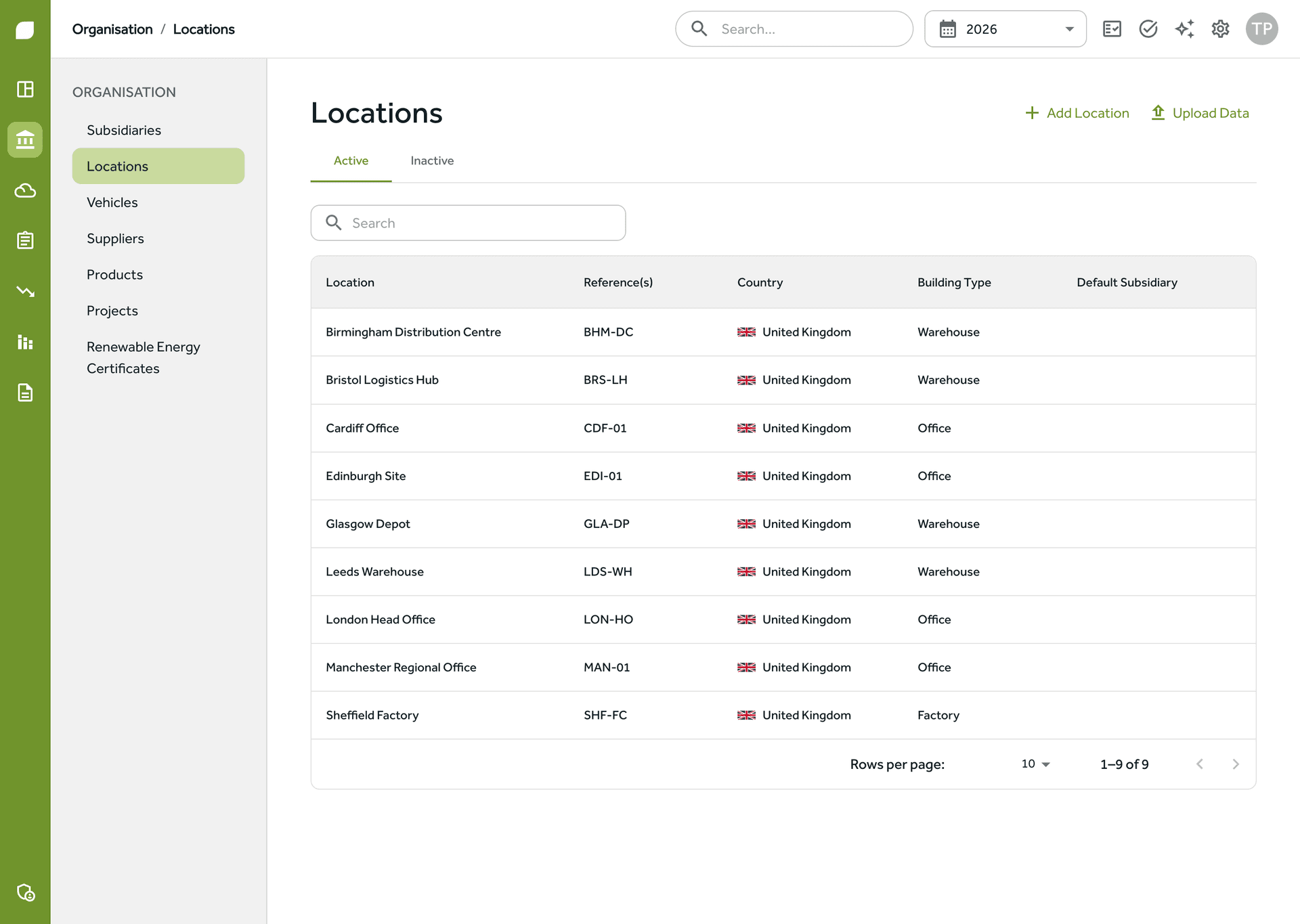
Running each client through a different spreadsheet is where errors creep in and where hours disappear. Gaia's multi-location tracking lets you keep each client's sites, subsidiaries and reporting years in one workspace, so you can switch between them without rebuilding the model each time. When a client adds an office or a new supplier, you update one account rather than starting over.
Data that stands up to review
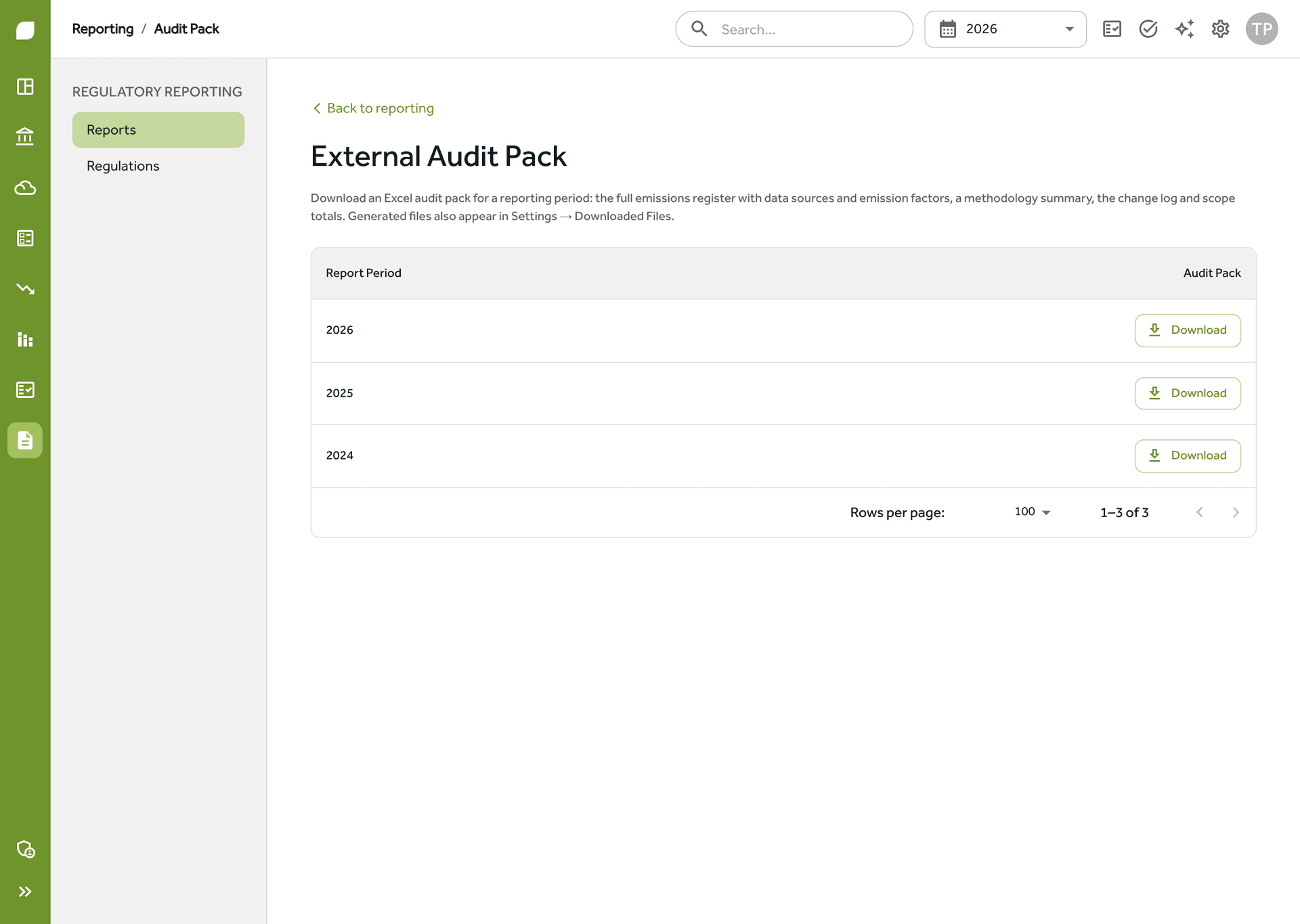
When you sign off a client's numbers, you're staking your reputation on them. Gaia keeps a clear line between measured figures and estimated ones, and every estimate is flagged as an estimate. Each emission carries its evidence, a field-level audit trail records who changed what and when, and the external audit pack sets out every calculation with its factor and assumptions: exactly what an auditor wants to see.
Deliverables clients can hand straight on
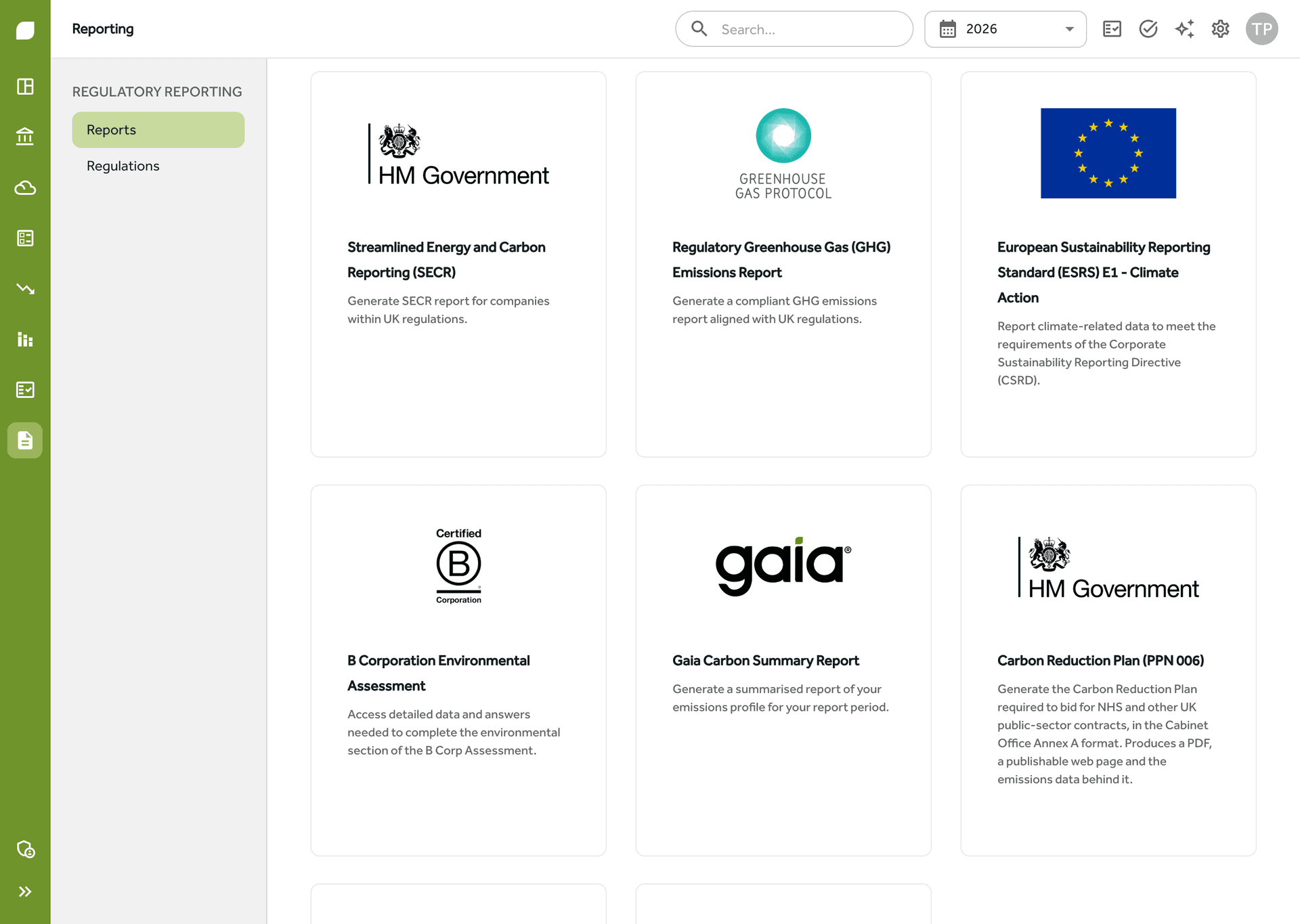
The report is the product. Gaia generates audit-ready reports aligned to Streamlined Energy and Carbon Reporting (SECR), the Corporate Sustainability Reporting Directive (CSRD), B Corp and the Greenhouse Gas Protocol (GHG Protocol), plus the PPN 006 Carbon Reduction Plan clients bidding for public-sector contracts need. Export each one as a shareable web link or a PDF and pass it straight to the client.
What Gaia helps consultancies measure
For your own practice and for every client you report on, across all three scopes.
Operational footprint
Business travel
IT and services
Client value chains
Bills and spreadsheets
Forecasts and pathways
Common questions from consultancies
Can I manage several clients in one account?
Yes. Gaia's multi-location tracking lets you keep each client's sites and reporting years in one workspace, with their data and reports held separately while you work across all of them from one login.
How do I share a finished report with a client?
Every report exports as a shareable web link or a PDF, so you can send a client the link or attach the file to your own deliverable.
How does Gaia help me trust the client data I sign off?
Every import is validated row by row, and every rejected row states its reason. Estimates are always flagged as estimates, each emission carries its evidence, and a field-level audit trail records who changed what and when. You can see which figures are measured and which are estimated before anything reaches the report.
How much manual data entry is involved?
You can upload energy and fuel bills as a PDF or a photo and Gaia reads the consumption, with a person confirming before anything counts. Spreadsheets import through the wizard with per-row validation. Supplier surveys reduce the chasing for client value-chain data.
Which standards and factors does Gaia use?
Gaia follows the GHG Protocol methodology and applies UK conversion factors from the Department for Environment, Food and Rural Affairs (DEFRA) and the Department for Energy Security and Net Zero (DESNZ). Reports align to SECR, CSRD, B Corp and the GHG Protocol.
Trusted carbon data



Aligned with the standards your reports rely on
Gaia is aligned with the Greenhouse Gas Protocol (GHG Protocol) methodology and uses recognised industry-standard data to calculate your emissions, including the annual UK conversion factors published by the Department for Environment, Food and Rural Affairs (DEFRA) and the Department for Energy Security and Net Zero (DESNZ).