
Carbon accounting for hotels, restaurants and venues
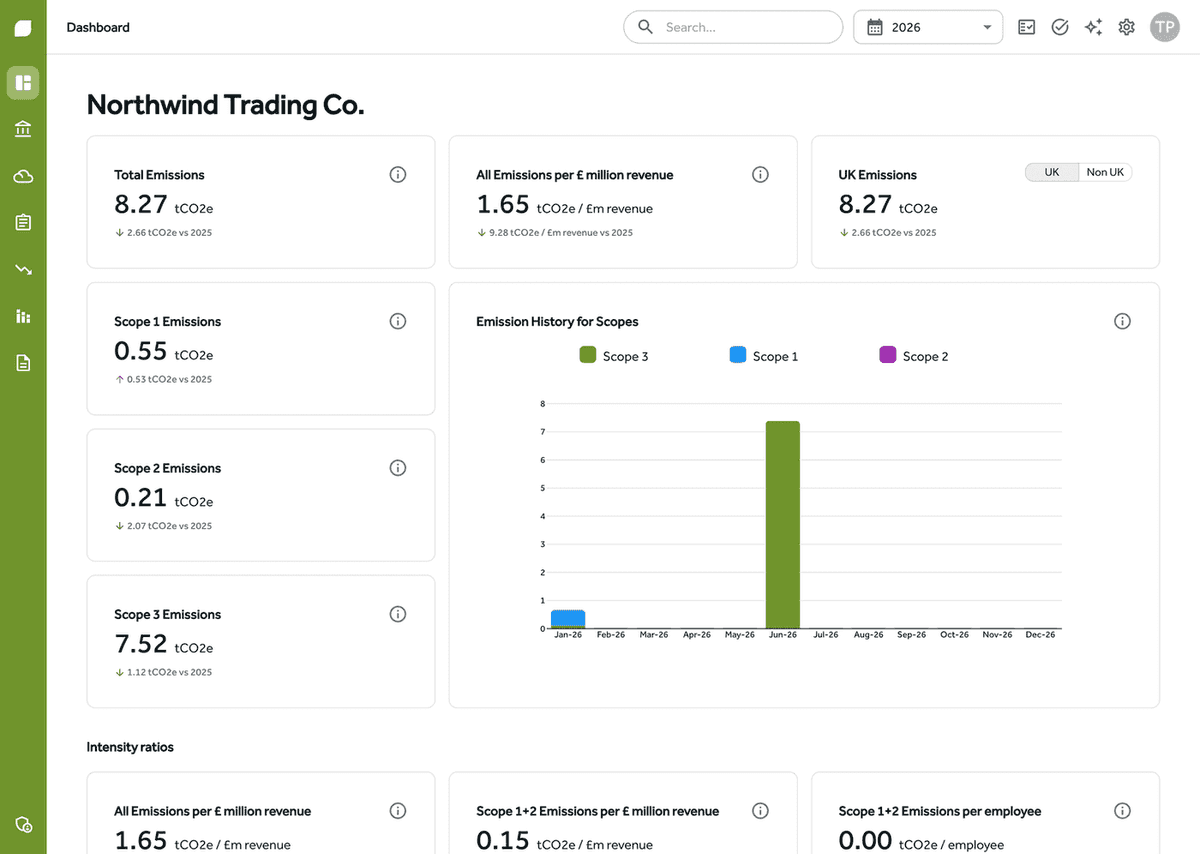
Hospitality emissions are spread across your properties and your supply chain, from the energy that runs kitchens and rooms to the food and drink you buy. Gaia measures Scope 1, 2 and 3 in one place and produces audit-ready reports, so you can show guests credible progress instead of vague promises.
Built for the way hospitality actually runs
Most hospitality emissions sit in a few familiar places: property energy, the food and drink you source, the travel of the people who visit, and the waste and water that come with running a busy site. The hard part is pulling that together across multiple locations without drowning in spreadsheets.
Gaia collects the data, calculates your footprint using Greenhouse Gas Protocol (GHG Protocol) methodology and Department for Environment, Food and Rural Affairs (DEFRA) and Department for Energy Security and Net Zero (DESNZ) conversion factors, and turns it into reports you can stand behind.
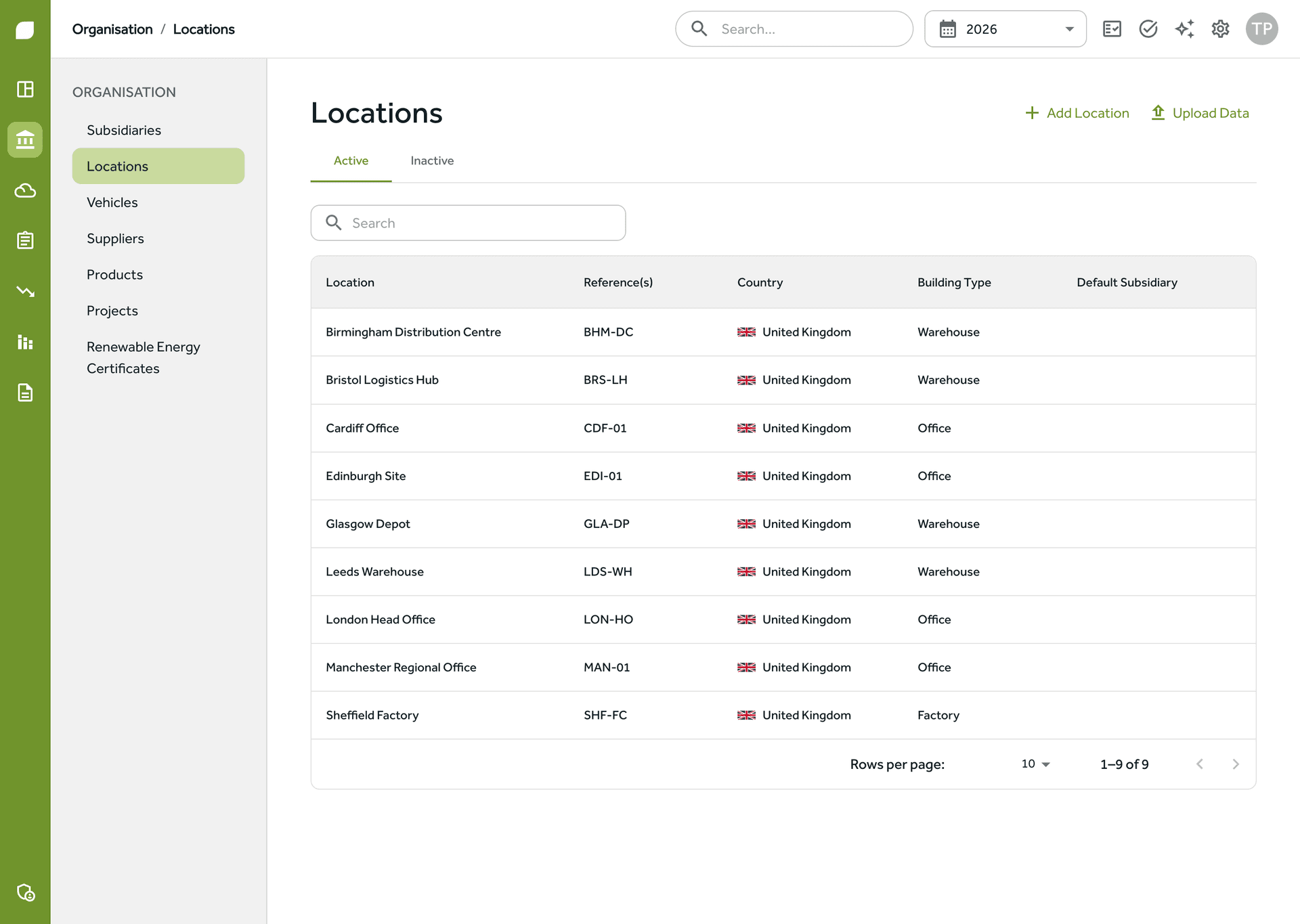
Energy across every property in one view
Heating, cooling, kitchens and laundry make property energy one of your biggest controllable costs and a large share of Scope 1 and 2. When you run several sites, comparing them fairly is the problem. Gaia tracks energy use per location, so you can see which properties burn the most, spot the ones that sit out of line, and decide where a retrofit or an operational change earns its keep first.
The supply chain behind every menu
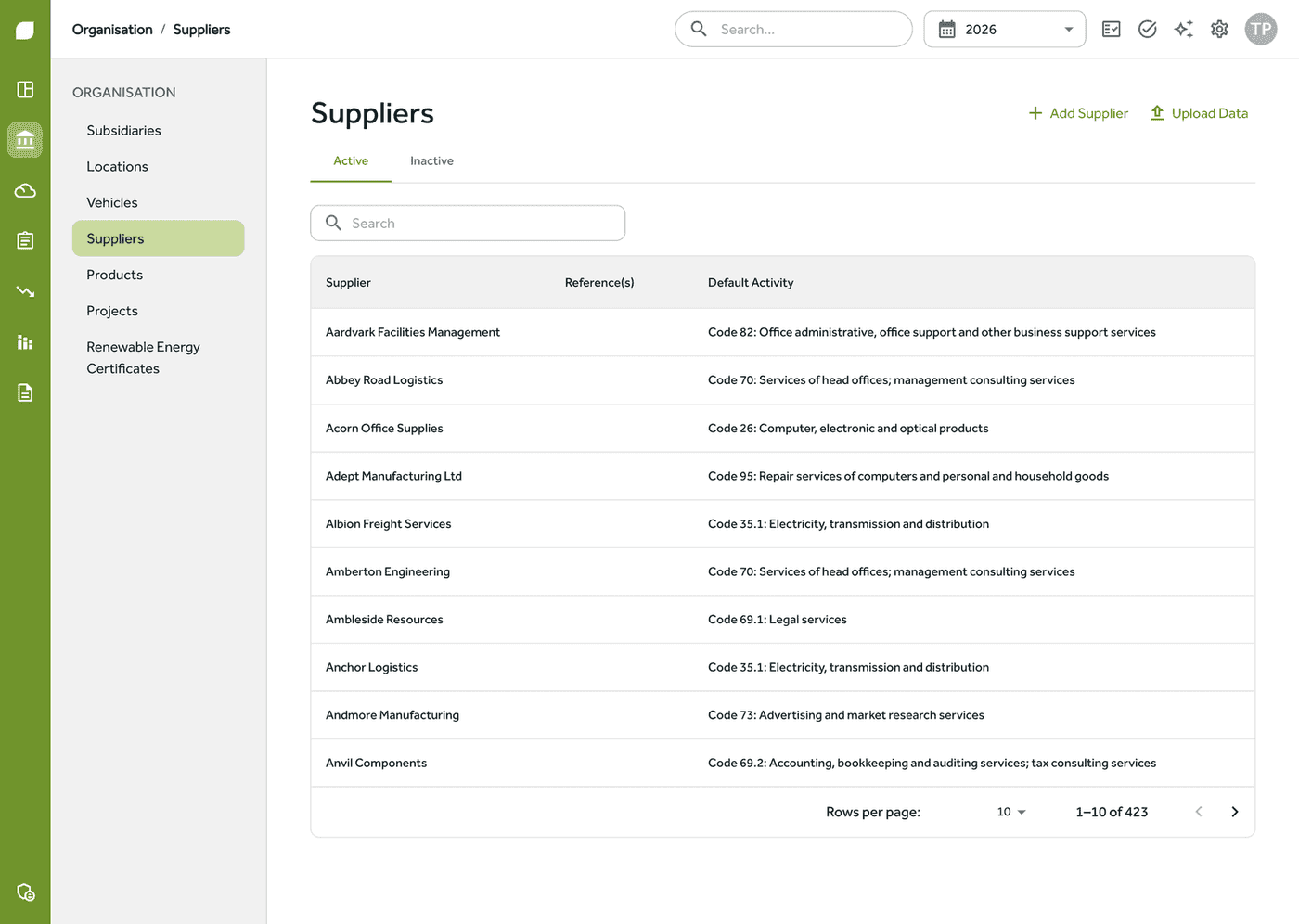
For most hospitality businesses, the food and beverage you buy is one of the largest parts of your Scope 3 footprint, and it hides across dozens of suppliers. Gaia gathers primary data through supplier surveys and calculates the rest from your purchasing records, imported with per-row validation, so your sourcing emissions are built from your own suppliers and purchases.
Guest travel and progress you can show
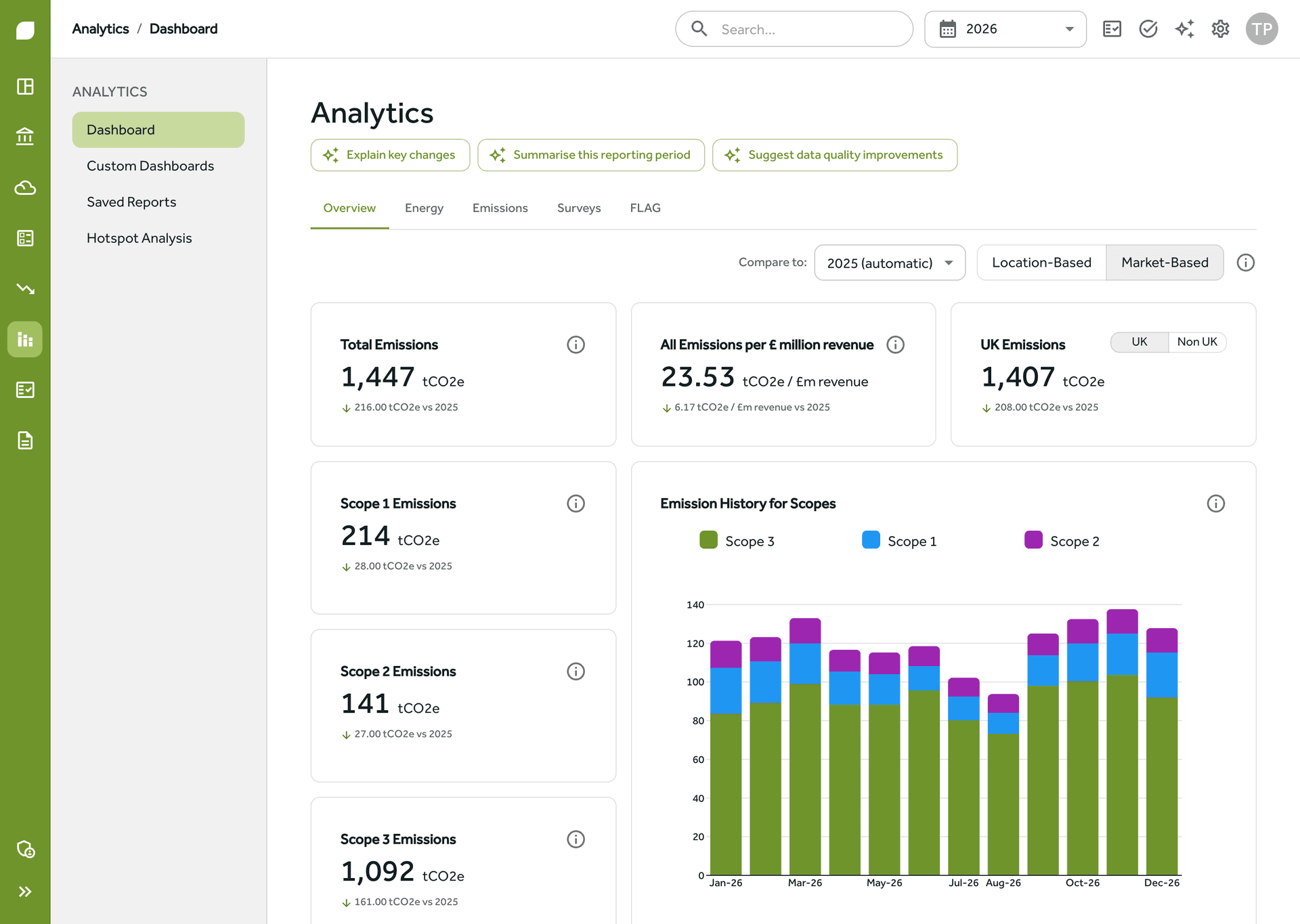
Guests travel to reach you, and increasingly they want to know what your sustainability claims are actually built on. Gaia helps you account for guest and event travel inside your Scope 3 total, then generates reports you can export as a web link or a PDF. That gives you something concrete to share with guests, corporate clients and event bookers, backed by numbers rather than sentiment.
What Gaia helps hospitality businesses measure
From the boiler room to the supply chain, each source is mapped to the right scope and ready to report.
Property energy
Food and beverage
Guest and staff travel
Waste and water
Common questions from hospitality operators
Can Gaia handle a group with several hotels or restaurants?
Yes. Multi-location tracking lets you record data for each property and see them side by side, so you can compare sites fairly and roll everything up into one group footprint.
How does Gaia deal with our food and beverage suppliers?
Gaia has a supplier survey feature to gather primary data. You can also upload energy and fuel bills as a PDF or a photo and Gaia reads the consumption, with you confirming before anything counts, while purchasing spreadsheets import through a wizard that validates every row, so sourcing data comes from real purchases.
We have gaps in our data. Is that a problem?
It's normal, especially early on. Every import is checked row by row, and every rejected row states its reason, so errors are caught before they reach a report. For a site with no energy bills, Gaia can estimate its energy from floor area and building type, always flagged as an estimate and replaced when metered data arrives, and the data-quality mix shows how much of your footprint is measured rather than spend-based.
Which reports can Gaia produce?
Gaia generates audit-ready reports for Streamlined Energy and Carbon Reporting (SECR), the Corporate Sustainability Reporting Directive (CSRD), B Corp and the GHG Protocol. You can export each one as a web link or a PDF.
Can we share our progress with guests and corporate clients?
Yes. Because reports export as a shareable web link or a PDF, you can give guests, event bookers and corporate clients a clear account of your footprint and where it's heading, using your own measured data.
Trusted carbon data



Aligned with the standards your reports rely on
Gaia is aligned with the Greenhouse Gas Protocol (GHG Protocol) methodology and uses recognised industry-standard data to calculate your emissions, including the annual UK conversion factors published by the Department for Environment, Food and Rural Affairs (DEFRA) and the Department for Energy Security and Net Zero (DESNZ).