
Carbon accounting for universities, colleges and schools
Education emissions are spread across buildings, energy, travel and everything the institution buys. Gaia measures Scope 1, 2 and 3 across every campus in one place and turns it into audit-ready reports, so your estates and sustainability teams can spend less time chasing data and more time cutting it.
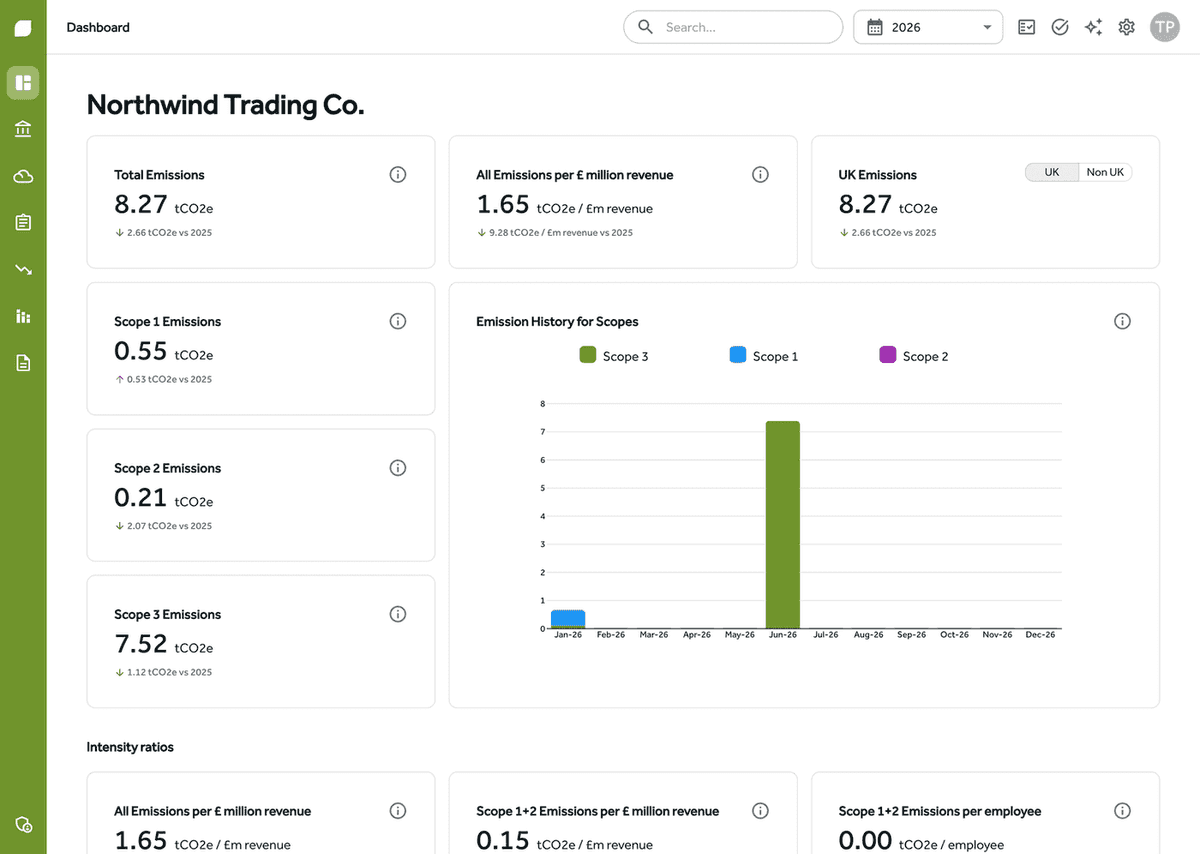
Built for the way education estates actually work
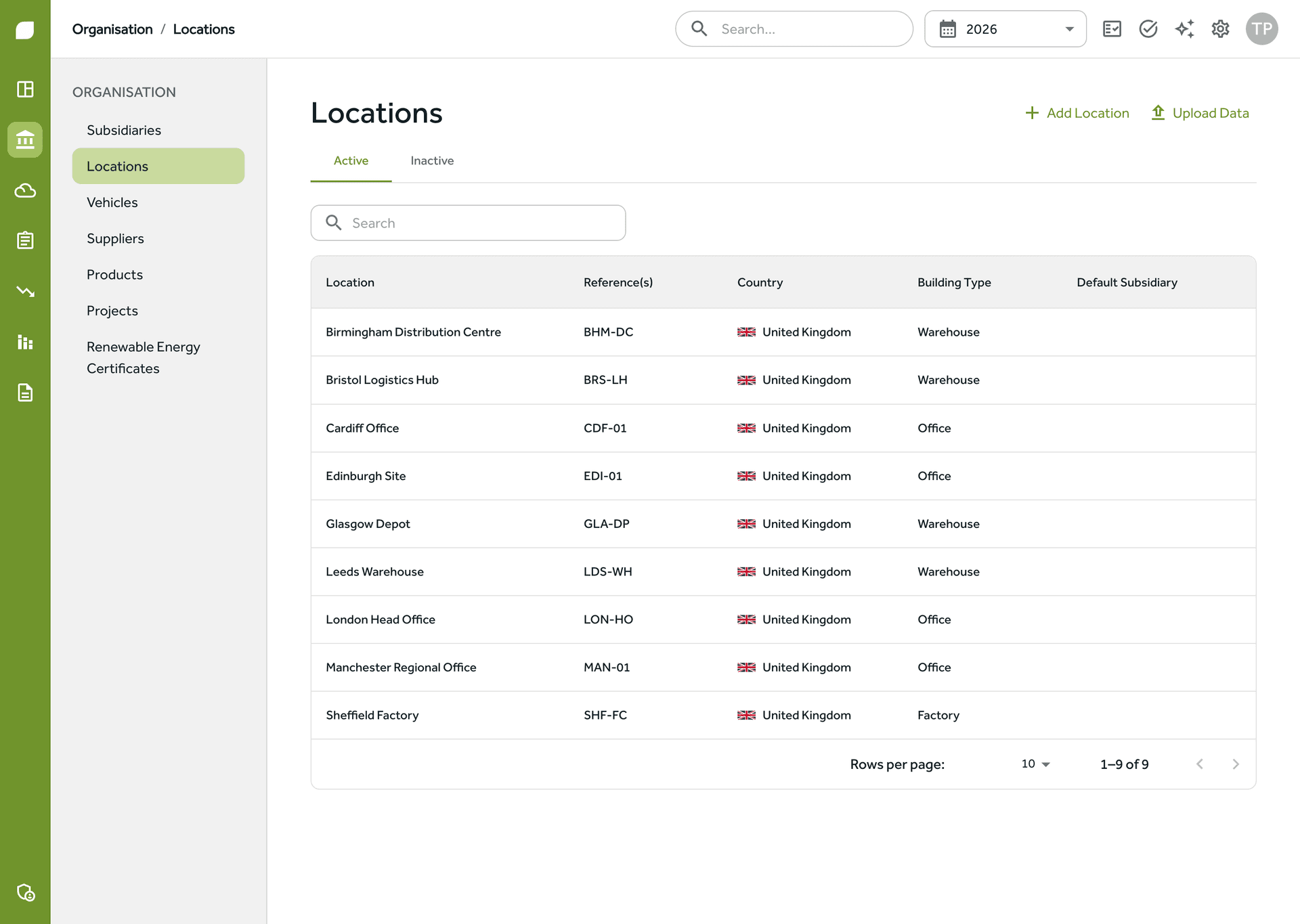
Universities, colleges and schools rarely sit on a single site. A large institution might run dozens of buildings across several campuses, plus halls of residence, sports facilities and catering, all with their own meters, contracts and data. Pulling that together for a carbon report usually means spreadsheets, chasing figures from different departments and hoping nothing was missed.
Many institutions now have net zero commitments to meet. Some answer to the Department for Education's sustainability and climate change strategy for schools and colleges in England. Others have set their own board-level target. Gaia gives you one system to measure emissions across the whole estate, track progress against those targets and report with confidence.
Every campus and building in one view
Gas, electricity and heating span old and new buildings, labs, libraries, residences and sports centres, often on separate supply contracts. Gaia's multi-location tracking brings energy use from every site into one picture, so you can compare buildings and campuses side by side and see which parts of the estate drive the most emissions. Upload gas and electricity bills as PDFs or photos and Gaia's document extraction reads the consumption, with a person confirming each figure before it counts, while spreadsheets of billing data import through the wizard with per-row validation.
Measure the miles staff and students travel
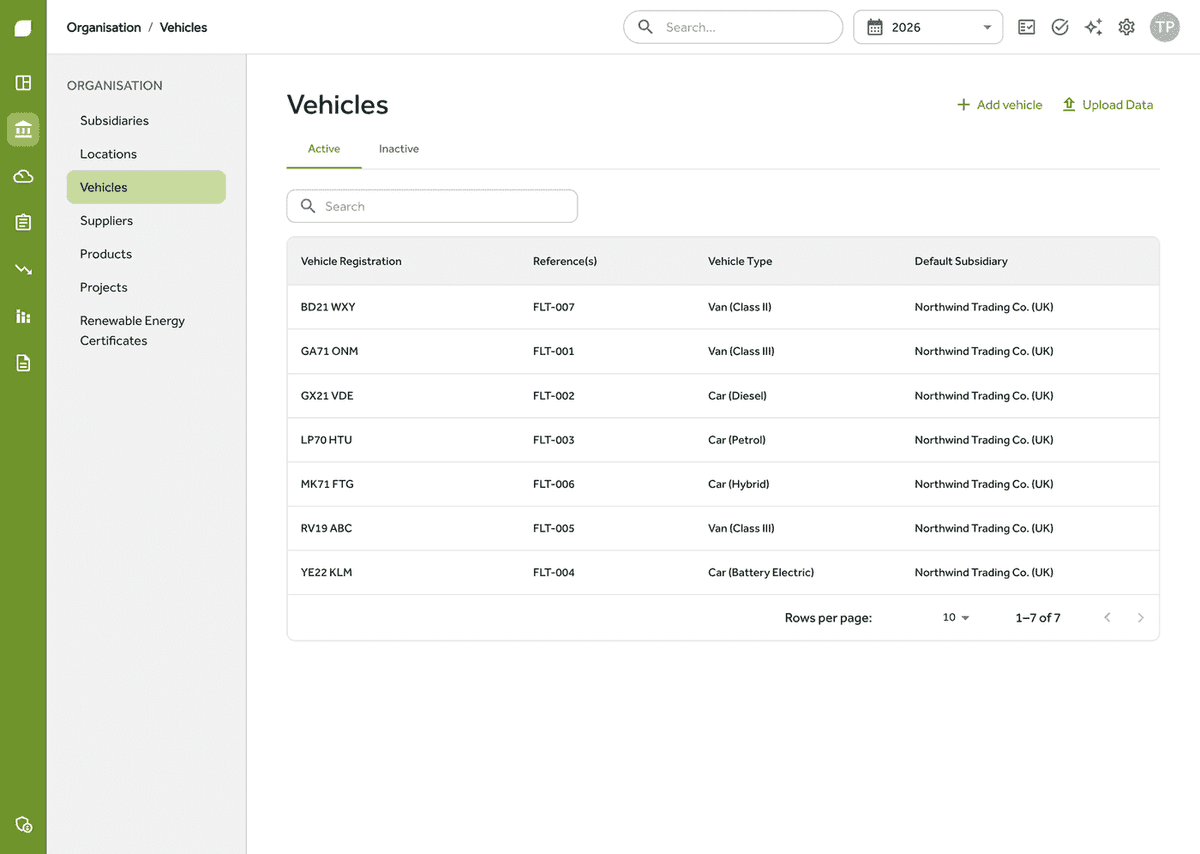
Commuting, field trips, placements and academic travel make up a large share of an institution's Scope 3 footprint, and it's some of the hardest data to collect. Gaia's survey engine helps you gather travel and commuting information without building the survey machinery yourself, starting from a ready-made employee commuting template, and where only a sample responds you can extrapolate to the full population with the scale factor recorded, so a first travel footprint doesn't stall waiting for perfect numbers.
Bring your supply chain into the numbers
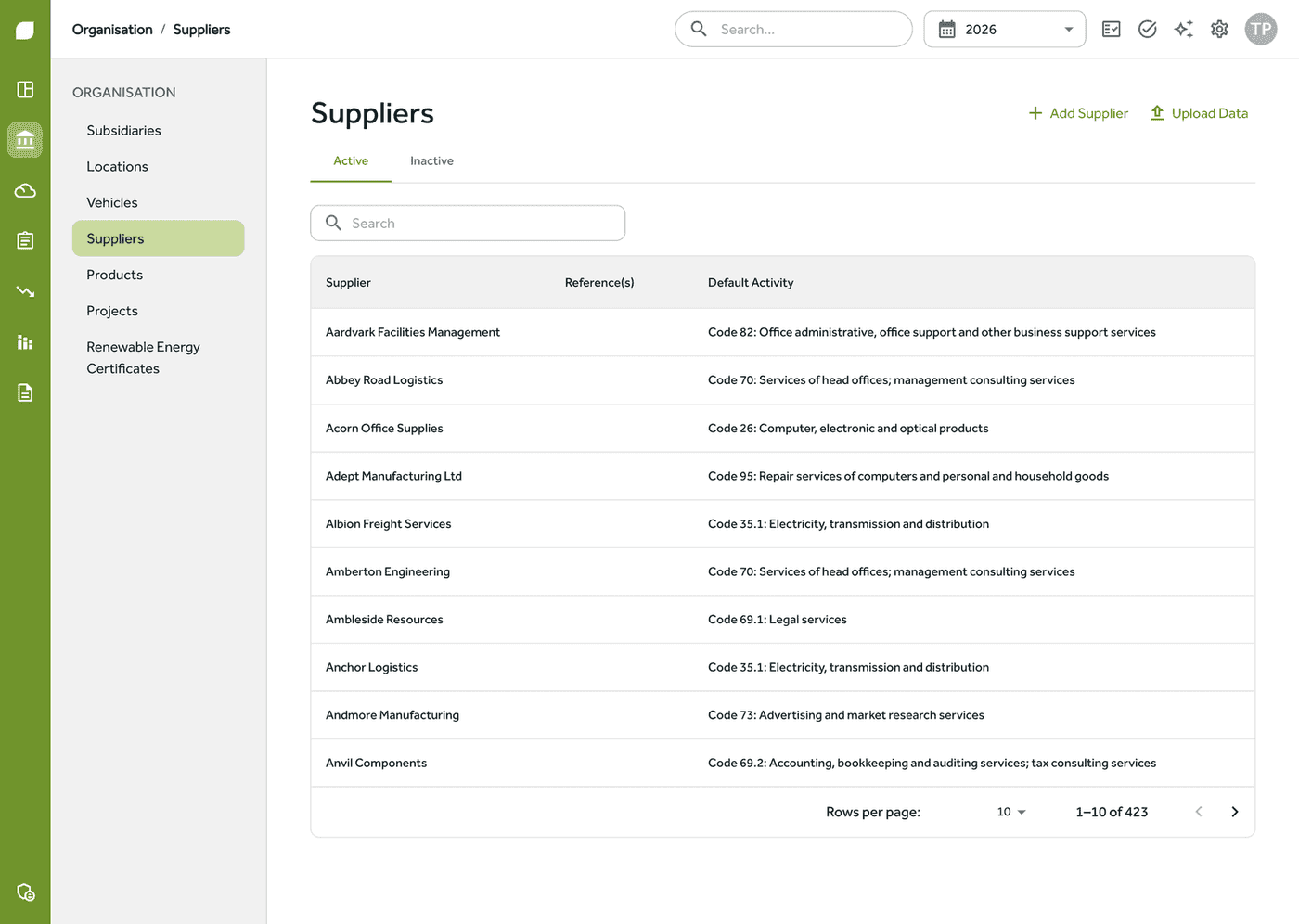
From catering and cleaning to lab equipment, IT and construction, procurement is often the biggest and least visible source of emissions in the sector. Gaia's supplier engagement tool sends surveys to the organisations you buy from and collects their data in one place, and every imported figure passes per-row validation, with every rejected row stating its reason, so you can query it before it reaches a report.
What Gaia helps education institutions measure
One platform for the full footprint, from the boiler room to the supply chain, using the Greenhouse Gas Protocol (GHG Protocol) methodology and Department for Environment, Food and Rural Affairs (DEFRA) and Department for Energy Security and Net Zero (DESNZ) UK conversion factors.
Scope 1 and 2 energy
Staff and student travel
Procurement and supply chain
Catering and residences
Validation and gaps
Progress to net zero
Common questions from education teams
Does Gaia handle a multi-campus estate?
Yes. Multi-location tracking lets you record energy and emissions building by building and campus by campus, then roll them up into one institutional total. You can compare sites to see where to focus first.
Can Gaia produce our SECR report?
Yes. Gaia generates audit-ready reports for Streamlined Energy and Carbon Reporting (SECR), the Corporate Sustainability Reporting Directive (CSRD), B Corp and the Greenhouse Gas Protocol (GHG Protocol). You can export each as a web link or a PDF.
How do we collect staff and student travel data?
Gaia's survey engine helps you gather commuting and travel information without building your own process, and you can start from a ready-made employee commuting template. Where only a sample responds, you can extrapolate to the full population, with the scale factor recorded, so you can still produce a footprint.
We hold data in different formats across departments. Is that a problem?
No. You can upload energy and fuel bills as PDFs or photos and Gaia's document extraction reads the consumption, with a person confirming each figure before it counts. Spreadsheets import through a wizard with per-row validation, and Gaia also connects to finance systems including Xero, QuickBooks and Sage through integrations and application programming interface (API) access.
How does Gaia calculate emissions?
Gaia uses GHG Protocol methodology with DEFRA and DESNZ UK conversion factors, so your reporting lines up with the standards and factors expected of UK institutions.
Trusted carbon data



Aligned with the standards your reports rely on
Gaia is aligned with the Greenhouse Gas Protocol (GHG Protocol) methodology and uses recognised industry-standard data to calculate your emissions, including the annual UK conversion factors published by the Department for Environment, Food and Rural Affairs (DEFRA) and the Department for Energy Security and Net Zero (DESNZ).