
Carbon accounting for charities and non-profits
Most charities want to report their emissions honestly but have no dedicated sustainability team to do it. Gaia measures Scope 1, 2 and 3 from the data you already hold and produces audit-ready reports you can hand to funders and trustees. No spreadsheets, no consultants.
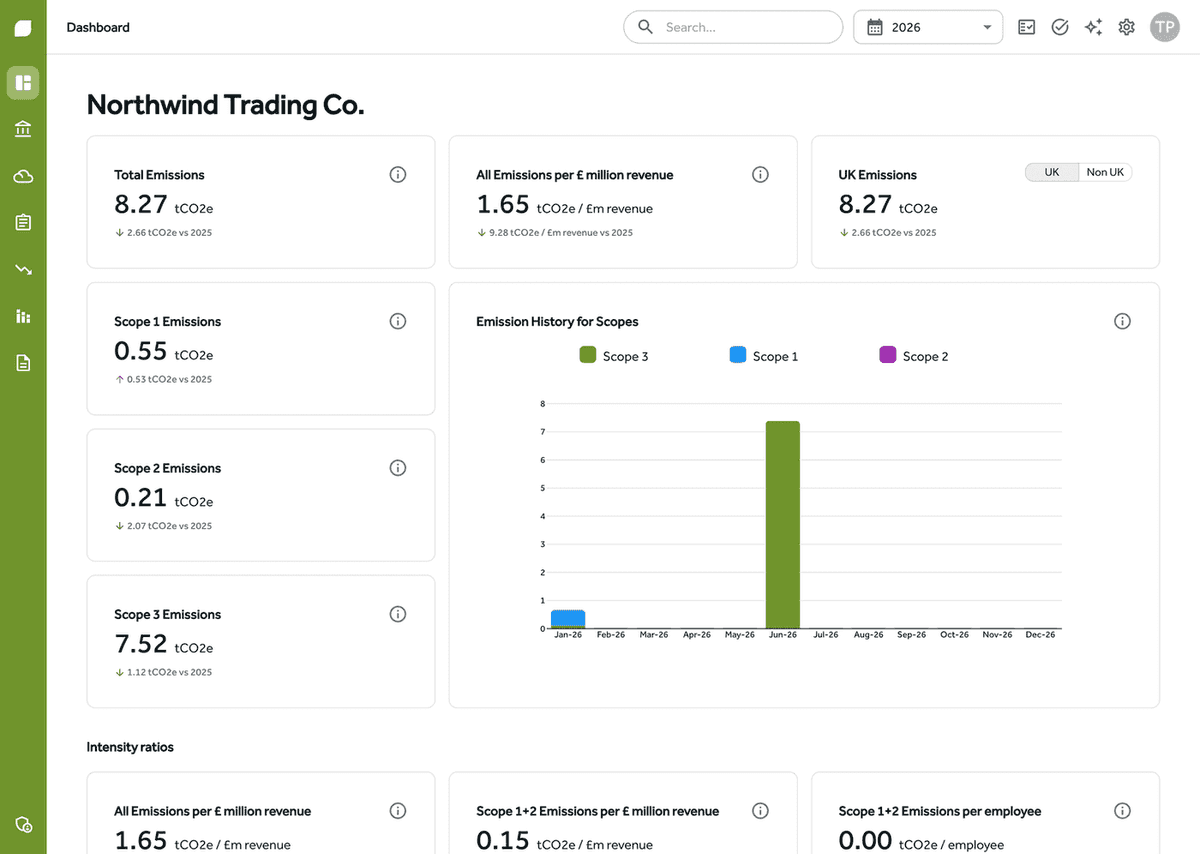
Reporting you can stand behind, on the resources you have
Charities and non-profits run lean. The person asked to measure the organisation's carbon footprint is usually already doing three other jobs, and there's rarely a budget to bring in a consultant. That's where reporting tends to get skipped, or done badly.
Gaia takes the emissions data you already hold, such as energy bills, travel claims and supplier invoices, and turns it into a footprint you can explain. You get a clear number and a record of how it was worked out, so trustees and funders can see the reasoning behind it without you hiring anyone new.
Credible measurement without a dedicated team
You don't need a carbon analyst to use Gaia. Upload your energy and fuel bills as PDFs or photos and Gaia reads the consumption, with you confirming the figures before anything counts. Spreadsheets import through a wizard that checks every row and states the reason when one is rejected, so a mistyped meter reading gets caught before it reaches a funder. Where a site has no bills at all, Gaia can estimate its energy from floor area and building type, always flagged as an estimate and replaced when metered data arrives.
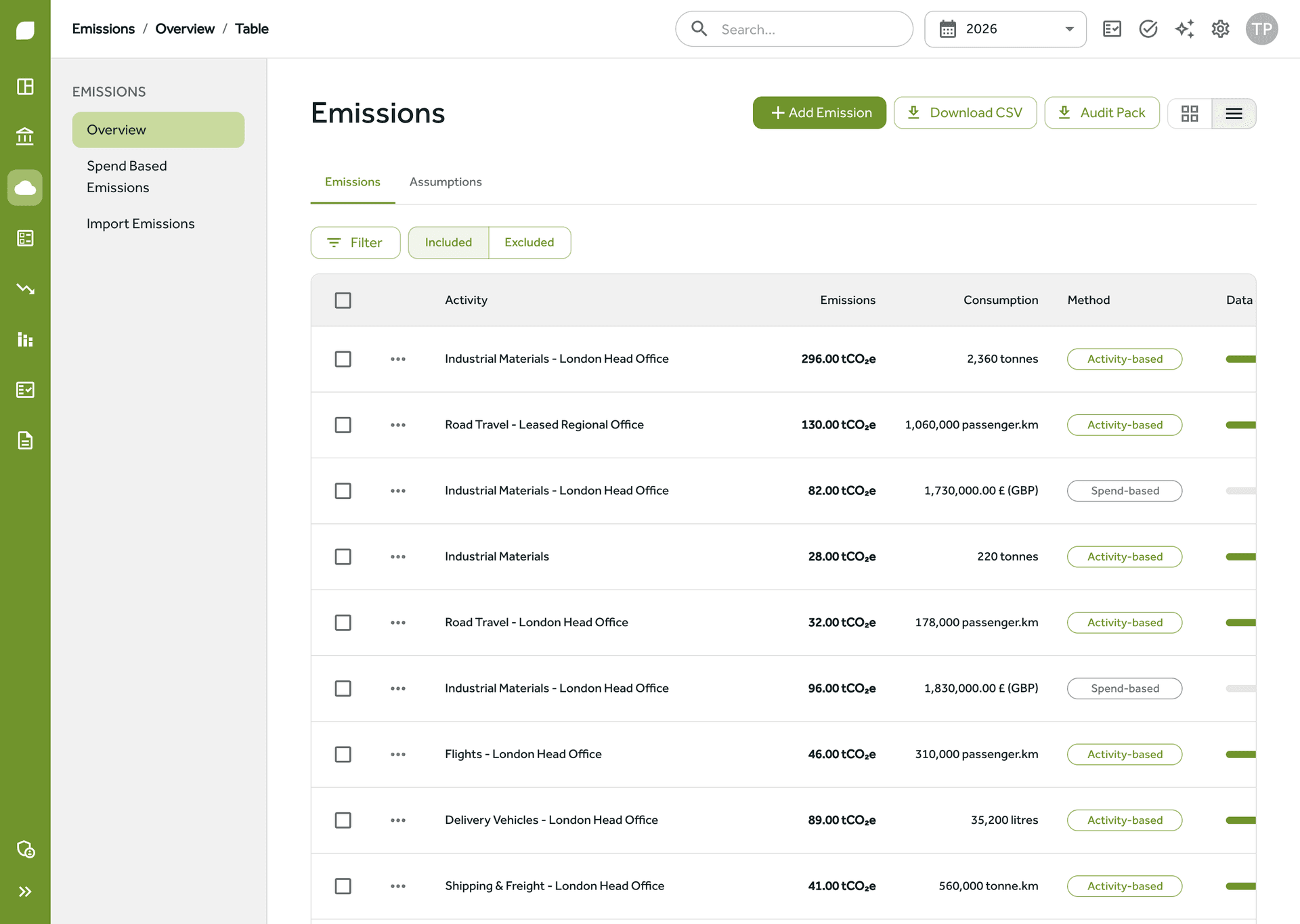
Reports that answer what grant-makers ask for
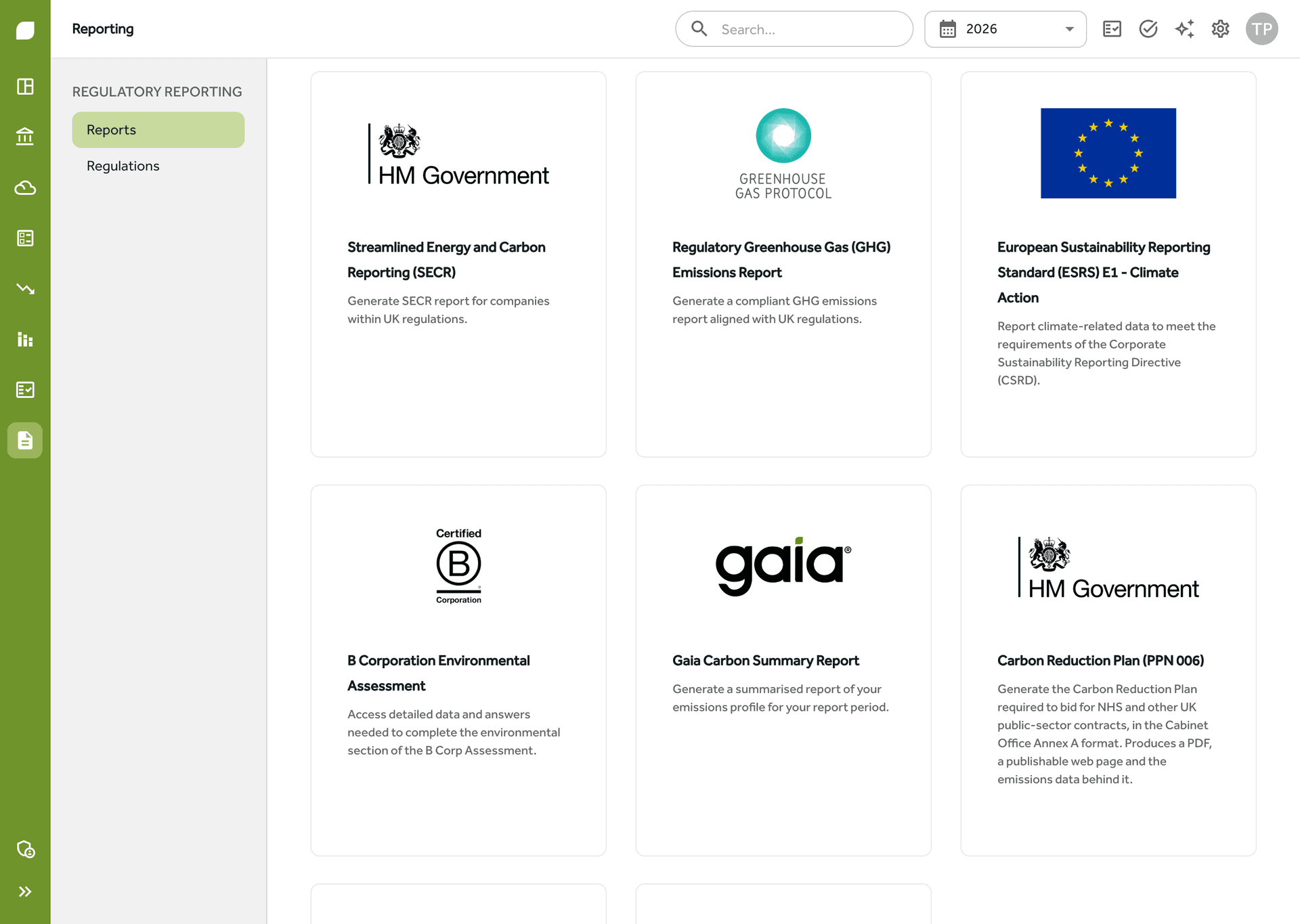
More funders and grant-makers now ask applicants about their environmental impact, and the questions change from one form to the next. Gaia generates reports to recognised frameworks, including the Greenhouse Gas Protocol (GHG Protocol), Streamlined Energy and Carbon Reporting (SECR) and B Corp. It uses UK government conversion factors from the Department for Environment, Food and Rural Affairs (DEFRA) and the Department for Energy Security and Net Zero (DESNZ), so your figures rest on the same basis a reviewer would expect. Export a report as a web link or a PDF and attach it straight to a bid.
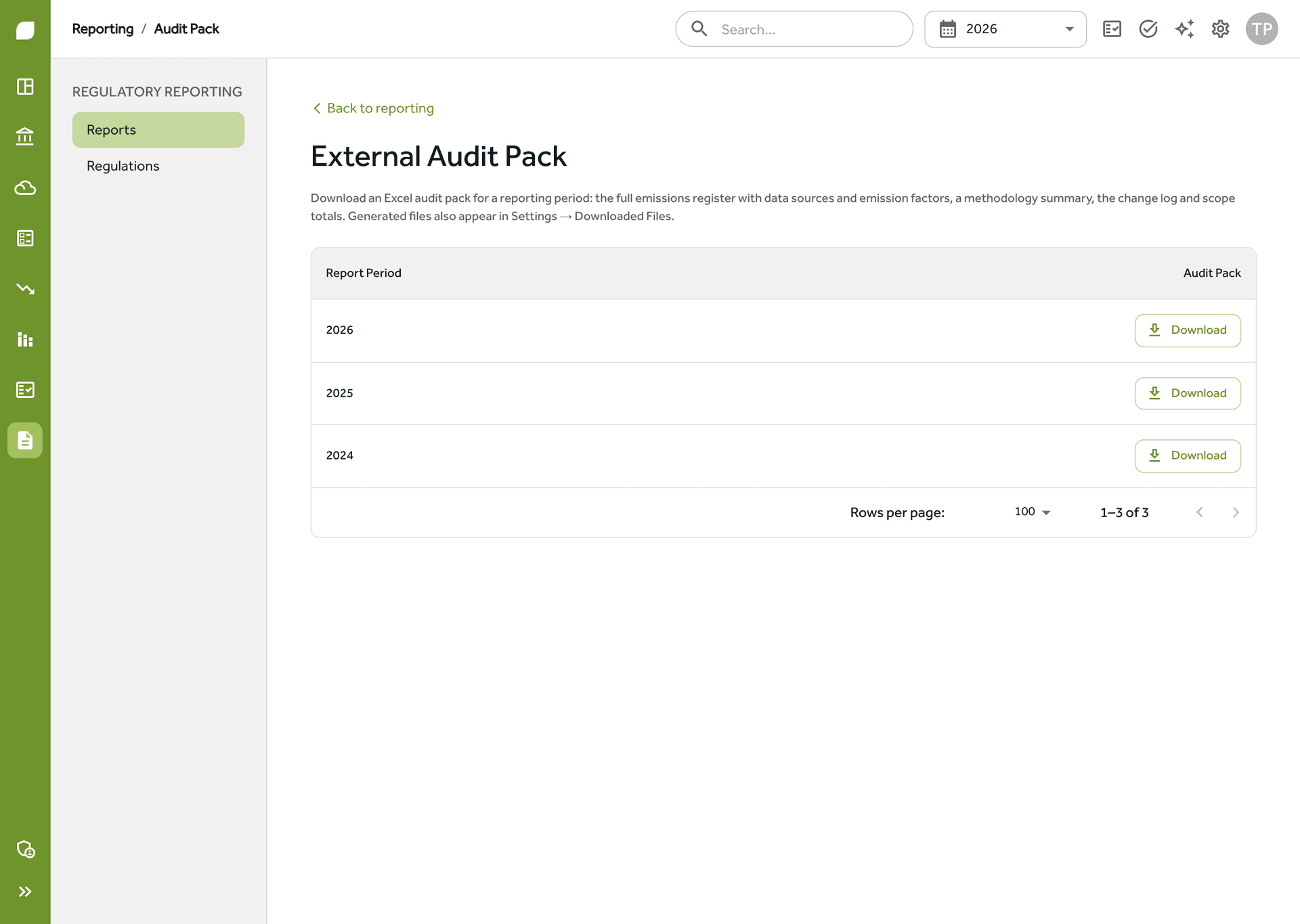
Transparency your supporters can see is real
Donors, members and beneficiaries give a charity the benefit of the doubt, and a vague green claim can cost that goodwill fast. Every figure in Gaia carries its evidence and a record of how it was worked out, so your reporting is audit-ready and defensible. If a trustee or a journalist asks how you reached a number, you can show the working rather than guess.
Common questions from charities and non-profits
We're a small charity with no sustainability staff. Can we actually use this?
Yes. Gaia is built so that someone without a carbon background can produce a report. Upload your energy and fuel bills as PDFs or photos and Gaia reads the consumption, with you confirming the figures before anything counts. Travel and spend data import from spreadsheets through a wizard that validates every row and states the reason when one is rejected, so you aren't left checking every line by hand.
Do we have to report under SECR?
Streamlined Energy and Carbon Reporting (SECR) applies to larger organisations that meet its size thresholds, so many smaller charities fall outside it. If you do qualify, Gaia generates an SECR report. If you don't, the same measurement still gives you a credible footprint for funders, trustees and your annual reporting.
How does Gaia handle our travel and procurement emissions?
Those usually sit in your Scope 3 footprint, which is where a lot of a charity's impact lives. Gaia measures Scope 3 alongside Scope 1 and 2. It also includes a supplier engagement feature that sends surveys, so you can gather figures directly from the organisations you buy from.
Can Gaia pull data from our accounting system?
Yes. Gaia integrates with Xero, QuickBooks and Sage, and offers application programming interface (API) access, so financial data can feed your footprint instead of being re-keyed. You can also just upload documents if that suits how you work.
Can we offset the emissions we can't yet cut?
Gaia doesn't sell carbon credits. What it does is record the offsets you buy in a register, with the registry, vintage, serial range and retirement certificate, and report them gross-first: offsets never reduce a scope total, they sit alongside it, which is exactly what a funder or auditor wants to see. It also has a decarbonisation strategy builder and forecasting tools to help you plan reductions first, before you reach for offsets.
Trusted carbon data


Aligned with the standards your reports rely on
Gaia is aligned with the Greenhouse Gas Protocol (GHG Protocol) methodology and uses recognised industry-standard data to calculate your emissions, including the annual UK conversion factors published by the Department for Environment, Food and Rural Affairs (DEFRA) and the Department for Energy Security and Net Zero (DESNZ).