

Key Takeaways:
- Voluntary carbon markets are for businesses, individuals and NGOs to allow for strategic climate action in line with ethical, reputational, or net zero goals.
- The system has advanced significantly with drones, AI, satellite imaging, and blockchain to ensure data is traceable, constant, and issued.
- Without the voluntary carbon market, net zero achievements would be fraught, as residual emissions are unavoidable operational emissions.
- Global frameworks such as Verra, Gold Standard, and the American Carbon Registry certify high-quality carbon offset projects worldwide.
- Voluntary carbon markets are adapting fast with demands for transparency, and the best systems will become mainstream and help companies contribute towards major global climate goals.
Voluntary carbon markets are a growing digital fight for climate action, allowing businesses and individuals to offset their emissions and reduce greenhouse gas output.
These nature-based systems tend to support energy efficiency, renewable projects, and verified frameworks such as the Climate Action Reserve to strengthen climate impact and combat climate change.
Our latest article functions as an explainer of the voluntary carbon market, then delves into a straightforward list of prime players in both the UK and global space. With countless platforms, standards, project types, arising technologies and more, use our blog to navigate and understand the developing landscape with all of its nuance.
What Are Voluntary Carbon Markets
Carbon markets were conceptualised in the 90s when the Kyoto Protocol (1997) first catalysed carbon trading on a global scale.
It involves businesses purchasing permits which deliver the right to emit carbon and other greenhouse gases (as a means of monetising emissions in line with the Polluter Pays Principle (PPP)).
- Compliance / regulatory markets are mandatory, broadly made for the heavy industry (i.e., cement, steel) and energy producers (those burning fossil fuels) for legal compliance.
- Voluntary carbon markets (VCM), on the other hand, are for businesses, individuals and NGOs to allow for strategic climate action in line with ethical, reputational, or net zero goals.
In recent years, carbon markets have grown rapidly in popularity as regulations tighten across nations, net-zero goals become the norm for large corporations, technological advancements drive carbon innovation, and consumer pressure accelerates at speed.
How Voluntary Carbon Credits Work
Back in the late 90s to early 2000s, newly emerging carbon trading systems were mostly marketing tools, while now they are integral to many ESG and net zero strategies.
Having used to rely on onsite audits and self-reported data, registries were asynchronous, simple and prone to error.
Today, we have drones, AI, satellite imaging, and blockchain to ensure data is traceable, constant, and issued.
The system has advanced significantly as new carbon policies arise in line with global temperatures, allowing for a streamlined system that makes it easy for businesses today to make meaningful change and achieve targets.
To visualise the process, companies today:
- calculate their footprint with carbon accounting,
- cut out the identified emission hotspots,
- calculate the residual emissions,
- buy credits from the voluntary market to offset this amount,
- retire the credits in a public registry,
- and present in the ESG or net zero report.
Without the voluntary carbon market, net zero achievements would be fraught – residual emissions are the emissions left over after reduction such as unavoidable operational emissions.
UK Voluntary Carbon Markets
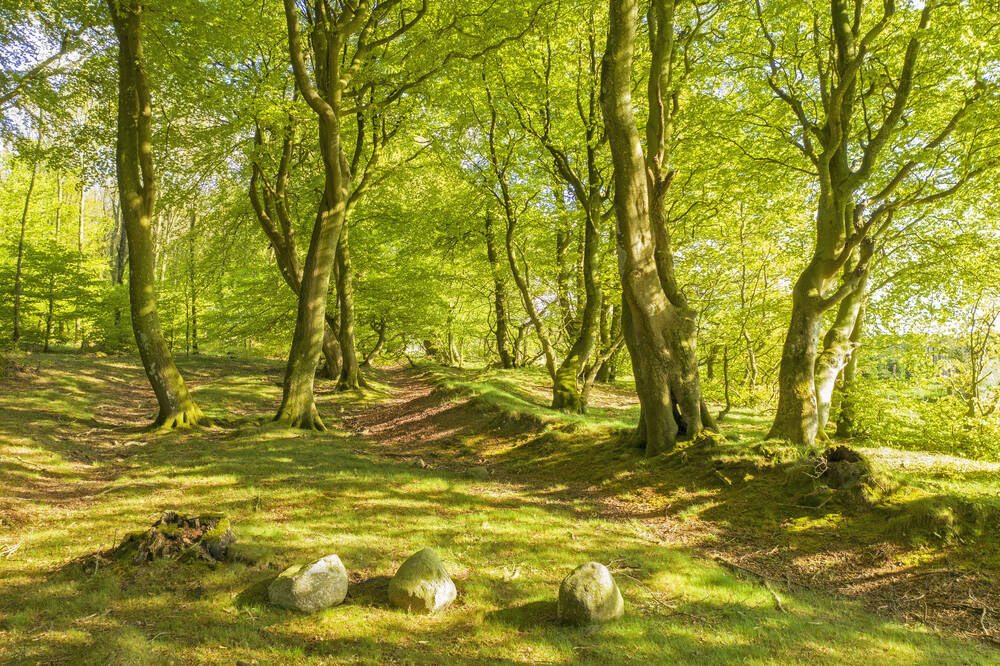
Woodland Carbon Code
https://www.woodlandcarboncode.org.uk
Established in 2011, the UK Woodland Carbon Code is aimed at forestry businesses, UK landowners, plus any businesses needing to offset carbon.
They work by certifying woodland creation projects, which will be absorbing CO₂ over time, usually involving afforestation or reforestation. Credits are validated to ISO standards and governmentally backed.
When a credit is purchased, woodlands must be secured for a minimum of 20 years and a maximum of 100 years—meaning some projects secure carbon for a century.
Peatland Code
https://www.iucn-uk-peatlandprogramme.org/peatland-code
Established in 2015, the UK Peatland Code is aimed at UK landowners, conservation groups, and any business seeking carbon offsets.
They work by certifying peatland restoration projects which will be absorbing CO₂ over time, with restoring degraded peatlands and rewetting. Many peatlands in the UK have been drained for development and agriculture, or peat has been extracted for garden compost and fuel. However, they are massive carbon stores and provide essential climate resilience.
These credits are also validated to ISO standards and supported by the IUCN UK Peatland Programme.
UK Carbon Code Of Conduct
The UKCCC (UK Carbon Code of Conduct) is a standard within the VCM, much like VCS and Gold Standard.
Newly established back in 2022, it’s a more specialised, high-integrity, UK-centric framework that’s not yet taken center stage.
Though these are tree and peat focused, UKCCC will cover everything else. It’s getting some traction, however global frameworks Verra and Gold Standard still dominate.
UKCCC could become the main framework for everything outside woodland and peat in the upcoming years.
Rather than replacing, it could fill in gaps where UK-specific standards are missing – such as biochar credits, soil carbon, regenerative agriculture, blue carbon, and grassland restoration.
Plan Vivo (UK-based but accepts global projects)
Plan Vivo was founded not long after in 1997, Edinburgh, Scotland. Focusing on community-led carbon projects worldwide, they are a key standard for nature-based solutions, ensuring both carbon sequestration and social benefits.
Plan Vivo operates by certifying projects that follow strict sustainability principles, supporting forestry, agroforestry, soil carbon, and ecosystem restoration. They often work with rural communities and smallholder farmers to achieve long-term environmental and social impacts.
Global Voluntary Carbon Markets
Verra
Launched in 2005 by Verra, a non-profit based in Washington, D.C., USA. VCS is for governments, NGOs and businesses globally to purchase well-validated carbon offsets.
Their range of projects includes forestry, renewables, soil and blue carbon, industrial emission reduction, as well as community-based projects.
They are stringently verified by third-party auditors, ensuring high-quality offsets, with credits ranging from $5 – $200 depending on project quality and credibility. (The more expensive credits may also add PR value by supporting endangered species or repairing critical habitats, for instance, making it a better investment for ESG).
Gold Standard
Gold Standard is a premium carbon offset certification established in 2003 by WWF, alongside SouthSouthNorth and Helio International.
It operates globally but is based in Geneva, Switzerland, used by NGOs, governments and any businesses seeking high-quality credits with a simultaneous strong ESG impact.
While more expensive, the premium credits are highly regarded, with project types involving energy efficiency, renewables, clean cookstoves, water access, waste management and more.
American Carbon Registry
The American Carbon Registry was the first ever private carbon registry in the world; launched in 1996 in Virginia, USA. They laid the foundation for today’s carbon credit systems, still a major player in the market.
The ACR works by developing rigid protocols to ensure emissions are certified in many ways such as scientifically.
All projects must follow their methodology, adopting a range of approaches such as agriculture, industrial gas destruction, methane reduction and carbon capture.
Climate Action Reserve
Climate Action Reserve (CAR) was established in 2001 called the California Climate Action Registry (then rebranded to CAR in 2008). Based in LA, the reserve mostly serves North American businesses, governments, and organisations.
Credits are high-quality and stringently compliant, ensuring emissions are both genuine and permanent. This includes forestry, agricultural methane capture, industrial gas destruction, carbon capture, and more.
Their credits are widely accepted within compliance markets, as rigorously validated.
Global Carbon Council
The Global Carbon Council (GCC) was established in 2016 in Qatar as there was no regional carbon standard for South Asia, Africa, and the Middle East.
The GCC reviews and approves project designs from project developers, formally registering projects that pass on a public registry.
After expanding globally in 2020, its registered key projects in India, Turkey, Egypt and Southeast Asia.
Registered projects can then be sold through direct sales, carbon exchange platforms, and voluntary trading platforms.
It’s cheaper than Verra and Gold Standard so well-suited to smaller projects, plus shorter timelines as it relies on a digital-first system.
ART TREES
REDD+ is a UN initiative that stands for Reducing Emissions from Deforestation and Forest Degradation. The programme is for developing countries with large forests to earn money from avoiding deforestation.
While REDD+ is the concept, ART TREES turns it into verified, tradable credits.
ART is the Architecture for REDD+ Transactions and TREES is The REDD+ Environmental Excellence Standard.
Since its launch in 2019, it has progressed steadily, with Guyana the first to complete the full ART TREES process in December 2022 and other countries expected in the following years.
SocialCarbon Standard
SocialCarbon Standard launched in 2005 as a co-benefit standard (measuring just the co-benefits of carbon projects, not their emissions).
In 2022 this expanded to a full carbon standard that now has global reach with projects in Asia, Latin America, and more.
Their projects usually include forest conservation, agroforestry, mangrove or wetland restoration, and renewable energy for villages. They’re community-led, meaning the workers directly benefit from the projects – not just some external company.
Protecting both local wellbeing and biodiversity is SocialCarbon’s main focus.
Puro.earth
Puro.earth is an online marketplace launched in 2018 in Finland. They sell verified permanent carbon removals, verified under their own Puro Standard.
They certify CORCs (Carbon Removal Certificates) when projects remove CO₂ physically, e.g. biochar, carbonated concrete, geological storage, and more. Projects are live across Europe, North America, Latin America and Asia Pacific.
Buyers tend to be larger corporations aiming for Net Zero, i.e. Microsoft, Shopify.
Nori
Founded in 2017 in Seattle, Nori is a carbon removal marketplace. With blockchain technology, they value transparency and traceability.
First projects are soil carbon on US farmland, with regenerative practices like cover-cropping or no-till farming equating to carbon credits (Nori tokens).
Mostly active in the US, Nori was one of the first platforms to use a public blockchain on Ethereum. This makes every single data log and record visible, findable, and verifiable – leaving little to no room for double counting or error.
Toucan Protocol
Toucan Protocol launched in 2021 in Europe, also a blockchain platform that turns credits into tokens.
With a focus on forest, renewables, and carbon removal projects, projects around the world make up one of the largest blockchain-based carbon systems.
Over 20 million credits are tokenised on the public blockchain (Polygon), making the data transparent and accessible through the technology.
Regen Network
Regen Network was founded in 2017 in the US, another blockchain platform that works differently to the others.
It’s a carbon marketplace (on blockchain) that lets its scientists and partners create new standards.
It’s a system for testing and approving new science-based methods, because the traditional carbon standards can fail to cover new types of climate projects (e.g. soil health, grassland restoration, watershed).
The scientists include research institutes, NGOs or conservationists, and technical partners.
The credits are real within Regen’s system, but not widely recognised. They can be bought, but only voluntarily, as they aren’t recognised by regulators.
AirCarbon Exchange
AirCarbon Exchange was founded in Singapore in 2018, a carbon exchange trading platform that’s regulated under the country’s financial laws.
It’s based there, but trades global credits like a stock exchange as a major financial hub in Asia.
Currently one of the leading digital carbon exchanges in the world, it could be the most advanced in Asia.
Covering most project types, credits must be verified with well-recognised standards.
Climate Impact X
Climate Impact X (CIX) is also based in Singapore, launched in 2021.
While AirCarbon Exchange is more of a private-sector trading platform, CIX is a regulated, finance-backed exchange for large corporate buyers.
They offer a credit marketplace, a spot-exchange, and an auctions platform, with key clients from over 32 countries worldwide.
Project types include nature-based solutions and renewable energy certifications, spanning globally in Latin America, Africa, Asia and more.
Moss.Earth
Moss.Earth was founded in Brazil in 2020, a blockchain carbon accounting platform where one token equates to a tonne of CO₂e.
Interestingly, they are one of the only platforms that have made NFTs an offsetting method. They’ve sold NFTs tied directly to Amazon land, purchased by individuals and corporations then able to display the token on marketplaces like OpenSea.
Most projects are in the Amazon rainforest and Brazil, with others available globally.
This tends to involve tokenised land assets, deforestation avoidance, and forest preservation.
Cercarbono
Founded in 2016 in Colombia, Cercarbono is not a marketplace, but a voluntary carbon standard for climate mitigation projects.
The standards are more accessible for emerging-economy developers, with lower entry barriers such as project size while also supporting a broader range of project types.
Projects are then listed on EcoRegistry (digital blockchain platform) and can be traded on Xpansiv (global carbon market exchange).
CarbonClear
Founded in Denmark in 2017, CarbonClear is a digital carbon standard with its own rules, a registry platform for issuing and retiring, and also acts as a project developer.
They’re high-tech, with project data from automated systems like sensors, satellites, and smart meters tracking and verifying projects in real-time.
Carbonclear focuses on distributed renewables and nature-based projects, mostly in Africa, Latin America, Southeast Asia, and now Europe.
ISO 14064-Based Registries
The International Organization for Standardization (ISO) is a global, non-governmental organisation. ISO’s 14000 series is a family of environmental standards, with 14064 focusing on GHG accounting.
- ISO 14064-1 enables companies to calculate their carbon footprint by identifying contributors to GHG emissions. It results in a detailed inventory forming a foundation for reduction targets.
- ISO 14064-2 focuses on the project-side, providing guidelines for reporting and monitoring emission-reduction projects.
- ISO 14064-3 verifies reduction projects and emission reports through third-party validation.
These frameworks underpin leading registries such as Verra, Gold Standard, and Cercarbono, providing the technical basis for consistent carbon accounting and verification.
How Projects Are Verified and Certified

To bring credibility to the market, all carbon projects must be verified and certified.
Verification ensures the project has done what it says it’s done, and avoids mistakes or exaggeration in the data.
Certifications mean that the project meets standards, fortifying the method’s legitimacy and framework.
Without these, a credit is untradeable.
For verification, the project must be checked by an independent third party (a verifier) such as DNV (Det Norske Veritas) or TÜV NORD.
They review the project’s plan, check its baseline, verify data, conduct site visits, discuss with project staff and write the report, passed to the certifier (e.g. Verra or Gold Standard) to decide whether to approve or reject.
If approved, the project gets certified – meaning it is able to be sold and traded as carbon credits on the market.
Crucially, many projects must be re-verified at intervals (often annually) to confirm that the carbon reductions remain authentic and the project continues to perform as claimed.
Trading Platforms and Market Access
Trading platforms can be new and confusing. The examples covered in this article alone do not fit under one category, with online marketplaces, exchanges, and blockchain platforms cropping up everywhere.
Market access means who can use the platforms, with some more accessible to smaller projects, some strictly big corporations, and some NGOs and individuals.
Benefits and Criticisms
The crucial benefit of voluntary carbon markets is allowing companies to meet net zero targets.
Without VCMs, fewer companies would be taking climate action. With just the mandatory offsetting from regulators, the line would stop at reducing emission hotspots.
Net zero targets would fail to exist, and residual emissions would always be left over. They sound small, but in a corporate context, this can quickly equate to millions of tonnes of CO₂e that would otherwise remain unaccounted for.
One major criticism, made clear throughout this article, is the overwhelming amount of technical jargon and complexity.
Digital carbon markets have evolved into something so nuanced and layered, yet from the outside, they often appear like a confusing maze of terms, platforms, and protocols.
But complexity isn’t a flaw; it’s a sign that this space is still growing.
Voluntary carbon markets are adapting fast with demands for transparency. The best systems will become mainstream, easier to navigate, and help companies contribute towards major global climate goals.
More Information
https://www.gov.uk/government/organisations/department-for-energy-security-and-net-zero
https://www.iso.org/standard/66453.html
https://www.woodlandcarboncode.org.uk
https://unfccc.int/process-and-meetings/the-kyoto-protocol
FAQs
What are voluntary carbon markets?
They let businesses, individuals, and NGOs take climate action in line with ethical or net zero goals.
How do voluntary carbon credits work?
Companies calculate their emissions, buy credits to offset residuals, retire them in a public registry, and report in ESG or net zero reports.
What are the main UK voluntary carbon standards?
The Woodland Carbon Code, Peatland Code, and UK Carbon Code of Conduct certify projects like woodland creation, peatland restoration, and regenerative farming.
Why are voluntary carbon markets important?
They help companies reach net zero targets by offsetting unavoidable emissions that would otherwise remain unaccounted for.