There are 36 regions across the world flagged as Biodiversity Hotspots due to their immense global biodiversity, species richness, and levels of endemism.
Importantly, most of these hotspots are endangered, so their title encourages conservation initiatives to go towards where the highest levels of biodiversity are under the highest amount of danger.
From Madagascar or the Eastern Himalayas to the Mesoamerican Forests and Sundaland, this article will provide insights into the ecological contexts, unique habitats, and species diversity of each hotspot. We explore the vast range of life across the world, and where the concept of biodiversity hotspots came from.
Buy or sell Biodiversity Units on the UK's largest BNG Marketplace
A network of over 1,500 registered buyers
Browse 50,000 BNG units nearing £1.5 billion in value
Hands-on support, whatever your BNG needs
Visit the marketplaceWhat are Biodiversity Hotspots?
Biodiversity hotspots are regions that feature extraordinary biodiversity, with majorities of species endemic to the area (found nowhere else in the world).
This includes some qualifying criteria, with an area having to have at least 1,500 endemic species of vascular plants to be deemed a hotspot.
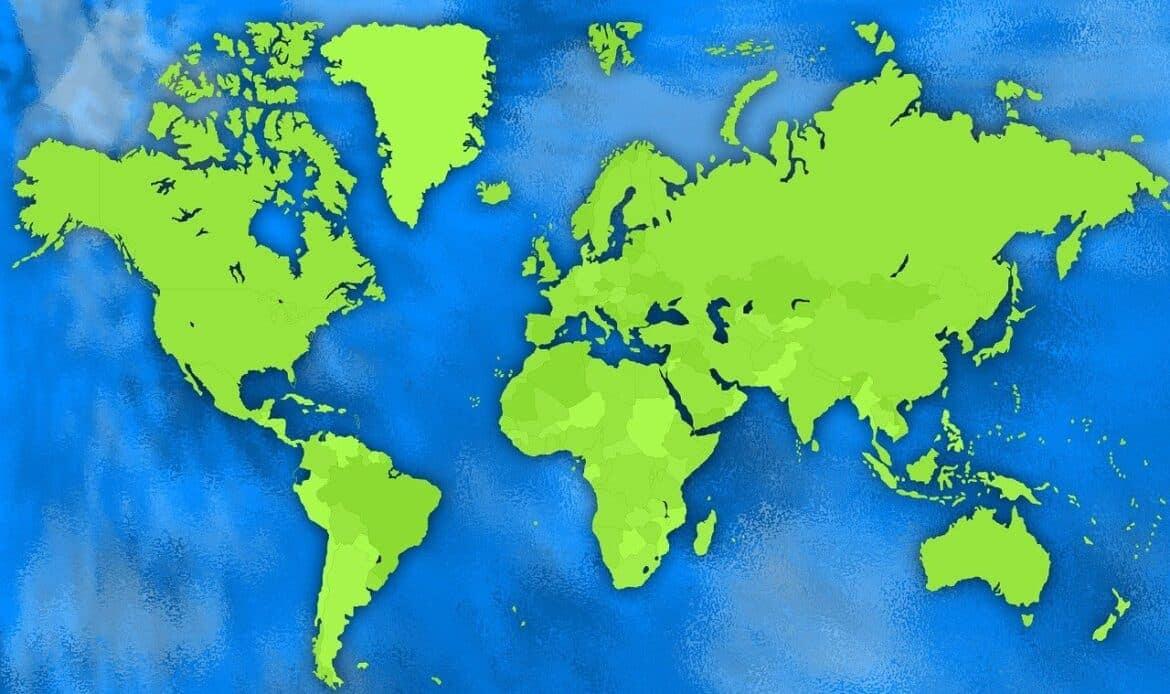
The 36 hotspots are distributed across the globe, all with ranging ecosystems that each host countless unique species.
Why They Are Important
Biodiversity hotspots contain significant amounts of the entire planet's biodiversity, which humans depend on for a vast variety of things.
Carbon-rich territories essentially regulate the climate, and provide ecosystem services like pollination, water purification, and healthy soils.
Beyond our struggling planet, biodiversity hotspots are essential for supporting our economic systems such as eco-tourism, medicinal plants, and agriculture.
The 36 Biodiversity Hotspots
Africa
Cape Floristic Region
The Cape Floristic Region is one of the planet's most substantial locations of terrestrial biodiversity, located in southwest South Africa. Spanning around 90,000 square kilometres in land surface, it's highly notable for its immense plant diversity as well as endemism.
Its unique fynbos ecosystem is characterised by shrublands adapted to the Mediterranean climate; typically hardy, small-leaved plants.
Coastal Forests of Eastern Africa
The Coastal Forests of Eastern Africa extend from Somalia to Mozambique as well as the island of Zanzibar, consisting of mangroves, moist woodlands, and coastal forests.
It's known for high levels of biodiversity, homing over 1,500 endemic plant species, plus threatened, rare primates such as the Tana River red colobus monkey.
Eastern Afromontane
The Eastern Afromontane spans across diverse mountain ranges in Eastern Africa, extending from Ethiopia and South Sudan to Mozambique, and parts of Yemen and Saudi Arabia.
This includes montane forests, alpine ecosystems, and grasslands, which provide tens of millions of people with freshwater.
It has over 7,000 plant species, with many found nowhere else on Earth, including the endangered mountain gorilla and Ethiopian wolf.
Guinean Forests of West Africa
The Guinean Forests of West Africa are a belt of dense tropical forests from Guinea and Sierra Leone to Cameroon, with swamp forests, savannas, and rainforests.
With high humidity and significant rainfall, they are home to over 2,250 endemic plant species and many unique animals, including over 900 bird species and almost 400 terrestrial mammals.
Horn of Africa
The Horn of Africa covers parts of Ethiopia, Eritrea, Djibouti, Somalia, and eastern Sudan.
It's a rugged, dry region with arid conditions, known for about 60% plant endemism, including succulent-rich vegetation such as unique aloe or frankincense variants.
Speke's gazelle and the Somali wild ass are examples of some of the many desert-adapted species, with some of the hottest and driest conditions in the world.
Madagascar and the Indian Ocean Islands
Madagascar and the nearly Indian Ocean islands are unique, isolated ecosystems with 12,000 plant species, such as the majestic traveller's palm tree. Over 90% of the wildlife in Madagascar is found nowhere else on the planet, such as chameleons, lemurs, and baobabs.
Its tropical, varied climate is prone to monsoons, less in drier areas in southwestern Madagascar.
Maputaland-Pondoland-Albany
The Maputaland–Pondoland-Albany extends along the Indian Coast, from southern Mozambique to Eswatini. It's made of unique subtropical habitats including savannas, coastal forests, grasslands, and wetlands.
It's known for the ancient cycad plant which dates back millions of years, as well as the Natal forest tree frog, unique to the region.
Asia-Pacific
Eastern Himalaya
The Eastern Himalayas stretch across China, Myanmar, Nepal, and northeastern India, made up of tropical rainforests, cloud forests, montane grasslands, alpine meadows, subalpine conifer forests, as well as alluvial grasslands.
This is home to over 10,000 plant species, boasting spectacular fauna such as Bengal tigers and snow leopards, as well as the rare golden langur and red panda.
Indo-Burma
In Southeast Asia, Indo-Burma hosts evergreen and deciduous forests, karst limestone shrublands, unique coastal habitats, as well as seasonally flooded grasslands.
Endemic turtles are supported by the Mekong River and Tonle Sap Lake.
With nearly 1,300 bird species and over 7,000 plant species, the biodiversity hotspot has distinctive wildlife, encompassing the solo, Irrawaddy dolphin, pygmy loris, white-eyed river-martin, giant ibis, and orchids.
Japan
Japan features temperate forests, coastal areas, coral reefs, wetlands, and grasslands, with unique island geography with a diverse climate across both terrestrial and marine ecosystems.
With many different species on each island, a rich biodiversity varies across habitats, such as the dense forests in the Japanese Alps, and rare plants in subtropical islands.
Mountains of Southwest China
The Mountains of Southwest China stretch across parts of Yunnan and Myanmar, Western Sichuan, and southeastern Tibet. Landscapes vary from mountain peaks to river valleys, with habitats such as alpine meadows, temperate forests, and even mixed coniferous forests that change into subtropical broadleaf forests as they descend.
The rare Gaoligong pika, giant panda, and the snow leopard are a few examples of the region's notable wildlife.
New Caledonia
New Caledonia is a South Pacific archipelago that lies over 1,000 km east of Australia, consisting of a primary island called Grande Terre, with smaller and outlying islands.
Their unique ultramafic soils (high in heavy metals) support specialised plants, with nearly three quarters of overall plant species endemic.
The biodiversity hotspot is home to remarkable species, including the second-largest coral reef, plus some of the richest variations of lizards on Earth.
Philippines
Also an archipelago, but amazingly of over 7,000 islands, the Philippines is a stand-out biodiversity hotspot in Southeast Asia.
The major regions like Palawan, Mindanao, and Luzon, are each packed with their own diverse landscapes, ecosystems, and endemic species.
Their waters have some of the highest levels of marine biodiversity, with over 500 coral species and 1,600 fish species.
Polynesia-Micronesia
Polynesia-Micronesia spans over 4,500 islands in the Pacific, including Micronesia, Polynesia and Fiji across a vast ocean area.
With some of the richest marine biodiversity as part of the Coral Triangle, as well as over 5,000 vascular native plant species, and the ancient Degeneria trees in Fiji.
Southwest Australia
Southwest Australia is one of the world's oldest biodiversity hotspots, with over 356,700 square metres covered within a Mediterranean-style climate. Similar to the forests of East Australia, this leads to specialised ecosystems, like eucalyptus woodlands, or kwongan heathlands.
From the Esperance Plains in the south to Shark Bay in the north, the hotspot inhabits several endemic species, including the salamanderfish.
Sundaland
The Sundaland biodiversity hotspot covers the western Indonesian archipelago, Malaysia, Bruneri, Singapore, and Malaysia, with tropical rainforests featuring some of the largest flowers in the world (such as the Rafflesia arnoldii, or the stinking corpse lily).
They have a significant 25,000 vascular plant species—over half endemic—alongside orangutans, endangered rhinoceros, and the proboscis monkey only in Borneo.
Wallacea
Wallacea bridges the ecological areas of Australia and Asia in Indonesia, with over 1,680 islands between Borneo and New Guinea.
Tropical rainforests, karst forests, and mangrove swamps are some of the common ecosystems, creating lush habitats for a vast range of endemic birds and amphibians.
Also part of the Coral Triangle, it boasts over 450 coral species, alongside sea turtles, giant clams, whale sharks and thriving marine life.
Western Ghats and Sri Lanka
The Western Ghats, a mountain range in India, transition into the highlands of Sri Lanka, forming a range of wetlands, lush rivers, and dense forests.
An amazing 4,000 flowering plant species live there across diverse elevations with ranging micro-climates.
They are home to over 500 bird species, and the endangered Asian elephant, Bengal tigers, as well as the lion-tailed macaque.
Europe and Central Asia
Caucasus
Bridging Europe and Asia, the Caucasus spans Georgia, Azerbaijan, Armenia, plus areas in Iran, Turkey, and Russia. From alpine meadows to semi-deserts, it features nine different climate zones, supporting a fantastic range of species.
Picture lush subtropical forests in one area and then high-altitude tundra in another. The Caucasus supports the goitered gazelle, the endangered Caucasian leopard, the red deer to name a few, and a range of notable migratory birds along the Caspian Sea flyaways.
Irano-Anatolian
The Irano-Anatolian hotspot in Western Asia extends across a range of countries and mountain ranges.
It has almost 2,500 species of plants, but interestingly a concentrated number along the Anatolian Diagonal in Turkey, with masses of endemic plants, including salt-tolerant species.
With over 140 mammal species, the mountainous terrain further supports wild sheep and rare Persian leopards.
Mediterranean Basin
The Mediterranean Basin lies across parts of southern Europe, the Middle East, plus North Africa, with coastal areas, mountainous regions, and a diverse range of islands.
With around 25,000 plant species, the Mediterranean Basin has some of the highest levels worldwide, with specialised plants across habitats with unique ecological conditions.
North and Central America
California Floristic Province
The California Floristic Province is a biodiversity hotspot in Western North America, with very humid, hot summers and not so cold winters. This spans across parts of Oregon, Baja California, California, and Mexico.
With the unique chaparral, oak woodlands, coastal sage scrub, serpentine soil areas, as well as mixed evergreen and montane coniferous forests, a diverse range of microhabitats support rich biodiversity.
Caribbean Islands
The Caribbean Islands are an archipelago spanning from the Greater and Lesser Antilles to the Bahamas, with diverse ecosystems across 30 territories and nations.
Some islands include Puerto Rico, Hispaniola, Cuba, and Jamaica. The islands cover nearly 4 million square kilometres of ocean, and a significant 230,000 square kilometres of land.
Madrean Pine-Oak Woodlands
The Madrean Pine-Oak Woodlands feature rugged mountainous terrains, and a broad range of habitats from forests to grasslands. This lies across areas of Mexico as well as the southwestern United States.
Home to over 135 oak and 44 pine species, the dense woodlands shelter many species from larger mammals like the black bear, puma, and jaguar, to birds like the thick-billed parrot, tufted jay, and a range of endemic reptiles and amphibians.
Mesoamerica
From Panama to central Mexico, Mesoamerica is an important biodiversity hotspot enveloping eight countries and various islands.
Tropical lowlands, montane cloud forests—the ecosystems critically bridge species in North American and South American regions. What's more, it has a major migratory corridor for over 225 bird species.
With 17,000 vascular plant species and over 3,000 of those endemic, the region is not key for global biodiversity levels, but further costs vast carbon-rich territories critical for climate regulation, as well as indigenous communities.
South America
Atlantic Forest
The Atlantic Forest stretches along Brazil into Argentina and Paraguay, a lush biodiversity hotspot despite significant threats from deforestation.
Spanning over 3,000 km, there are over 20,000 plant species in the forest, about 40% endemic.
With tropical and subtropical forests, coastal mangroves, highland Araucaria forests, and many forest corridors.
Cerrado
In Brazil, the Cerrado is the most biodiverse savannah on the planet, also extending into Bolivia and Paraguay.
With over 12,000 plant species, 251 mammal species, 800 fish and 856 bird species, the savannah ecosystem is essential for biodiversity. Notably, they host the rare Spix's macaw, the giant armadillo and the maned wolf.
Chilean Winter Rainfall and Valdivian Forests
The Chilean Winter Rainfall and Valdivian Forests stretch from central to southern Chile and western Argentina.
With almost half of 4,000 plant species endemic, the region's temperate rainforests, Mediterranean shrublands, and coastal shrub support isolated, adapted species amongst a broad range of biodiversity.
They host the critically endangered Andean cat, which roams the mountains and has only been pictured a handful of times by conservationists.
Tumbes-Chocó-Magdalena
The Tumbes-Chocó-Magdalena hotspot extends along the Pacific coast, including the dry forests of Tumbes-Piura, coasts and mangroves, plus the Chóco-Darién rainforests.
They host several distinctive primates such as several spider monkey species, bare-faced tamarins, and rice rats.
The mangrove ecosystems in Ecuador are highly endangered, with only a small fraction remaining. Many conservation initiatives are underway.
Tropical Andes
The Tropical Andres consists of montane cloud forests, Andrean páramo grasslands, dry forests and humid and dry puna grasslands. The Andres mountains are a critical source of water, and the forests store around 5.4 billion tonnes of carbon.
This region hosts the largest diversity of amphibian species (with over 980 in total, and 670 of those endemic), bird species (with 1,724) and high mammal diversity.
Middle East
Arabian Peninsula
The Arabian Peninsula, covering 3 million square kilometres, features remarkable biodiversity adapted to its extreme environments.
WIths, expansive sand deserts, and mountainous regions including the Dhofar highlands or the Asir Mountains, a range of microclimates host over 600 plant species, plus wildlife such as the Nubian ibex, the Arabian oryx, and many desert-adapted reptiles and birds.
Mountains of Central Asia
The Mountains of Central Asia cover around 860,000 square kilometres across China, Uzbekistan, Tajikistan, Kyrgyzstan, Turkmenistan, and Kazakhstan.
Steppes, semi-deserts, coniferous forests and alpine meadows are few of the varied habitats, with eminent glaciers and high-altitude lakes feeding major rivers like the Syr Darya and the Am Darya.
Oceania
East Melanesian Islands
The East Melanesian Islands have exceptional levels of species richness as well as endemism. They feature lowland and montane rainforests, coral reefs, freshwater lakes, amongst a diverse range of habitats.
In the southwestern Pacific Ocean, this includes over 1,600 islands of varying scale. The isolation leads to endemism, meaning majorities of species are found nowhere else on the world, such as the Solomon Islands skink, and the Bougainville monkey-faced bat.
New Zealand
New Zealand lies within the southwestern Pacific Ocean, with north and south primary islands, as well as many other smaller islands.
Around 80% of its native species are endemic, with lush temperate rainforests with ancient trees such as the beech and rimu, as well as alpine zones, coasts, wetlands, and marine lands.
Notable wildlife include kauri trees, the tuatara reptile, and the kiwi bird.
Global Oceans
Coral Triangle
In the western Pacific Ocean, the Coral Triangle is named by some as the most important part of the ocean. The marine region hosts a vast amount of marine life, and touches across parts of SouthEast Asia.
The triangle is home to 76% of the world's coral species plus has more reef fish than anywhere else on the planet, with around 37%.
Madagascar
Madagascar is frequently referred to as the eighth continent due to its sheer diversity of flora and fauna. In the southeastern coast of Africa in the Indian Ocean, an amazing 90% of Madagascar's wildlife is endemic.
Tropical rainforests, mangroves and coasts, dry deciduous forests as well as spiny forests make up a complex network of ecosystems, with remarkable species like lemurs, the fossa, and baobab trees.
Where Did the Biodiversity Hotspots Concept Come From
Biodiversity hotspots were introduced by British ecologist Norman Myers in 1988 to recognise which areas need to be prioritised not just due to their ecological value, but due to being critically endangered and facing major biodiversity loss.
His work calls for steering conservation efforts to where they are most needed, and his thoughts are now integrated into many global conservation initiatives, such as Conservation International who adopted Myers' concept in 2000 who are actively protecting biodiversity.